Walleye Under the Ice: Rattle Baits, Spoons & Swimmers
A practical guide to choosing and fishing rattle baits, flutter spoons, and swimming lures for walleye beneath the ice. Read the fish’s response, tune your cadence, and make careful adjustments without changing everything at once.
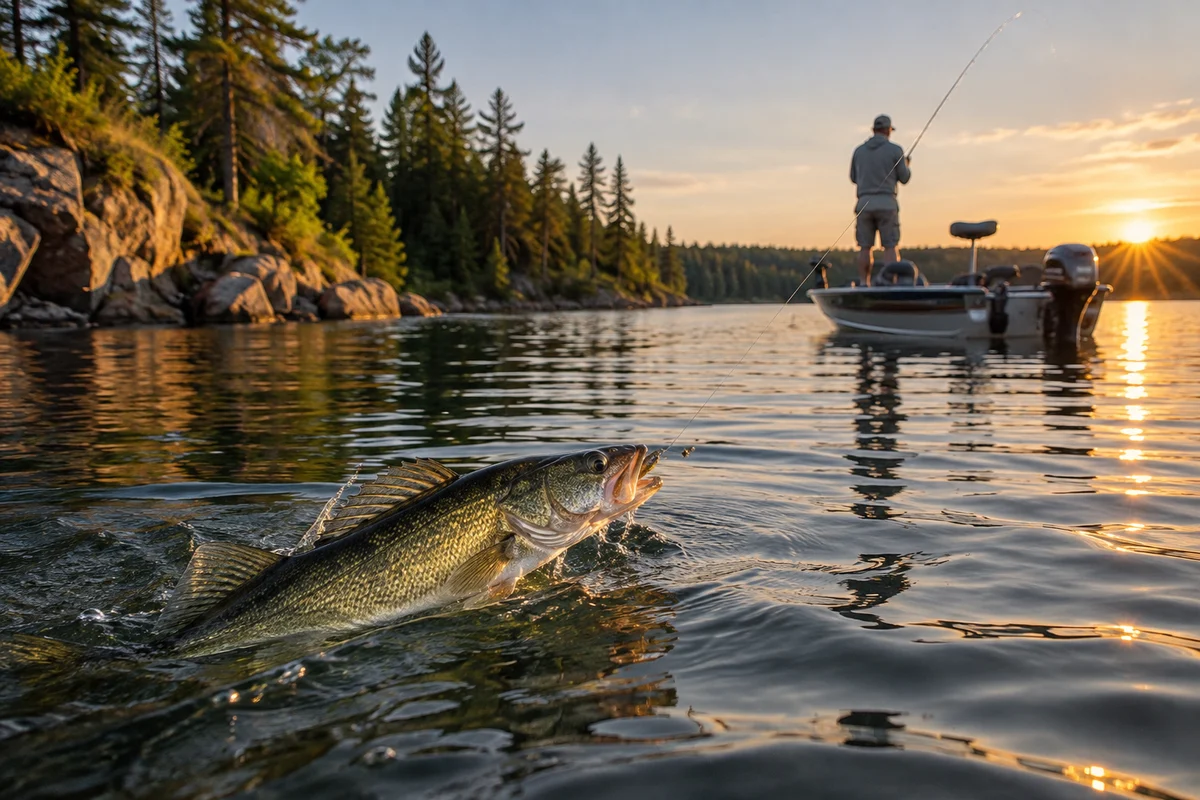
Walleye under the ice can react to a lure’s sound, flash, and movement as much as its profile. A rattle bait can call fish from a distance; a flutter spoon can slow the fall and hold attention; a swimming lure can sweep through a broader space. None is a guaranteed solution, because depth, light, forage, fishing pressure, and the fish’s mood all matter. The useful skill is recognizing what each lure does, then making controlled adjustments based on what happens below the hole.
Start by locating fish and establishing a repeatable presentation. If you’re building a broader winter approach, the walleye fishing hub collects related tactics, while essential ice fishing lures for walleye offers a companion look at lure choices. For a distinct vertical presentation, see how to use a jigging rap for walleyes.
What makes these three lure styles different?
Rattle baits, flutter spoons, and swimming lures are not interchangeable, even when their size and color look similar. Their action controls how much water they cover, how quickly they reach a target depth, and how strongly they announce themselves.
| Lure style | Main signal | Useful starting situation | Main trade-off |
|---|---|---|---|
| Rattle bait | Vibration, sound, flash, and a sharp lift-and-fall | Searching a basin or drawing attention toward a hole | Strong action may be too much for close, cautious fish |
| Flutter spoon | Flash and a slower, drifting fall | Fish holding near a level or following without committing | A slow fall can make depth control less immediate |
| Swimming lure | A lateral sweep on the lift, often followed by a glide | Fish spread around a hole or responding to a wider arc | Needs room and a controlled stroke to avoid excess movement |
These are tendencies, not guarantees. Individual lure designs vary, and line, rod movement, depth, and current can change the action. Check the manufacturer’s description or original instructions for a particular model rather than assuming that every lure in a category behaves identically.
When should you try a rattle bait?
A rattle bait is a reasonable first search lure when you need to attract attention or determine whether fish are using an area. Its sound and vibration can be detected beyond the immediate space beneath the hole, while a brisk lift gives it a pronounced escape-like movement. That can be useful in deeper water or when actively moving between promising locations.
Begin with a measured lift rather than a full-arm snap. Let the lure settle, pause, and watch for a mark that rises or follows. If fish appear but do not close the distance, reduce the lift height and lengthen the pause. If nothing shows after a handful of consistent cycles, try a different cadence or move to another hole rather than endlessly changing colors.
A rattle bait can also be a poor fit when fish are already directly below and seem reluctant. A loud, forceful presentation may keep them interested without producing a strike. In that case, keep the lure nearby but soften the movement—or switch to a spoon that falls more slowly.
How do flutter spoons help with reluctant fish?
A flutter spoon’s curved or shaped body can wobble as it drops, giving the angler a slower, more visible fall than a compact, fast-sinking lure. That descending movement can hold a fish’s attention through the pause. It is especially useful when a walleye follows a lure upward but turns away before the next aggressive lift.
Lower the spoon to the fish’s level, then work a modest lift and allow it to fall on a controlled line. Keep enough tension to detect a bite, but don’t pull so tightly that you erase the spoon’s natural flutter. The exact balance depends on the spoon design and line; observe its behavior in shallow water when practical, and consult the product instructions for model-specific guidance.
If fish track the spoon but do not bite, vary one factor at a time: shorten the lift, pause longer, or let the lure fall a little farther. A small change makes it easier to learn what prompted a response. Repeatedly changing lure, color, depth, and cadence together leaves no clear clue.
When is a swimming lure the better choice?
A swimming lure moves outward on a lift or sweep, then glides or returns toward the line. That wider path can intersect fish that are not precisely beneath the hole. It also provides a different look when a vertical jigging motion gets attention but no commitment.
Use a controlled stroke and give the lure enough space to complete its movement. In a crowded house, among nearby lines, or in tight cover, a broad sweep may be inconvenient. In open water, try a moderate lift, pause, and watch for fish that follow the lure’s arc. If they appear to lose it at the end of the glide, make the next stroke smaller and keep the lure in their view longer.
This approach is a useful contrast to the more fixed position of slip bobbers for walleye fishing, a method that can hold bait at a chosen level. Use the method that suits the fish’s position and the conditions; a moving lure does not automatically outperform a stationary presentation.
How can you read a fish finder or line response?
Treat electronics as evidence, not a verdict. A rising mark may indicate interest, but it does not prove the fish has identified or accepted the lure. Watch whether the mark follows a particular lift, stalls during the pause, or fades when the lure speeds up. Without electronics, line movement, a sudden change in weight, or a tap can offer clues, though subtle bites may be difficult to distinguish from line contact or current.
Use a simple field decision framework:
- No fish appear: Keep the presentation consistent briefly, then change location or search depth. A lure change cannot solve an empty area.
- Fish appear but stay low: Bring the lure into their level and try a slightly higher, controlled lift. Avoid pulling it far above them.
- Fish rise and follow: Reduce the stroke, slow the fall, and pause. A flutter spoon may be a useful change if a rattle bait is moving too sharply.
- Fish approach but turn away: Change one variable—cadence, lure profile, or color—and compare the next response.
- A fish bites: Note the depth and movement that preceded the bite, then repeat that presentation before experimenting again.
Fish can also move with changing light, weather, forage, and pressure. A quiet interval is not proof that one lure has failed for the day. Keep track of time, depth, and presentation so you can distinguish a meaningful pattern from a single encounter.
What tackle and safety details matter?
Choose line and rod that let you control the lure and detect bites at the depth you’re fishing. A line that is too light for local conditions can be hard to manage; a very heavy or stiff setup may dampen a small lure’s movement. There is no universal line size for every lake, lure, or fish. Follow manufacturer guidance where available and account for local fish, vegetation, and the possibility of larger species.
Check hooks and connections before fishing, and handle treble hooks carefully, especially in gloves or a confined shelter. Keep hooks secured when moving between holes. Follow local rules for seasons, legal tackle, and the number and placement of lines. Ice conditions are variable and can change across a single waterbody; consult local authorities, avoid assuming ice is safe from appearance alone, and use appropriate flotation and safety equipment. The U.S. Fish and Wildlife Service provides federal fish and wildlife information, while state fish and wildlife agencies are the primary place to confirm local regulations and advisories.
How should you choose among the three?
Use a rattle bait to search or create a distinct signal, a flutter spoon to extend the fall and slow the presentation, and a swimming lure to cover a wider arc. Begin with the lure that fits the immediate problem, not the one that sounds most exciting. Make a controlled presentation, observe fish or bites, and change one thing at a time.
The best decision may be to move, change depth, or wait for a different activity window rather than swap lures. These presentations are tools for testing a hypothesis: that sound will draw attention, a slower fall will keep a fish engaged, or a wider sweep will reach it. A short record of depth, cadence, and response can make the next outing more informed—and helps turn a box of lures into a deliberate plan.
Frequently asked questions
Which lure should I start with for walleye under the ice?
If you are searching an area, try a rattle bait with controlled lifts. If fish follow but hesitate, test a slower-falling flutter spoon or reduce the movement before changing several variables.
How do I fish a flutter spoon for walleye?
Lower it to the fish’s level, use a modest lift, and let it fall on a controlled line. Adjust the pause and lift gradually, since spoon designs and their actions differ.
When is a swimming lure useful for ice fishing?
A swimming lure can help when fish are spread around the hole or respond to a wider, gliding movement. Use a controlled stroke and ensure there is room for the lure to move safely.
Sources & further information
Consult these primary sources for current regulations, technical information and local guidance.