How a New World Record Walleye Is Verified
A record walleye claim depends on more than an impressive fish: category rules, verified weight, witnesses, and documentation all matter. Here’s how to assess a potential new world record and where to confirm official standings.
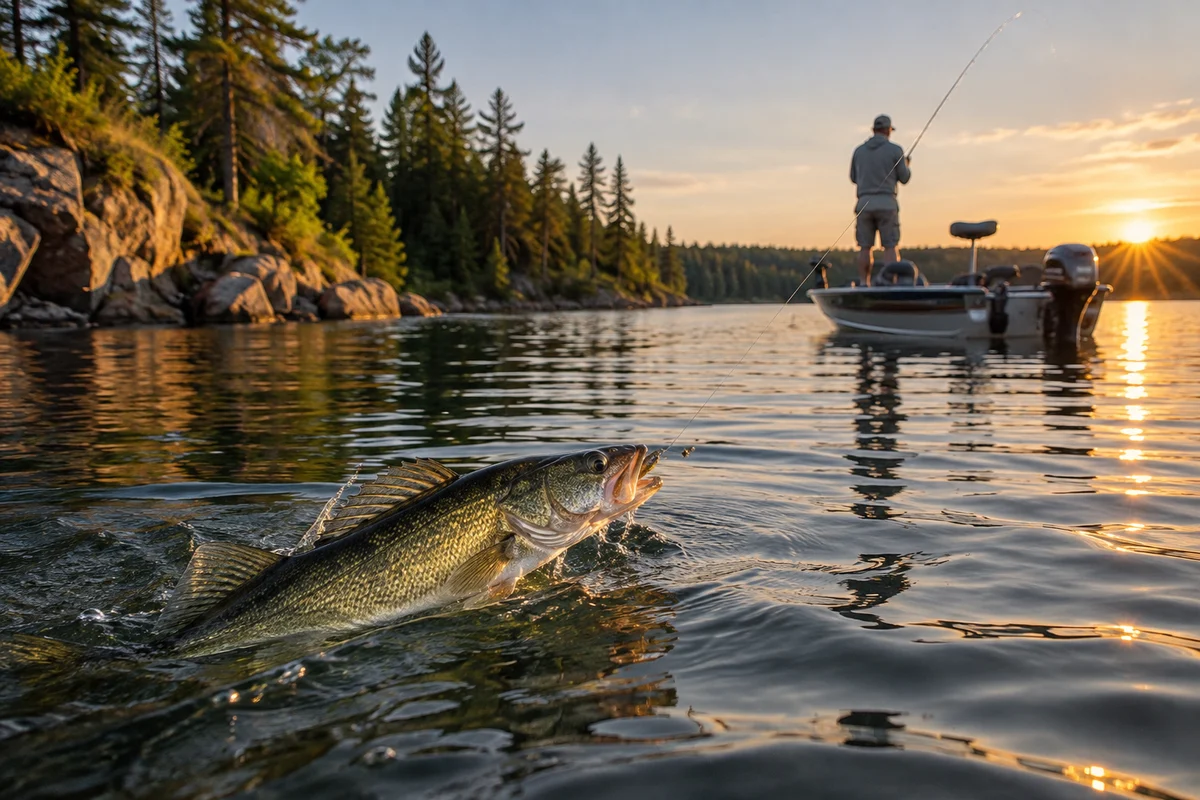
A new world record walleye is not established by a photograph, a social-media post, or a fish that looks unusually large. A record claim must fit a defined category and survive an evidence review by the organization that keeps that category’s records. Anglers can use the same framework to separate a remarkable catch from an officially recognized one—and to understand why two apparently similar claims may receive different outcomes.
Walleye records are especially easy to misread because “world record” can refer to different rulebooks. An all-tackle record, a line-class record, and a state or provincial record are not interchangeable. Before comparing weights, identify the recordkeeper, category, and current rules.
What does “world record walleye” mean?
The International Game Fish Association (IGFA) maintains fishing records across species and line classes. Its records are governed by application requirements and category rules; a fish does not become an IGFA record merely because it is the largest one an angler has heard about. The IGFA’s official record listings and application guidance are the places to check its current status and requirements.
Other authorities maintain their own records. A state wildlife agency may certify a state record, while a provincial or national organization may keep a separate list. Those designations can be meaningful, but they describe different jurisdictions and standards. A state record should not automatically be labeled a world record, and a local announcement should not be treated as confirmation by an international recordkeeper.
There can also be distinctions within one organization. All-tackle records generally concern the heaviest qualifying fish under the relevant rules. Line-class records add requirements about the line used, and other categories may impose further conditions. Always compare like with like: species identification, category, location eligibility, and rules in effect for the application.
How is a record walleye claim verified?
A credible claim is built from a chain of evidence. The exact checklist depends on the recordkeeper, so an angler should consult its current rules before handling or submitting a potential record fish. In general, the review may consider:
| Evidence area | What reviewers need to establish | Why it matters |
|---|---|---|
| Species | The fish is correctly identified as a walleye | A mistaken identification cannot qualify under the intended species record |
| Weight | The weight came from an acceptable, traceable scale and procedure | An unverified reading is difficult to reproduce or audit |
| Category | The tackle and circumstances meet the category’s rules | A fish may qualify in one category but not another |
| Catch details | Date, place, angler, and fishing circumstances are documented | These details establish eligibility and context |
| Witnesses and images | Independent observation and clear evidence support the account | Corroboration helps resolve uncertainty in the submission |
| Application | Forms and supporting materials reach the correct recordkeeper | A claim is not official until the responsible organization decides it |
The table is a general guide, not a substitute for a rulebook. Requirements may change, and organizations can request specific forms of evidence. When a potentially exceptional fish is caught, contact the relevant recordkeeper or fisheries authority promptly rather than relying on a remembered checklist.
A scale reading deserves particular care. Record the scale’s identifying information and follow the organization’s instructions for weighing and certification. Avoid rounding a number to make a claim sound stronger, and do not assume that a fish weighed on a household or unverified scale can later be validated. Where local rules require a certified scale or an official witness, those requirements control.
Photographs can help document the fish and process, but a photo cannot establish weight by itself. Useful images show the fish clearly and, where permitted, the weighing setup and scale display without obstructing the reading. Preserve original files and notes, and provide only authentic documentation. Do not alter images or fill gaps in a timeline with guesses.
What should you do if you catch a possible record?
First, prioritize legal and humane handling. Check local fishing regulations, including season, size limits, possession rules, and any special waters regulations. A fish that cannot legally be retained must not be kept to pursue a record. If the fish may be eligible for release, minimize handling and follow sound fish-care practices; a record attempt is never a reason to disregard conservation or law.
Next, identify the exact category you hope to enter and contact its recordkeeper as soon as practical. Ask what evidence is required, whether a particular scale or witness is necessary, and how the fish should be handled. Do not assume that a procedure used for a state record will satisfy IGFA rules, or vice versa.
Write down the facts while they are fresh: date, time, waterbody and location details requested by the organization, equipment category, and the names of witnesses. Keep the information factual. If a detail is uncertain, mark it as uncertain rather than supplying a precise-sounding estimate.
For a fish that is retained legally, follow the recordkeeper’s directions for weighing, photographing, and preserving evidence. For a fish released alive, ask in advance what evidence is acceptable; do not make a claim depend on an action that would unnecessarily harm the fish. Requirements differ, and the record authority—not online discussion—decides whether the evidence meets its rules.
Why do record claims sometimes differ?
A headline may use “record” informally, while the official list uses a narrower category. A large fish may be a state record but not an international one, or a potential record may still be awaiting review. Differences can also arise from the scale, documentation, eligibility rules, or whether an application was completed and accepted.
That is why a reported weight and an official record are separate statements. When a news item says a fish “could be” a record, treat that wording as provisional. Look for a dated decision in the appropriate official record list. If the listing is absent, that alone does not prove a claim false; the application may be pending, or it may concern another authority’s records. But until the responsible organization confirms it, call it a reported or potential record—not a certified world record.
The Georgia state-record story is a useful example of why geographic labels matter: a state record is a state-level designation, distinct from an all-tackle world record. For broader walleye context, browse the walleye fishing hub. Anglers planning a winter trip can also review ice-fishing lures for walleye and compare seasonal options in this guide to blade baits for fall walleye.
How can you check the current record?
Start with the organization named in the claim. Search its official records by species and category, then check the publication or decision date. For an international claim, consult the IGFA; for a state designation, use the relevant state wildlife agency or its named record program. If the source is a news report, follow its link to the original authority rather than repeating the headline as confirmation.
Keep three questions in view: Which organization? Which category? What is the official status? Those simple checks prevent most record-label confusion. They also make room for what is genuinely remarkable about a large walleye: the catch can be noteworthy even when it does not become a formal record.
The record systems are useful benchmarks, not a measure of every good fishing day. A well-documented catch, responsible handling, and respect for local regulations matter whether the fish qualifies for a list or not.
Frequently asked questions
Does a large walleye become a world record as soon as it is weighed?
No. The appropriate recordkeeper must review the fish’s eligibility and supporting evidence under the rules for the claimed category. A scale reading or public announcement alone is not official confirmation.
Is a state-record walleye also a world record?
Not automatically. State records and world records are maintained under different jurisdictions and may use different requirements. Verify each designation with the organization responsible for it.
Where should I verify a claimed IGFA walleye record?
Check the IGFA’s official records and current application guidance at IGFA.org. For a state or regional record, consult that jurisdiction’s wildlife agency or official record program.
Sources & further information
Consult these primary sources for current regulations, technical information and local guidance.