Spring Walleye Tips: Plan a Better Early-Season Trip
A practical early-season framework for finding walleye by water temperature, spawning-season movement, light and forage—without assuming every lake follows the same calendar.
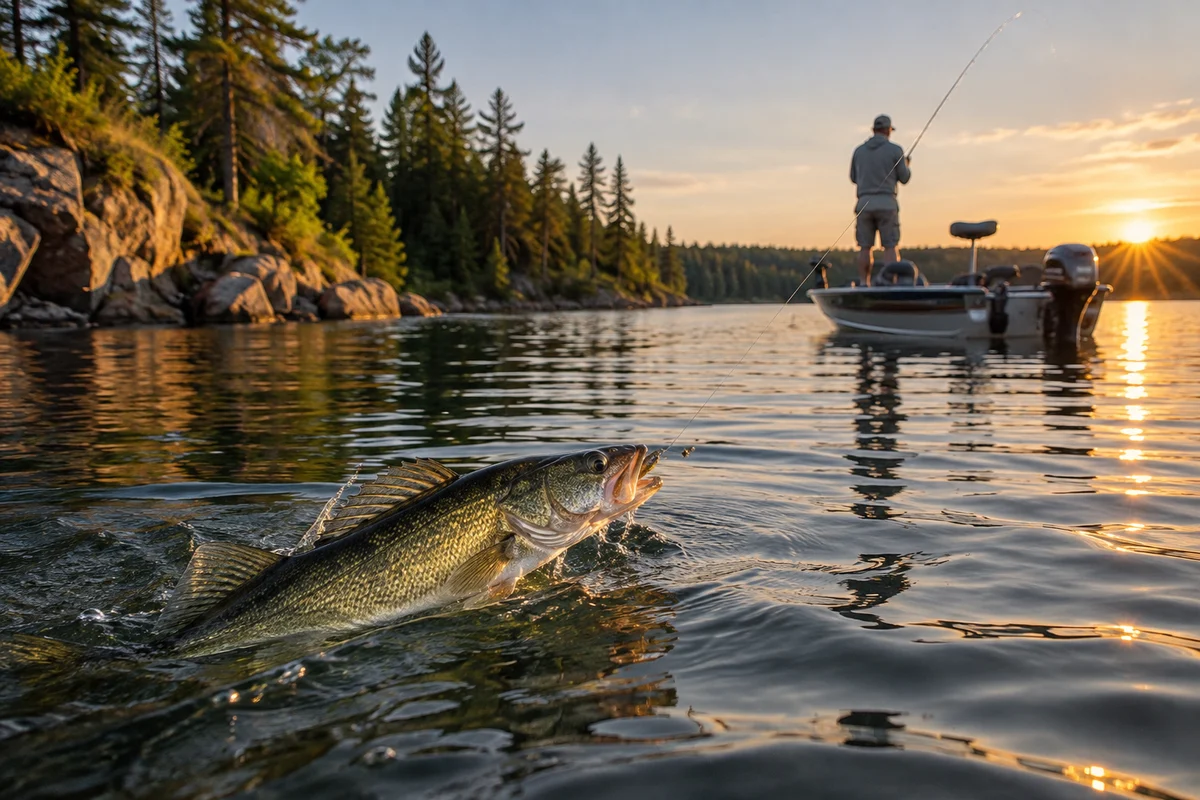
Spring walleye tips work best as a decision process, not a fixed list of secret spots. On a lake such as Wawang, changing ice conditions, water temperature, wind and local regulations can matter more than the date on the calendar. Start by identifying the season’s likely fish locations, then choose a simple presentation and adjust one variable at a time.
This guide is designed for a spring trip to Wawang Lake or another northern walleye water. It does not assume current resort services, access, regulations or lake conditions; confirm those directly before traveling. For more species-specific guidance, browse the freshwater walleye fishing hub.
Where do walleye go in spring?
Walleye movement in spring is closely tied to spawning and recovery, but timing varies with latitude, weather, lake structure and local rules. Fish may use gravelly or rocky shallows and nearby current or shoreline features during spawning periods, then spread into adjacent feeding areas. A cold snap can slow activity; warming water may increase movement, but a warm afternoon does not instantly transform an entire lake.
Think in connected zones rather than a single “hot” location: a shallow spawning area, its nearest drop-off or break, and a nearby feeding flat or point. The exact habitat differs from lake to lake. Use a current bathymetric map, local advice and legal access information to identify comparable features, rather than assuming a named bay or resort shoreline is productive.
If regulations restrict fishing near spawning locations, respect the closure and give fish space. Check the current rules for the jurisdiction and waterbody before casting. The Ontario Ministry of Natural Resources is the appropriate starting point for Ontario fishing regulations; rules can change by zone and season.
How should you choose a spring presentation?
Begin with a jig and a soft plastic or live bait where permitted. It is adaptable, easy to work near bottom, and lets you test depth without carrying an elaborate spread. Select a jig weight that keeps contact with the bottom while remaining controllable in wind and current. Too light, and you may lose feel; too heavy, and the bait can look unnatural or snag more often.
Make deliberate casts across a depth edge, allow the lure to reach bottom, and use a modest lift, pause and controlled fall. If fish are shallow or the bottom is snaggy, a float presentation can suspend bait above cover; the slip-bobber approach for walleye is useful when you need to hold a bait at a repeatable depth. For active fish or a drift across a broader contour, consider the mechanics of drift jigging for walleye.
Keep the first adjustment small. If you feel taps but do not hook fish, shorten the lift or pause longer. If the lure repeatedly hangs up, raise it slightly or move to a cleaner section of the edge. If there is no contact, change depth before changing every part of the rig. A controlled test helps you learn whether the issue is location, speed or presentation.
What conditions should guide your plan?
| Field clue | First move | What to avoid assuming |
|---|---|---|
| Cold, stable weather | Probe nearby breaks and fish slowly | That fish must be inactive everywhere |
| Gradual warming | Check shallow-to-deep connections and feeding edges | That the warmest cove automatically holds fish |
| Wind pushing onto a shoreline | Test the adjacent edge if it is safe to fish | That wind direction alone guarantees a bite |
| Bright, calm conditions | Try shade, deeper edges or a quieter approach | That walleye only feed after dark |
| Changing water clarity | Adjust lure visibility and retrieve pace | That one color works across all lakes |
| No contact after a careful pass | Shift depth or location, then reassess | That a more complicated tackle change is needed |
These are starting hypotheses, not rules. Wind can make boat control difficult, and cold-water hazards deserve priority over fishing opportunity. Wear a properly fitted flotation device, check the forecast, and do not launch or travel on ice unless conditions and local guidance support it.
How can you make a one-day trip more efficient?
Before leaving, confirm access, operating dates, boat or shore options, bait rules and any current advisories with the resort or local authority. A place name does not establish what facilities are available today. Check the official fishing regulations and verify the specific waterbody’s season, limits, possession rules and any special restrictions.
Prepare a short sequence rather than a crowded tackle plan:
- Mark two or three connected depth zones on a map.
- Start at a safe, accessible edge and test a jig at a controlled pace.
- Note depth, wind, water clarity and whether you make bottom contact.
- After a focused pass without signs of fish, change depth or move to the next connected zone.
- Repeat the same presentation long enough to make a fair comparison.
- Record what changed when you find activity, so the next move is evidence-based.
Bring layers, eye protection, pliers and a landing net. Handle fish over the water where practical, minimize time out of water, and follow current retention rules. If keeping fish is legal and appropriate, identify the species confidently and measure or count it according to local requirements. Do not rely on an old report or another angler’s recollection for present-day limits.
What if the fish are not on the shallow edge?
Move outward in steps. Search the first break, a point or a nearby flat before abandoning the area entirely. If using electronics, treat them as a way to understand depth and structure, not as proof that every mark is a walleye. From shore, fan-cast different angles and vary the retrieve while keeping track of where the lure lands.
When fish appear reluctant, reduce the size or speed of the movement and give the lure a longer pause. When they are active, cover more water with a steady, repeatable presentation. A bottom-bouncer rig setup guide can help explain a different way to keep a bait near bottom when conditions and equipment suit trolling; it is not a requirement for every spring outing.
Walleye behavior is not uniform. A lake’s forage, clarity, depth and weather history all shape the day, and a strategy that works on one waterbody may not transfer neatly to another. Treat local reports as clues, not guarantees, and keep a second location or presentation in reserve.
A simple spring decision framework
Start with safe access and current regulations. Choose a shallow-to-deep connection likely to be used seasonally. Fish it with a controlled, bottom-aware presentation. If you detect activity, refine depth and pace; if not, test the next connected feature. This approach makes spring walleye tips useful whether you are planning a Wawang-area visit or fishing another northern lake—and it keeps the day grounded in observation rather than promises.
Frequently asked questions
When is the best time to fish for spring walleye at Wawang Lake?
There is no dependable date that fits every year. Timing depends on local season dates, ice-out, water temperature and conditions; confirm current regulations and access before going.
What is a good first lure for spring walleye?
A jig with a soft plastic or permitted bait is a versatile starting point. Choose a weight that maintains bottom contact without making the presentation difficult to control.
Should I fish shallow or deep in spring?
Test connected shallow areas and nearby breaks rather than committing to one depth. Seasonal movement and daily conditions vary, so use contact and structure to guide adjustments.
Sources & further information
Consult these primary sources for current regulations, technical information and local guidance.