Spinnerbaits Catch Giant Walleyes: A Practical Guide
Spinnerbaits can help anglers cover water and trigger walleyes around weeds, rock, and other structure. Learn how to select a presentation, adapt it to conditions, and recognize when another tactic is a better fit.
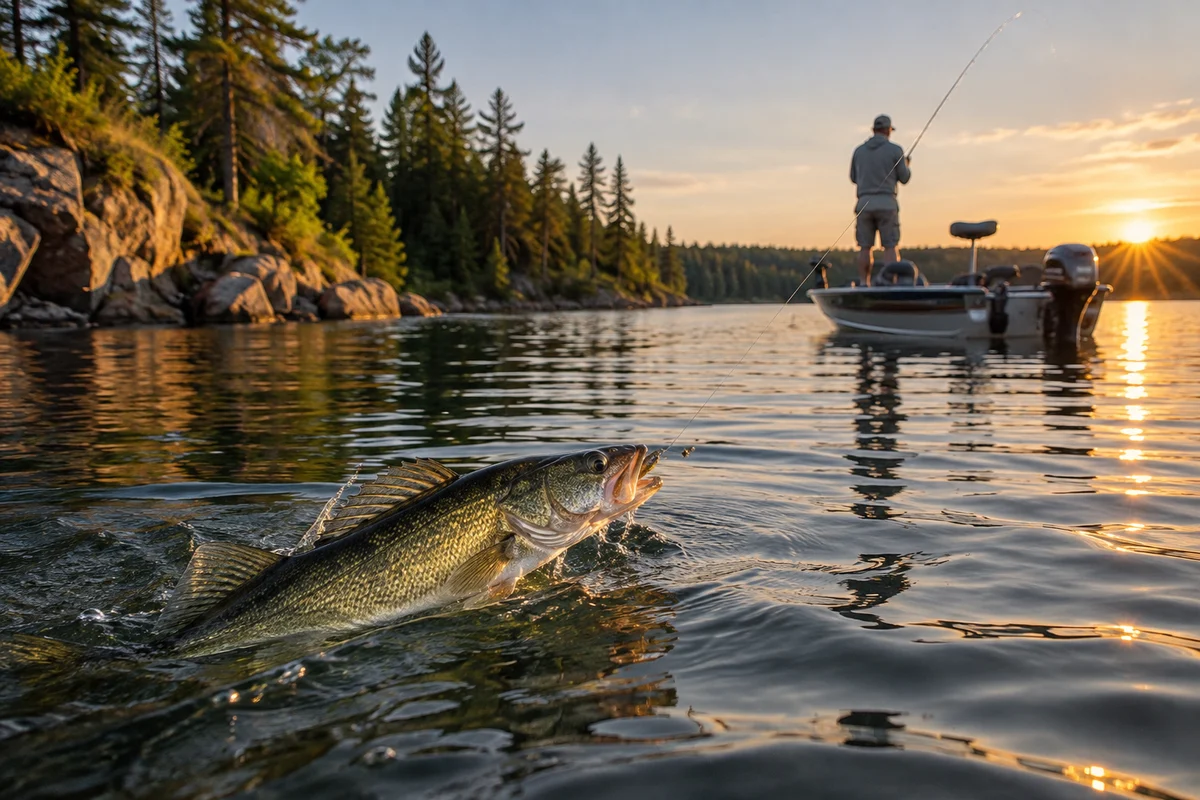
A spinnerbait can make a useful search tool when you want to cover water and keep a lure moving above snags. The idea that spinnerbaits catch giant walleyes is not a guarantee of size or success; it is a practical approach for exploring suitable habitat and presenting a visible moving target. Large fish still depend on local populations, season, weather, forage, and chance. Treat the lure as one option in a thoughtful plan, not a shortcut to a trophy.
Why try a spinnerbait for walleye?
A spinnerbait combines rotating blades with a skirted hook, usually on a bent wire frame. The blades flash and vibrate as the lure moves, while the skirt adds bulk and motion. That combination can be useful when water is stained, wind roughens the surface, or vegetation makes a straightforward minnow-style lure difficult to work.
Unlike a bottom-contact presentation, a spinnerbait is most often retrieved through a chosen depth band. This makes it useful for checking the edges of weed beds, shallow rock, flooded cover, and windblown shorelines. It can also help identify whether fish are positioned high enough in the water column to respond to a moving lure.
Walleyes are not always shallow or aggressive. Clear water, bright skies, heavy fishing pressure, cold fronts, or deep structure may call for a subtler or more precise approach. The fish’s position matters more than the lure’s reputation.
Where should you search?
Start with habitat that lets you control depth and avoid wasting casts. In a lake, look for a healthy weed edge near a drop-off, a point with rock or gravel, or a shoreline receiving wind. In a river, consider current seams, the edges of slack water, and accessible banks where a steady retrieve can pass through likely holding areas. Local regulations and access rules apply, and conditions can change quickly.
Use a map, electronics, or direct observation to build a small route rather than casting randomly. Begin at the outside edge of cover and make casts that cross it at different angles. A lure moving parallel to a weed line stays in the zone longer; a cast across the edge can reveal whether fish are concentrated on the inside, outside, or transition.
Wind can push forage and create comfortable feeding opportunities, but it can also make boat control and casting less safe. Choose a protected route if waves, current, or visibility make the exposed side unsafe. The U.S. Fish and Wildlife Service provides broad information about aquatic habitat and fisheries conservation; for local seasons, limits, and special rules, consult the responsible state or provincial authority.
For a broader view of seasonal presentations, use the walleye fishing hub. If fish are holding deeper or you need a controlled bottom presentation, compare the approach with setting up a bottom bouncer. When fish are suspended or reluctant, slip bobbers for walleye fishing offer a different way to keep bait near a chosen depth.
Choosing a blade and profile
Spinnerbaits vary in blade shape, size, color, skirt, and weight. There is no universal best combination. Use a simple field decision framework:
| Conditions | Starting choice | What to watch |
|---|---|---|
| Stained water or low light | A visible blade and contrasting skirt | Whether fish follow or strike; avoid assuming more flash is always better |
| Clear water or bright conditions | A more restrained profile and controlled speed | Followers may indicate that a smaller or slower presentation is worth testing |
| Weeds or shallow cover | A compact, snag-resistant design retrieved above vegetation | Keep the lure clear of the densest growth rather than dragging it through every cast |
| Wind or active fish | A profile that remains controllable on the cast | Maintain a steady path and watch for line bow that disrupts depth |
| Deep or inactive fish | Consider another presentation | A spinnerbait may pass above fish that are holding close to bottom |
Blade terminology and construction differ by maker, and a lure’s actual running depth depends on weight, blade lift, line, retrieve speed, and angle. Check the manufacturer’s information when a specific model’s characteristics matter. Do not infer a lure’s performance from its name alone.
Choose tackle that handles the lure comfortably and lets you maintain control. A balanced rod and reel, sound line, and a properly functioning drag matter more than chasing a single prescribed setup. Check knots and inspect line for abrasion after contact with rock, wood, or vegetation. Handle hooks carefully, especially when removing a lure from a fish.
How to retrieve it without guessing
Begin with a moderate, steady retrieve. Make several casts over the same feature while changing one variable at a time: cast angle, speed, or depth. If you alter all three at once, it becomes difficult to learn what changed the result.
A useful sequence is:
- Cast beyond the target edge so the lure reaches its path before it arrives at likely holding water.
- Let it settle briefly if the cover and depth allow, then begin reeling smoothly.
- Keep the rod position consistent and note how much line is out and how quickly the lure moves.
- If it contacts weeds, pause or lift the rod enough to clear the obstruction, then resume a steady retrieve.
- Repeat from another angle before moving to the next feature.
A brief speed change can sometimes draw a response, but erratic jerking is not required. If a fish follows without striking, test a slightly slower pace, a different cast angle, or a more compact profile. If the lure repeatedly rides above the fish or misses the target depth, switch rather than forcing the method.
Reading results and changing tactics
A strike is useful information, but so is a clean stretch without one. Watch for baitfish, birds, weed transitions, current seams, and changes in bottom composition. Record the time, weather, depth estimate, and presentation. This makes a later return more deliberate and helps separate a repeatable pattern from a lucky cast.
If fish appear to be deeper, a bottom-contact lure or controlled drift may be more appropriate. The guide to drift jigging for walleye covers a contrasting method for working a defined zone. For cold-water fishing beneath ice, consult essential ice fishing lures for walleye rather than assuming an open-water spinnerbait approach transfers directly.
Avoid treating a fish’s size as proof that a particular lure or color is responsible. A large walleye may take many kinds of presentations, and many variables are outside an angler’s control. Follow local size and possession limits, use appropriate handling practices, and release fish carefully when that is your choice or required by regulation. The International Game Fish Association publishes information about its record-keeping program; claims about records should be checked against the official category and verification requirements rather than repeated from informal reports.
A practical trip checklist
Before heading out, check current regulations, access, weather, and water conditions. Bring a small selection of spinnerbait profiles rather than an oversized assortment, plus a contrasting alternative for slower or deeper fishing. Inspect hooks and line, carry tools for safe hook removal, and plan a route that can be fished without compromising boat or shore safety.
On the water, begin where depth, cover, and forage intersect. Work the target thoroughly, make controlled adjustments, and move on when evidence suggests fish are elsewhere. Spinnerbaits catch giant walleyes only when the presentation meets the fish in the right place and moment—and even then, no result is guaranteed. Their strongest role is often helping you find active water efficiently, after which the fish and conditions determine what to do next.
Frequently asked questions
Can a spinnerbait catch a large walleye?
Yes, walleyes of different sizes may strike spinnerbaits, but no lure guarantees a large fish. Location, season, forage, and presentation all affect the outcome.
When is a spinnerbait useful for walleye fishing?
It can be useful for covering shallow or mid-depth water around weed edges, rock, and windblown structure, especially when a moving, visible lure suits conditions.
What should I change if walleyes follow but do not strike?
Try a modest speed adjustment, a new casting angle, or a more restrained profile. If fish are deeper than the lure is running, switch to a presentation that reaches their depth.
Sources & further information
Consult these primary sources for current regulations, technical information and local guidance.