How to Fish a Jigging Rap for Walleye
A jigging-style hard bait can cover water vertically or on a short cast, but its effectiveness depends on keeping it near fish and managing each lift and fall. Use these practical adjustments to refine depth, cadence and presentation without assuming one retrieve works everywhere.
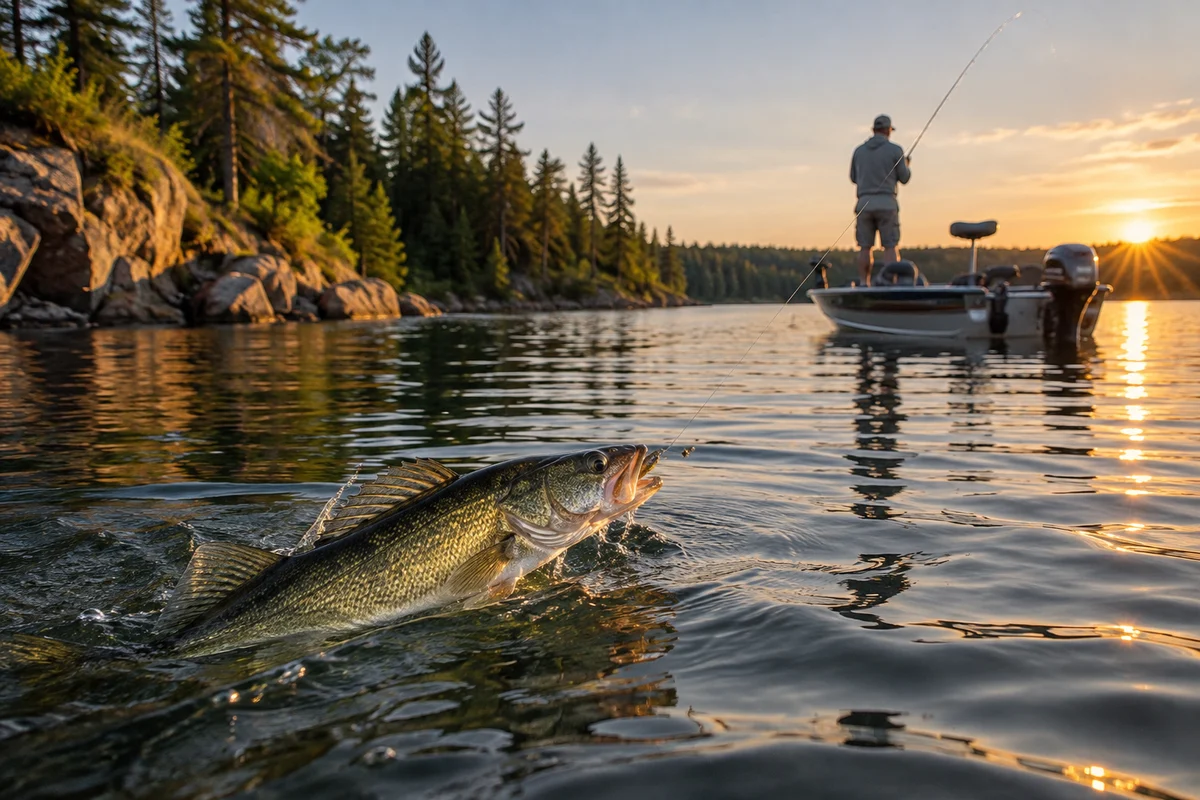
A jigging rap for walleye can be fished beneath a boat or worked on a controlled cast, but the key is not simply jigging harder. Keep the lure in the fish’s zone, let it complete its movement, and use pauses to learn whether walleyes respond to a lift, a fall or a steady presentation. This guide explains how to choose a starting depth and cadence, then make useful adjustments when the bite is subtle or absent.
What does a jigging-style lure do underwater?
A jigging-style hard bait is designed to move away from the line’s vertical path when lifted, then return as it falls. The exact action varies with the lure’s design, size, line connection and how sharply you move the rod. Think of each cycle as a short swimming motion followed by a controlled descent—not as a straight up-and-down bounce.
That distinction matters because a walleye may follow the lure without striking during the lift. A pause on the fall or after the lure settles can give a fish time to commit. Conversely, a long pause may let the lure drop below suspended fish or into weeds and snags. Watch the line and rod tip during the descent; a sudden stop, sideways movement or unexpected slack can signal contact.
Start with a modest lift and let the lure return on a semi-controlled line. Avoid snapping so forcefully that the lure shoots out of the target zone or the line goes slack. The aim is a repeatable movement that lets you notice changes. For product-specific setup or lure variations, consult the manufacturer’s information rather than assuming every model behaves identically.
Where should you fish it for walleye?
Use the lure where you can maintain contact with a defined target: a break in depth, the edge of a weed bed, a rock transition, a point, or fish seen on sonar. Walleyes may hold close to bottom, suspend above it, or shift position as light and conditions change. Treat sonar as a way to identify depth and nearby structure, not proof that every mark is a walleye.
Lower the lure to the fish or just above bottom, then work it through a narrow vertical band. If fish are suspended, do not keep dropping to bottom after every cycle. If they are near bottom, use a lift that clears the substrate without repeatedly dragging the lure through it. On unfamiliar water, test a few depths and note where bites or follows occur before changing several variables at once.
A jigging presentation is particularly useful when you can stay over a compact target and keep the line reasonably vertical. Wind, current and boat drift can pull the line at an angle; that changes the lure’s path and makes depth harder to judge. Reposition or reduce drift when possible. For a moving presentation along a contour, compare this approach with drift jigging for walleye, which is built around covering a stretch rather than holding over one spot.
What tackle and line help maintain control?
Choose a rod with enough sensitivity to detect a light pickup and enough backbone to set hooks, while keeping its length and action comfortable for repeated vertical work. A balanced spinning outfit is a common starting point. The best match depends on the specific lure, depth, cover, current and angler preference; follow the lure maker’s recommendations when they are available.
Use line that lets you feel the lure and see subtle changes without making the presentation difficult to control. Thin, low-stretch line can transmit movement clearly, but the right choice also depends on abrasion, snags and how you handle fish. A leader may be useful where rocks or other abrasive cover are present. Check knots and the last section of line regularly, especially after contact with structure.
Keep the rod tip low enough to manage slack and high enough to make a clean lift. If the line bows in wind or current, shorten the distance to the lure or reposition the boat. A lure that is technically at the right depth but connected to a large belly of line is difficult to animate consistently. The goal is dependable contact, not a particular gear label or a complicated setup.
How should you work the lift, fall and pause?
Begin with a simple cadence: lower the lure to the target depth, lift it smoothly, then follow the descent with the rod tip while keeping slight contact. Pause briefly once it returns to its starting level. Repeat several times before changing the rhythm. This gives you a baseline and makes it easier to tell whether fish react to the lift, the fall or the pause.
If fish track the lure but do not take it, make the next adjustment small. Try a shorter lift, a slower descent, or a slightly longer pause. If the fish are active and chasing, a more assertive lift may draw a response. If they appear reluctant, a restrained movement can keep the lure in view without startling them. These are experiments, not fixed rules: water clarity, depth, forage and fish behavior can all change the result.
Pay attention to how the lure feels at the end of each fall. A normal return has a familiar resistance; a bite may feel like extra weight, a tap, or no weight at all. Set the hook with a controlled sweep rather than a wild strike, and maintain tension as the fish comes up. Check the hooks for debris or damage if the action suddenly feels different.
How do season and conditions change the presentation?
In cold water, fish may be less willing to chase far, so keep the lure near their level and test a measured, restrained cadence. In warmer periods, walleyes can use a wider range of depths and locations; locate fish first rather than assuming a seasonal spot will hold them. Changes in light, wind, current and water clarity can shift both their position and their willingness to follow.
At first light, dusk or in low visibility, a walleye may move shallower or become more active, but that is not guaranteed on every lake or day. Likewise, a lure’s color is only one part of the presentation. Begin with a finish that is visible in the conditions and easy for you to track, then change it if repeated, controlled passes produce no response. Avoid switching color, depth and cadence all at once; you will not know what helped.
When fish are holding in a defined zone but do not respond to a moving hard bait, a stationary presentation can offer a useful contrast. A slip-bobber setup for walleye fishing keeps bait near a chosen depth with less continuous motion. For fish spread along a contour, a bottom-bouncer rig may suit a controlled search better. These are alternatives for different situations, not proof that one method is universally superior.
Why might walleyes follow without biting?
A follow tells you the fish noticed the lure, but it does not reveal why it declined. It may be outside the fish’s preferred depth, moving too quickly, or passing at an awkward angle. Make one deliberate change at a time: hold the depth, shorten the lift, and lengthen the pause. If the fish still follows, try the opposite cadence or move the lure slightly higher rather than repeatedly dropping it through the fish.
If there are no follows or bites, first verify the basics: Is the lure actually reaching the target? Is the line too far off vertical? Is the lure fouled? Are you working over fish or simply over promising-looking structure? Move to another depth or nearby feature after a few consistent attempts. Staying too long in a spot without evidence can turn persistence into guesswork.
Also consider whether the water calls for a different tool. A jigging rap is one option within a broader approach to walleye fishing. Keep notes on depth, location type, cadence and conditions so you can repeat a pattern when it produces, while remembering that the same pattern may not carry over unchanged to another lake or day. Check local regulations before fishing, since seasons, limits and permitted methods vary by water and jurisdiction.
Frequently asked questions
Can you cast a jigging-style lure for walleye?
Yes. A controlled cast can cover a nearby edge or flat. Let the lure reach the intended depth, then work it with short lifts and a managed fall; adjust for the lure’s design and avoid dragging it into cover.
Should a jigging rap stay on the bottom?
Not necessarily. Keep it near the fish. If walleyes are suspended, work at their level; if they are close to bottom, lift just enough to keep the lure clear and detectable.
What should I change if walleye follow but do not strike?
Change one factor at a time. Try a shorter lift, a slower fall, a pause, or a small adjustment in depth. A follow is useful feedback, but it does not identify a single cause.
Sources & further information
Consult these primary sources for current regulations, technical information and local guidance.