Wacky Rigging Soft Baits: A Simple Bass-Fishing Method
Wacky rigging soft baits gives a simple stick-style worm a distinctive fall that can tempt bass in clear water, around docks, or on pressured banks. Learn how to rig it, choose tackle, and adjust the presentation without overcomplicating it.
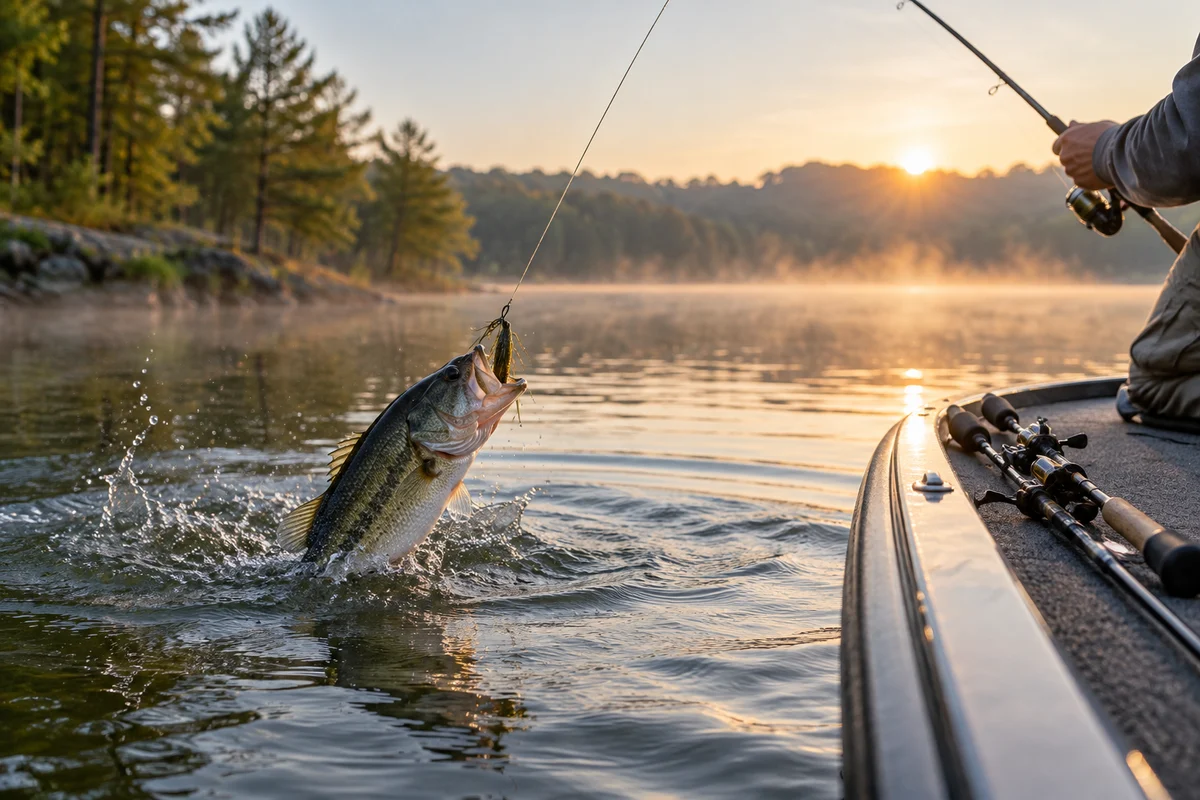
A worm can look almost motionless and still draw a strike. With wacky rigging soft baits, the hook passes through the lure’s midpoint so both ends hang freely and quiver as the bait sinks. That uncomplicated fall is useful when bass are reluctant to chase, but the method works best when you manage slack, watch the line, and match the rig to the cover rather than simply casting and waiting.
The standard setup is a soft stick-style worm, a short-shank hook, and a spinning outfit. It is easy to learn, yet small choices—where the hook sits, how fast the bait falls, and whether the line is controlled—change how it fishes. These steps offer a starting point for bass water; local regulations and conditions should guide where and how you fish.
What does a wacky rig do?
A wacky rig places a hook through the worm’s center, leaving the two ends unsupported. On the descent, water resistance makes the ends flutter independently. Many anglers fish the rig unweighted so it falls slowly, but a small weight can help when wind, depth, or current makes the bait difficult to control.
The method is especially practical around visible targets—dock edges, isolated shade, shallow vegetation, or a drop beside a bank—because you can place the bait accurately and let it sink beside the feature. It is not snag-proof. Open hooks catch weeds and wood, and a very slow fall can be inefficient when fish are spread across a large area. For a faster-moving search approach, compare the presentation with early-season bass lipless crankbaits; for a different soft-plastic profile, see fishing a 10-inch worm.
How do you rig a soft bait wacky style?
- Choose a straight, supple worm. A stick-style soft bait is a common starting point because its ends move readily. Length, density, and softness vary by maker; check the package and let the bait’s fall in the water determine whether it suits the situation.
- Find the midpoint. Fold the worm gently in half without creasing it hard, or estimate the center by eye. A centered hook helps both ends work evenly.
- Hook through the center. Pass the hook point through the bait’s body so the bend and point remain exposed. Keep the worm straight rather than bunching it around the hook.
- Add a ring if durability matters. A silicone O-ring or purpose-made bait band can hold the hook around the worm’s middle and reduce tearing. Place the hook under the band, not through the plastic. A band does not make the rig weedless, and a poorly fitted one can slide or pinch the bait.
- Test the fall. Lower the rig beside the boat or bank and observe it. If the bait spins, hangs crooked, or falls much faster than intended, check centering, hook placement, and whether the bait is weighted.
Use a hook sized to the bait and fishery, with a gap that leaves the point unobstructed. There is no universal best size: body thickness, hook style, and local rules differ. Barbless hooks can simplify release where required or preferred. Handle hooks carefully, and avoid leaving loose tackle or cut plastic at the water’s edge.
Which tackle and weight should you use?
A light spinning rod and reel make it easier to cast an unweighted worm and detect a subtle take. Choose line based on cover, water clarity, and your equipment. A light main line can cast well, while heavier line may be appropriate near vegetation or dock structure. Knots and line condition matter: inspect for abrasion after contact with wood, rock, or pilings.
| Situation | Starting choice | What to watch |
|---|---|---|
| Calm, shallow water | Unweighted bait and light spinning tackle | Slow descent; keep enough line control to notice a take |
| Wind or deeper water | Add a small nail-style or insert weight if compatible with the bait | Faster fall and better contact, but less pronounced slow-fall action |
| Sparse cover and open banks | Exposed hook through the center | Accurate placement and a clear path for the hook |
| Weeds or brush | Consider a guarded hook or another presentation | Guards reduce some snags but can change hook-up performance; no rig is snag-proof |
| Small bait or pressured fish | Scale hook and tackle to the bait and local conditions | Avoid overpowering light line or using a hook that crowds the bait |
Treat this as a field framework, not a fixed recipe. A weighted rig is not automatically better in deep water: if the fish are near the surface or the bait needs to linger, a slower fall may be more useful. Make one adjustment at a time so you can tell what changed.
How should you fish it around bass cover?
Cast beyond or alongside a target instead of landing directly on top of it. Let the bait sink on a controlled semi-slack line: enough slack for a natural fall, but not so much that you cannot see or feel movement. Watch the line where it meets the surface. A sudden sideways slide, an unexpected stop, or a twitch can signal a fish even when you feel nothing through the rod.
After the bait reaches the intended depth, try a small lift, a brief pause, and another controlled fall. Avoid constant shaking; the lure’s ends already move as it sinks. Near docks, cast parallel to the edge or let the bait fall beside a post without striking it. Along a weedline, target openings and the outside edge, then retrieve before the lure buries in vegetation. If repeated casts produce no sign of activity, change the target, depth, or pace rather than repeating the same fall indefinitely.
When a fish takes, keep the line under control and bring the rod into a steady sweep appropriate to your tackle and hook. Avoid a violent strike with light line. Follow local rules for size limits, seasons, and handling; the bass-fishing topic hub is a useful starting point for related freshwater techniques.
When is a wacky rig the wrong choice?
A wacky rig is a targeted, relatively slow presentation. It is less convenient when you need to cover a large flat quickly, punch through dense vegetation, or keep a bait moving above fish. Exposed hooks can snag, and unweighted baits may be difficult to cast in strong wind or control in current. A heavier insert can improve reach but changes the sink rate and feel.
Try a different lure when fish are visibly chasing fast-moving prey, when the bait cannot reach the strike zone, or when cover makes an exposed point impractical. A spinnerbait selection guide can help frame a moving-bait alternative for suitable conditions. The point is not to force one rig into every situation, but to choose the fall or movement that matches where fish are holding.
Quick pre-cast checklist
- Is the worm straight, with the hook centered and its point clear?
- Does the bait fall at a useful speed beside the boat or bank?
- Can you see or feel the line well enough to detect an unusual stop?
- Is the hook appropriate for the cover and local regulations?
- Do you have a plan for retrieving snags and disposing of damaged soft plastic responsibly?
Soft-plastic formulations and hook designs differ, and no setup guarantees a catch. Use the wacky rig as a controlled way to present a subtle bait, then let the fall, line movement, and response from the water inform the next adjustment.
Frequently asked questions
Where should the hook go on a wacky-rigged worm?
Place it through the worm’s midpoint so both ends hang freely. A properly centered hook helps the bait fall evenly; a ring or bait band can hold the hook without piercing the plastic.
Should a wacky rig be weighted?
Start unweighted when you want a slow fall and can control the line. Add a small compatible insert weight if wind, depth, or current makes the bait hard to cast or keep in the strike zone.
Can you fish a wacky rig around weeds?
Yes, around openings and edges, but an exposed hook can snag. A guarded hook may reduce some hang-ups, though it can affect hooking and does not make the rig snag-proof.
Sources & further information
Consult these primary sources for current regulations, technical information and local guidance.