How to Choose Best Spinnerbait Bass Fishing for Any Conditions
Choose a spinnerbait by reading the water first: depth, visibility, cover and bass activity point to the right blade style, weight and retrieve. This practical guide helps narrow the options without treating any color or setup as universal.
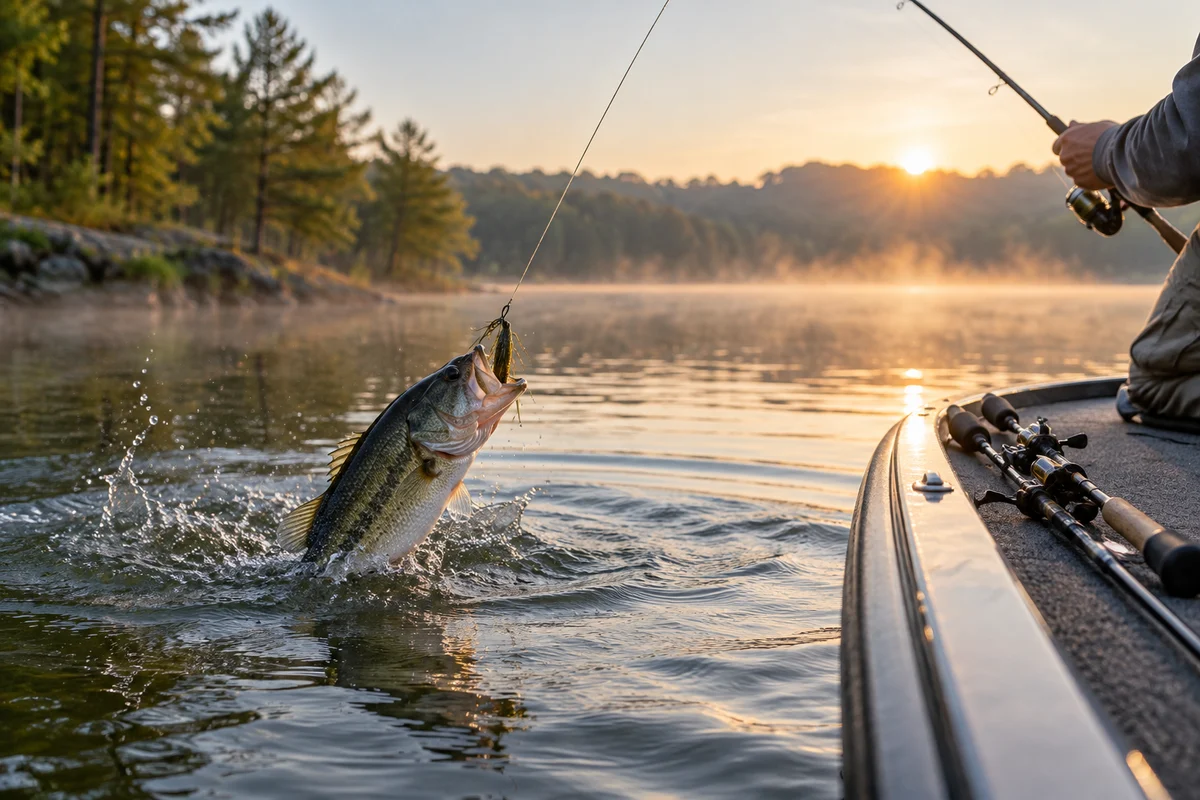
If you’re asking “how to choose best spinnerbait bass” anglers can use across changing conditions, start with the situation—not a favorite color or a complicated chart. A spinnerbait is a moving lure with one or more rotating blades, a weighted head, a wire frame, a hook and a skirt. Its flash and vibration can help bass locate it, while its profile lets you cover water efficiently. The useful choice depends on where fish are holding, how clearly they can see, and what the lure must pass through. Use this framework on the water, then adjust based on what the fish show you.
1. Where are bass holding, and how deep must the lure run?
Estimate the depth and cover before selecting a bait. Bass near the surface, along a shallow bank, around submerged vegetation, or beside a drop-off call for different presentations. Spinnerbaits can be retrieved at varied depths, but a bait that is too heavy or too light for the intended retrieve makes control harder.
For shallow water, a lighter option can be easier to keep above weeds and branches during a steady retrieve. For deeper edges or a faster retrieve, added weight can help the lure stay down and maintain contact with the chosen depth. These are starting points, not fixed rules: blade size, blade shape, line, current, and retrieve speed all affect how a spinnerbait rises or sinks.
Make a short test cast beside visible cover. Watch how quickly the lure drops and how it tracks when reeled slowly, then choose a retrieve that keeps it near the target without dragging through snags. If bass are not responding to a moving bait, the bass-fishing hub offers related approaches for changing the presentation.
2. Which blade style fits the water and retrieve?
Blade shape changes the balance of flash, vibration, and resistance. Willowleaf blades are long and narrow, while Colorado blades are rounder; Indiana styles fall between those general shapes. In broad terms, a narrow blade tends to produce less resistance and a more flashing presentation, while a broad blade pushes more water and can be easier to feel through the rod. Tandem arrangements combine blade shapes, giving a mix of those signals.
Use that distinction as a decision aid rather than a guarantee about what bass prefer. In clear water or when fish seem keyed to visual flashes, try a more compact, flashing blade arrangement. In stained water, low light, or a slow presentation near cover, a blade that creates stronger vibration may help fish detect the lure. Wind, chop, and the amount of light can matter as much as water color.
If you feel the blades stop turning or the lure suddenly loses its usual pulse, check for weeds, line, or damage around the blades and swivel. A spinnerbait that is not running properly may look fine at a glance but will not offer the same presentation.
3. How should water clarity guide color?
Treat color as a way to make the lure fit its surroundings, not a secret formula. In relatively clear water, natural-looking skirt colors and a restrained blade finish can keep the presentation from appearing overly conspicuous. In stained water or dim conditions, stronger contrast or brighter components can make the bait easier to distinguish. Cloud cover, sun angle, water color, and nearby forage all influence how a color appears below the surface.
A practical approach is to begin with a color that makes sense for the local forage and visibility, then change one feature if you see follows but no commitment. For example, keep the blade style and retrieve steady while switching to a more contrasting skirt. If you change several variables at once, it becomes difficult to learn which adjustment mattered.
Do not assume that a particular shade is universally best for a season or lake. Use what you can observe: clarity at the bank, available light, and the color of the surrounding habitat. Let strikes, follows, and missed bites refine the choice rather than repeatedly changing colors without a reason.
4. What weight and profile make sense around cover?
Match the lure’s weight to the depth and pace you need, then consider how its profile will move through cover. A compact spinnerbait can be useful when bass are feeding on smaller prey or when a subtle profile is appropriate. A larger frame and skirt create more presence. That may suit a search presentation in open water, but extra bulk is not automatically an advantage in tight cover.
The wire frame helps separate the hook from the line of approach and can deflect some contact with cover, but no spinnerbait is snag-proof. Cast beyond or alongside an opening and bring the lure through likely fish-holding water. Keep the rod angle and speed consistent enough to steer around stems or branches. When fishing over vegetation, retrieve just fast enough to keep the blades turning and the lure above the tops; adjust if it repeatedly fouls.
For a different way to cover water at depth, compare the approach with a deep-diving crankbait presentation. A crankbait and spinnerbait have different actions and snag behavior, but thinking about running depth and contact with cover helps clarify which tool better fits a location.
5. How fast should you retrieve it?
Retrieve speed is part of lure selection. A steady, moderate pace is a useful baseline because it helps the blades rotate consistently and makes it easier to notice a strike or change in resistance. Slow down when bass appear reluctant or when you want the bait to travel close to cover; speed up when covering open water or trying to keep the lure above weeds.
The key is control. A retrieve that is so fast the bait rolls onto its side is usually a poor presentation, while one so slow that the blades fail to turn loses a defining feature. Watch the lure beside the boat or bank before making a long cast. If it tracks straight and the blades work at the intended pace, repeat that motion where you expect bass to be.
Vary the retrieve deliberately. A brief change in speed as the bait passes a weed edge or submerged object can make the lure behave differently, but repeated jerks are not required. If fish follow without striking, try a modest speed or depth adjustment before replacing the entire setup.
6. What should you check before casting?
A short equipment check prevents avoidable problems and gives the bait a fair test:
- Blades: Confirm they swing freely and rotate during a short retrieve. Look for bent blades or debris at the swivel.
- Frame and skirt: Check that the wire is not badly bent and that the skirt is secure and untangled.
- Hook: Make sure it is clean and sharp enough to catch; use appropriate care when handling it.
- Line and knot: Inspect for abrasion, especially after fishing around wood, rocks, or vegetation, and retie if damaged.
- Running depth: Test beside shore or the boat, then make a controlled cast to the target.
If the lure rolls, runs crooked, or fails to pulse, correct the cause or choose another bait. Do not compensate for a mechanical problem by simply retrieving faster. To contrast a spinnerbait’s moving flash with a slower option, see this guide to wacky-rigging soft baits, which can be useful when bass will not chase a search bait.
7. How do you make a reliable first choice?
Use a simple sequence: identify the likely depth, judge visibility, note the cover, then choose a blade arrangement and weight that let you keep the lure in that zone. Start with a manageable retrieve and observe whether bass follow, strike, or ignore it. Make one change at a time—speed, depth, blade signal, or color—so each cast teaches you something.
A spinnerbait is especially useful as a search tool because it can be worked along banks, through open lanes in vegetation, and beside submerged cover. It is not the only answer. If the fish are inactive, holding very deep, or responding to a slower offering, change tactics rather than forcing a spinnerbait into every situation. The best selection is the one that maintains a controlled, believable presentation where bass are likely to be.
Keep local fishing regulations in mind, including any rules that apply to the waterbody or species. With a few deliberate choices and attention to depth, visibility, and retrieve, you can make spinnerbait selection repeatable instead of guessing at a supposedly perfect lure.
Frequently asked questions
Are willowleaf or Colorado blades better for bass?
Neither is always better. Willowleaf blades generally provide a narrower, flash-oriented profile with less resistance, while Colorado blades create more resistance and vibration. Choose based on visibility, retrieve speed, and how the lure needs to move.
What spinnerbait weight should I start with?
Choose a weight that lets you control the lure at the target depth and retrieve speed. Lighter options can be easier to keep shallow; heavier ones can help maintain depth, but blade size, line, and current also affect the run.
Can you fish a spinnerbait around weeds and wood?
Yes, it can be worked around many kinds of cover, but it is not snag-proof. Retrieve it through openings and alongside cover, keep it above vegetation when needed, and check the blades and frame if it stops running properly.
Sources & further information
Consult these primary sources for current regulations, technical information and local guidance.