Choosing Early Season Bass Lipless Crankbaits
A practical guide to selecting and fishing lipless crankbaits in cool spring water, with advice on cadence, cover, tackle and when to switch presentations.
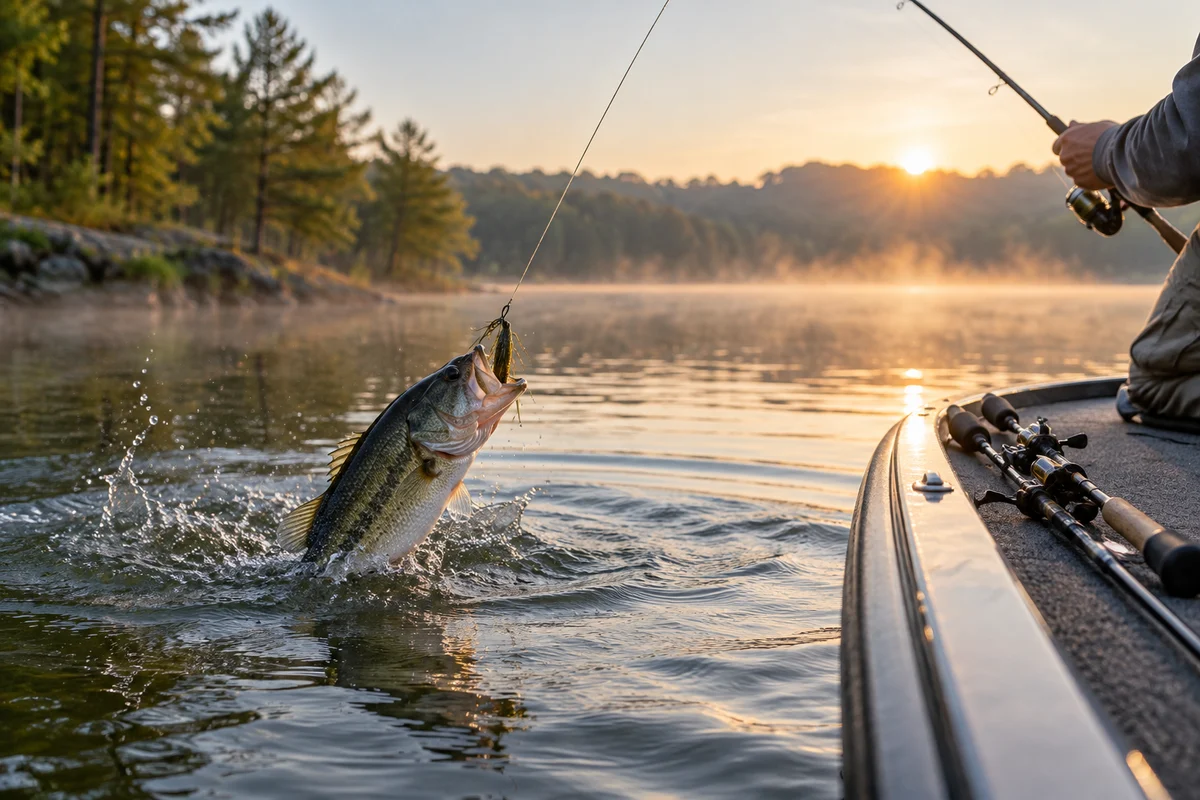
Early season bass lipless crankbaits can cover shallow flats and locate active fish quickly, but a productive choice depends on more than color. Water clarity, vegetation, wind, depth and the lure’s fall all matter. Start with a manageable size and a controlled retrieve, then adjust one variable at a time so you can tell what the fish respond to.
Why lipless crankbaits work in cool water
A lipless crankbait is a compact, sinking hard bait with line ties on its back. As it moves, its body vibrates; many models also make sound, though the pitch and intensity vary. Because the lure sinks, an angler can work it across different depths without changing to a deep-diving bill design.
That versatility is useful in early spring, when bass may be scattered between wintering areas and spawning shallows. A retrieve over a flat can reveal where fish are holding, while a controlled lift-and-fall can reach fish near the bottom. It is not a guaranteed cold-water solution: lethargic fish may prefer a slower, less conspicuous presentation, and some lakes have little vegetation or open shallow water where another bait is easier to fish.
For a different spring approach around rock and shallow cover, compare the ideas in spring bass with Wiggle Warts. The best choice depends on the structure in front of you, not a seasonal rule.
How should you choose size and weight?
Choose a size that you can cast accurately and keep in the strike zone. A smaller, lighter bait is easier to keep shallow and may suit calm, clear water or cautious fish. A heavier model casts farther and reaches deeper water more quickly, which can help on windy banks or when fish are holding beyond the shallow edge.
Do not assume that two lures of the same length sink at the same rate. Body shape, internal weights and hooks affect balance and fall. Read the manufacturer’s description, then test the bait beside the boat or in a safe, visible area. Note how quickly it descends and whether it tracks straight on a steady retrieve. If it rolls or veers consistently, inspect for a fouled hook or line; do not spend the day compensating for a bait that will not run properly.
A useful starting point is a medium-sized bait that can be retrieved above the bottom over a flat. If the lure repeatedly catches vegetation or rocks, go shallower through speed or rod position, or change to a lighter option. If it never reaches the depth where fish appear to be holding, try a heavier model or a slower controlled fall.
Which color and sound fit the conditions?
In clear water, natural-looking colors that resemble local forage can be a sensible starting point. In stained water, a brighter or more contrasting finish may be easier for fish to detect. Those are starting hypotheses, not fixed rules. Light, sky conditions, water color and the forage present can all change what looks visible underwater.
Sound is another variable, but louder is not automatically better. Some lipless baits have pronounced rattles; others are quieter. In pressured or unusually clear water, try a less aggressive sound profile if fish follow without striking. In wind or stained water, a stronger vibration or sound may help the bait stand out. Since sound and color often change together across models, switch only one at a time when possible.
Keep a small selection rather than carrying every finish. Two contrasting colors and a second sound or size profile are often enough to make a clear comparison. Record the conditions and where a bite happened; a brief note is more useful than changing colors after every cast.
How do you retrieve a lipless bait over a flat?
Begin with a steady retrieve that keeps the bait just above submerged grass or other cover. You should feel a consistent vibration through the rod. If the lure ticks vegetation, briefly pause or give the rod a short upward sweep to free it, then resume. Avoid dragging the bait through dense weeds continuously, where it can collect debris and lose its action.
A stop-and-go retrieve adds brief pauses. Because the lure sinks during a pause, use this method where there is room below it and watch the line for a twitch or unexpected slack. Over a clean flat, a short lift followed by a controlled fall can imitate a baitfish changing direction. Keep the movement compact; a large, fast rip may pull the lure out of the zone or bury it in cover.
Cold fronts and cold water can call for slower presentations, but slowing down should not mean losing control of the lure. Count a consistent interval after the cast, make a measured retrieve, and adjust based on depth and cover. If bites come during the fall, focus on that phase. If they occur as the lure clears grass, repeat that path.
What tackle and cover deserve attention?
Use tackle that lets you cast the bait accurately and manage its hooks. A moderate-action rod can help keep treble hooks pinned, while line choice affects both feel and running depth. Thicker line generally resists abrasion better but can alter a lure’s action and depth; lighter line can improve casting and feel but demands attention around rocks, wood and vegetation. Match the setup to the cover and the lure maker’s guidance rather than treating one combination as universal.
Check hooks regularly. Lipless crankbaits often carry exposed treble hooks, which can snag vegetation and present a handling hazard. Use pliers to remove weeds and keep fingers clear of hook points. Replace damaged or badly dulled hooks with compatible components, keeping the bait balanced and within the manufacturer’s design. Handle bass carefully, wet hands before contact, support the fish, and release it promptly when regulations and conditions call for release.
Wind-blown banks can gather forage and make a moving bait easier to fish, but wind also reduces casting control. Start on a protected edge if you cannot place casts safely. Avoid casting toward people, boats or overhead lines, and follow local rules for access and seasonal closures.
When should you switch to another presentation?
If several controlled passes produce no contact, do not keep repeating the same retrieve simply because the bait is associated with spring. Fish may be deeper, inactive, or positioned around isolated cover that a fast search bait passes too quickly. Try a slower presentation near the bottom or around a specific piece of cover. For a contrasting moving bait, see how to choose a bass spinnerbait; for a slower option, fishing a 10-inch worm offers a different pace and profile.
Pay attention to evidence: follows, short strikes, hooked vegetation, and the depth at which fish appear are clues. If bass follow but do not commit, change speed, pause length or sound before abandoning the area. If the bait repeatedly snags, alter its path or switch to a presentation suited to that cover. For more freshwater bass coverage, explore the guides on this topic hub.
A simple plan for the first outing
Choose a flat near a drop-off or another transition, subject to local access and seasonal rules. Begin with a steady retrieve and make casts that cover distinct lanes rather than scattering them randomly. If the water is clear, try a natural finish; if it is stained, compare a stronger contrast. Once you locate a depth or retrieve that produces contact, repeat it before changing several things.
Early season fishing rewards observation more than a supposedly perfect lure. A lipless crankbait is a useful search tool when its depth and cadence match the water. Keep it above snags, handle hooks carefully, and switch approaches when the conditions call for something slower or more precise.
Frequently asked questions
Are lipless crankbaits only for warm water?
No. They can be fished in cool water by adjusting retrieve speed, depth and pauses. Bass activity varies with local conditions, so a slower presentation may outperform a fast retrieve on a given day.
Should I use rattling or quiet lipless crankbaits in spring?
Neither is universally best. Consider water clarity, wind and fishing pressure, then compare sound profiles while keeping other variables similar. The lure’s action and depth matter as much as its rattle.
How do I keep a lipless crankbait out of grass?
Retrieve it above the vegetation by changing speed, rod position or lure weight. If it catches grass, pause and free it with a controlled movement rather than continuing to pull weeds through the water.
Sources & further information
Consult these primary sources for current regulations, technical information and local guidance.