6XD Crankbait Depth: How to Reach the Right Bass Zone
A crankbait’s advertised depth is a starting point, not a promise. Learn how line, retrieve, cast angle, and bottom contact affect the 6XD’s running range—and how to choose a safer, more productive path through deep structure.
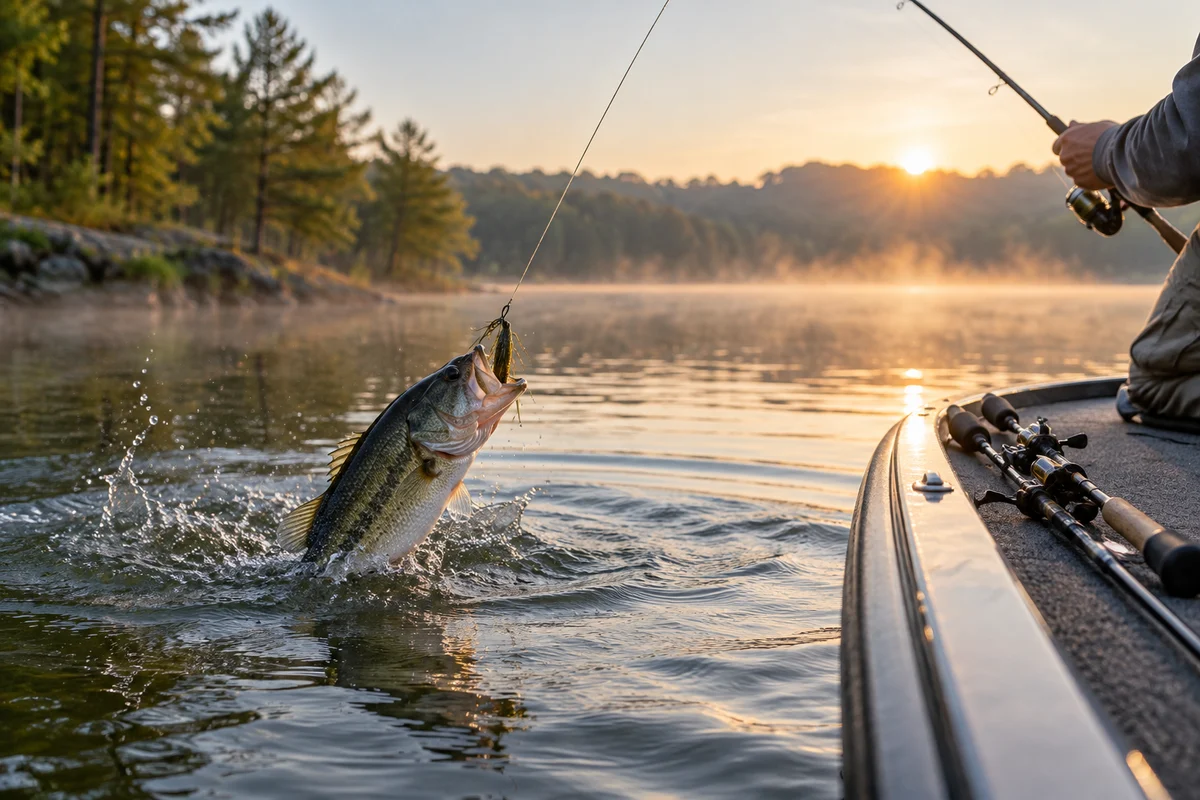
The 6xd crankbait depth question matters because a lure that runs above a fish may go unnoticed, while one driven continually into snags can cost time and tackle. The Strike King 6XD is a deep-diving hard bait intended for bass fishing, but its actual track through the water depends on the entire setup: line, rod, casting distance, retrieve, and the lure’s condition. Treat a stated depth as a reference point, then use the water and the bait’s behavior to make careful adjustments.
This is a practical guide to controlling that presentation—not a guarantee that a particular cast will reach a precise depth. Conditions vary, and manufacturer specifications or product details can change. Consult Strike King’s current product information for model-specific figures and instructions.
What determines 6XD crankbait depth?
A diving crankbait descends as water pressure on its bill pulls it down during a steady retrieve. The longer it travels under tension, the more time it has to approach its running range. It does not instantly reach maximum depth after hitting the water, and it may rise when the retrieve slows or pauses.
Several variables shape the result:
- Line diameter and material: Thinner line generally creates less resistance in the water and can let a diving bait track deeper. Heavier or more buoyant line can limit its dive. The difference depends on the line and the rest of the setup; there is no universal adjustment that guarantees a specific number of feet.
- Casting distance: A longer cast gives the lure more line travel in which to dive and remain down. A short pitch may never reach the same running range, even with the same bait and retrieve.
- Retrieve speed: A consistent, moderate retrieve helps the bait reach and hold a track. A faster turn can make it dive more forcefully, but also changes its action and the amount of time it spends near a target. Test a controlled pace before speeding up.
- Rod angle: Pointing the rod tip toward the water and along the line’s direction can help keep more line low and reduce the upward pull of a high rod position. Raising the tip often brings the lure toward the surface sooner.
- Lure condition and tuning: A damaged bill, fouled hooks, or a bait that pulls strongly to one side can change how it runs. Check for weeds and damage, and follow the manufacturer’s guidance for any adjustment.
The practical takeaway is to change one variable at a time. If you change line, rod angle, retrieve speed, and casting distance together, it becomes difficult to tell which adjustment helped.
How can you estimate its running range on the water?
Start with a known stretch of water or a depth contour you can identify on a map or sonar. Make a long cast over open water, keep the rod low, and retrieve steadily. Note where the bait begins to make consistent contact with bottom, if the bottom is appropriate for that test. Contact is a useful clue, not an exact depth measurement: a sloping bottom, waves, boat movement, and changing line angle all affect it.
A simple field process:
- Choose a low-risk test area. Use open water or a clean, gently sloping bottom rather than casting straight into brush, timber, or a rock pile.
- Make a repeatable cast. Keep the approximate distance and direction consistent across a few casts.
- Hold the rod low and retrieve evenly. Avoid changing cadence until you have a baseline.
- Record the signal. Note whether the lure runs freely, ticks bottom intermittently, or digs continuously. Also note approximate line type, rod position, and conditions.
- Adjust one factor. Try a longer cast, a lower rod tip, or a slightly different pace, then compare.
This approach creates a useful personal reference for that setup. It will not establish a laboratory depth rating, and it should not be transferred uncritically to different line, tackle, or water conditions.
Where does a deep-diving crankbait fit in a bass plan?
Use the 6XD when you want a moving lure to cover water around deeper structure or along a contour where bass may be feeding. Points, channel edges, and hard-bottom transitions are possible places to investigate, but fish location is seasonal and local; a contour alone does not prove bass are present. Use local observations and legal access information, and avoid treating any lure as a substitute for finding suitable habitat.
Bottom contact can help you interpret what the bait is passing over. A light tick across a clean hard bottom may provide feedback, while a lure that plows continuously can lose its action and become more prone to snagging. If the bait is repeatedly burying into cover, change the casting angle or move to a cleaner lane rather than forcing it through. For another style of moving presentation in changing conditions, compare the approach in this guide to early-season bass lipless crankbaits. For a different bottom-oriented option, see fishing a 10-inch worm.
The broader bass fishing hub is a place to explore related freshwater bass techniques. Match the method to the depth, cover, and conditions you actually encounter rather than assuming a deep diver is automatically the best choice.
What setup changes are worth testing?
| Field observation | First adjustment to test | What to watch for |
|---|---|---|
| Lure tracks above the target zone | Make a longer cast or lower the rod tip | Does it stay down longer without constant bottom digging? |
| Lure digs continuously | Raise the rod slightly, slow down, or change the line path | Does the bait resume a freer, steady wobble? |
| Bait pulls to one side | Inspect for fouling or damage; consult maker guidance | Does it track straight after the issue is addressed? |
| Frequent snags on a contour | Change angle or move to a cleaner lane | Can you cover the edge without dragging through cover? |
| Results change between outings | Recheck line, cast length, and water level | Which variable differs from the earlier setup? |
This is a decision aid, not a promise of a particular running depth. Keep notes on the same few variables and use depth maps or sonar as additional context, not as proof of where an individual fish will be.
How do you reduce snags and keep the presentation useful?
Before fishing, inspect the bill, split rings, and hooks for visible damage or debris. Make sure the bait is not fouled with vegetation. If it begins to roll, veer, or behave differently, stop and inspect it rather than continuing to cast blindly. Keep spare tackle organized and handle hooks carefully, especially when removing a lure from cover.
A crankbait can be an inefficient choice in dense wood or thick vegetation. Use a casting lane that gives the lure room to work, and change angle when the bottom or cover tells you the bait is being forced into trouble. A shallow-running presentation or a slower, more controlled lure may be a better fit. The right decision is often to change the route, not to push harder.
Local fishing rules also matter. Check current state or provincial regulations for seasons, access, and any applicable gear restrictions. The U.S. Fish and Wildlife Service provides information about conservation and aquatic resources; state wildlife agencies are the practical source for local regulations.
What should you remember about 6XD depth?
Think of advertised depth as a model reference, not a guaranteed measurement for every cast. A long cast, suitable line, low rod position, and steady retrieve can help a deep-diving bait approach its working range; water conditions, tackle, and lure condition still matter. Use repeatable tests, observe bottom contact carefully, and choose a cleaner path when cover makes the presentation unsafe or ineffective.
For current model specifications, check the manufacturer’s information rather than relying on assumptions based on a product name or an old listing. On the water, let the actual behavior of the lure and the conditions in front of you guide the next adjustment.
Frequently asked questions
Does the Strike King 6XD always reach its advertised depth?
No. Published depth is a reference under particular conditions. Line, cast length, retrieve, rod angle, and water conditions can change how deep it runs.
What is the first adjustment if a 6XD is not getting down?
Try a longer cast while keeping the rod tip low and the retrieve steady. Change one variable at a time so you can tell what affects the lure’s track.
How can I tell whether a deep-diving crankbait is running too deep for the cover?
Repeatedly digging into bottom or snagging suggests the path may be too low or obstructed. Change the angle or move to a cleaner lane instead of forcing it through cover.
Sources & further information
Consult these primary sources for current regulations, technical information and local guidance.