Snag-Proof Frog Lures: How Weedless Design Works
A snag proof frog can reach bass in vegetation that stops many open-hook lures. Learn the design trade-offs, how to fish it thoughtfully, and how to judge conditions before making a cast.
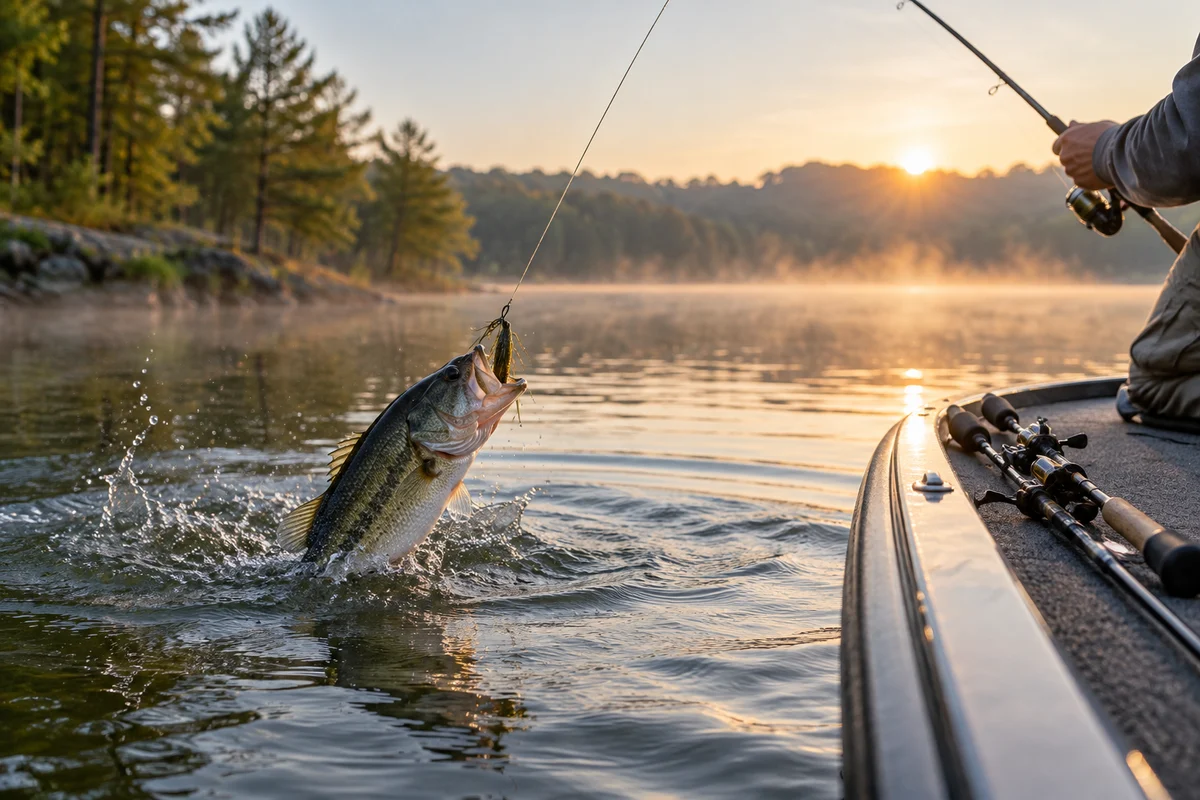
A snag proof frog is built to travel across or through cover where exposed hooks would catch, making it a useful option for bass around lily pads, matted vegetation, and shoreline weeds. The phrase describes a design goal, not a guarantee: stems, branches, and line can still foul a lure, and a fish may strike without getting hooked. Understanding how the body, hook placement, and retrieve work together helps you decide when a frog belongs in the rotation—and when a different presentation makes more sense.
Despite the name, there is no single inventor or universally agreed “first” modern hollow-bodied frog that explains every frog lure on the market. Weedless surface lures developed over time from the broader effort to fish over cover, while contemporary models differ in shape, materials, hook configuration, and action. Treat brand histories as product-specific claims, and consult a maker’s own history or documentation when exact dates and origins matter.
What makes a frog lure snag resistant?
Most soft-bodied frog lures place one or two hooks close against the body, with the points oriented upward or tucked along its sides. When the lure passes across leaves or soft vegetation, the body can shield the points from many obstructions. On a strike, pressure compresses the body and can expose the hook points. That balance—shielding the hooks during travel while allowing them to engage on a bite—is the central design challenge.
Hollow-bodied frogs typically have a cavity that helps the body collapse. The shape and material affect how easily it compresses, how it floats, and how it moves. A soft body may fold readily but can take on water or deform; a firmer body can retain its shape but may require a more deliberate hook-setting response. These are design trade-offs, not a simple ranking. Check product details and instructions for the particular lure rather than assuming all models behave alike.
A frog’s legs or skirt provide movement and a visible profile. Some designs are intended to walk from side to side with short rod movements; others produce a more direct, splashing or buzzing action. Hook gaps, body width, and the way the legs are trimmed can affect both action and hookup potential. Altering a lure may change its balance or invalidate manufacturer guidance, so begin with its intended configuration and make adjustments only when you understand the likely trade-offs.
When is a snag proof frog the right choice?
Use a frog when the surface itself is part of the route: a gap between pad fields, a line of grass, a shaded pocket under overhanging plants, or a stretch of vegetation with openings worth probing. The lure is especially practical when you need to keep the hooks protected while moving over cover. It is less compelling over bare water if bass are feeding below the surface or if another lure can present the target more naturally.
Read the cover before casting. Broad, continuous mats offer a different problem from scattered pads or thin reeds. Look for lanes where the lure can be retrieved without dragging across woody snags, and note where a fish could follow or intercept it. Leave room for a controlled retrieve and avoid casting into vegetation so dense that you cannot move a hooked fish safely or comply with local access rules.
| Conditions | Frog approach | Consider switching when |
|---|---|---|
| Open pockets among pads | Work the lure across openings, pausing briefly at edges | Fish are clearly feeding beneath the surface |
| Broad floating vegetation | Keep the lure moving steadily over the mat and toward a visible opening | The cover is too dense to retrieve or handle a fish responsibly |
| Sparse weeds near open water | Try short, deliberate movements and observe the lure’s action | Exposed-hook lures can travel cleanly and match the activity better |
| Woody or snag-filled cover | Avoid forcing a frog through branches; choose a route with less risk | The lure repeatedly catches or cannot reach the intended water |
This is a field decision aid, not a promise about fish behavior. Water clarity, season, forage, local regulations, and fishing pressure all matter. The bass-fishing hub at ODU Magazine’s freshwater bass-fishing section offers related context for choosing presentations around changing conditions.
How should you work a frog over cover?
Start by checking the hook points, body, legs, and line connection. A bent hook, torn body, or damaged connection can compromise performance. Make a short test cast where you can see the lure. Confirm that it floats as expected, moves in the intended way, and does not collect vegetation immediately. If it rolls, sinks, or spins unexpectedly, inspect for water inside a hollow body, tangled legs, or a line connection that is affecting its balance.
Cast beyond the likely target when there is a clear, low-risk route, then bring the lure into the opening or along the edge. Short rod-tip movements can create a walking action; a steady retrieve may be more suitable when the lure is designed to travel over a mat. Keep the line under control without jerking the lure out of the strike zone. Let the lure’s own design guide the cadence, and change one variable at a time so you can tell whether a different pause, speed, or route improves the presentation.
A surface strike can be startling. Resist reacting to the splash alone: maintain contact and allow the fish to take the lure before applying a firm, controlled hook-setting motion. If the lure comes back without a fish, inspect it for a compressed body, shifted legs, or vegetation caught around the hooks. Repeated misses can reflect timing, hook exposure, fish size, or the angle of the strike; they do not automatically mean the lure is defective. Keep handling safe, use appropriate tackle for the cover, and avoid hauling a fish through vegetation in a way that risks injury.
What tackle and maintenance matter?
Frog fishing often calls for gear that can manage a fish near vegetation, but there is no universally correct rod, reel, line, or drag setting. Match tackle to the lure maker’s guidance, the fishery, your experience, and local rules. A setup that is too light for heavy cover can make control difficult; equipment that is unnecessarily heavy can reduce casting comfort and precision. The useful test is whether you can cast accurately, keep the lure moving as intended, and handle a fish without unsafe or excessive force.
After fishing, rinse off grit and plant material, dry the lure, and inspect the body and hooks. Hollow designs may retain water if damaged or if water enters through an opening, so check how the manufacturer recommends draining and storing that model. Store hooks so they cannot snag fingers or other gear. Replace or retire a lure with a badly damaged body or compromised hook rather than relying on a repair whose durability you cannot verify.
If a frog is not producing, compare it with other surface and subsurface options rather than repeatedly changing the same lure. A floating buzz bait can offer a moving surface presentation over cleaner lanes, while a Booyah ToadRunner overview provides another example of a soft-bodied topwater concept. These are different designs, not interchangeable guarantees; evaluate each according to its intended action and the cover in front of you.
How should you evaluate a brand’s “first” claim?
“First” can refer to several things: an early weedless surface lure, a hollow soft body, a particular hook arrangement, or a named product line. A company may use the term for one category while anglers use it more broadly. To assess a historical claim, look for dated catalogs, patents, product packaging, or contemporaneous trade material, and distinguish those records from later marketing summaries. Without reliable documentation, it is more accurate to describe a lure as an influential or well-known design than to declare it the first.
The same care applies when comparing current products. Design features are not proof of independent testing or a measured advantage. Public manufacturer information can explain intended use and construction, but real performance varies with cover, retrieve, tackle, and angler technique. For exact construction details or care instructions, consult the maker’s current product information or original manual; specifications and availability can change.
A quick field checklist
- Choose a route through cover that the lure can cross without repeated snagging.
- Inspect the body, hook points, legs, and line connection before casting.
- Test the action close by, then use a retrieve suited to the lure’s design.
- Give a fish time to take the lure; respond with controlled pressure rather than a reflexive splash reaction.
- Change presentation when conditions or cover call for something else.
- Follow local fishing rules, access restrictions, and responsible fish-handling practices.
A snag proof frog is most useful when its hook-shielding design solves a real problem: reaching fish over surface cover. Its limits are just as important. It cannot pass every obstruction, guarantee a hookup, or establish a product’s place in history by name alone. Match the lure to a fishable route, verify its behavior, and let observed conditions—not slogans—guide the next cast.
Frequently asked questions
Is a snag proof frog completely weedless?
No. Its hook placement helps it pass many kinds of soft vegetation, but stems, branches, line, or dense mats can still foul it.
How do you retrieve a hollow-bodied frog?
Use the action the model is designed for: short rod-tip movements for a walking style or a steady retrieve for designs meant to travel over cover. Test its action first.
Did one brand invent the first hollow-bodied frog?
Claims depend on what counts as a frog or hollow-bodied design. Check dated primary records such as catalogs or patents before treating a brand’s “first” claim as established history.
Sources & further information
Consult these primary sources for current regulations, technical information and local guidance.