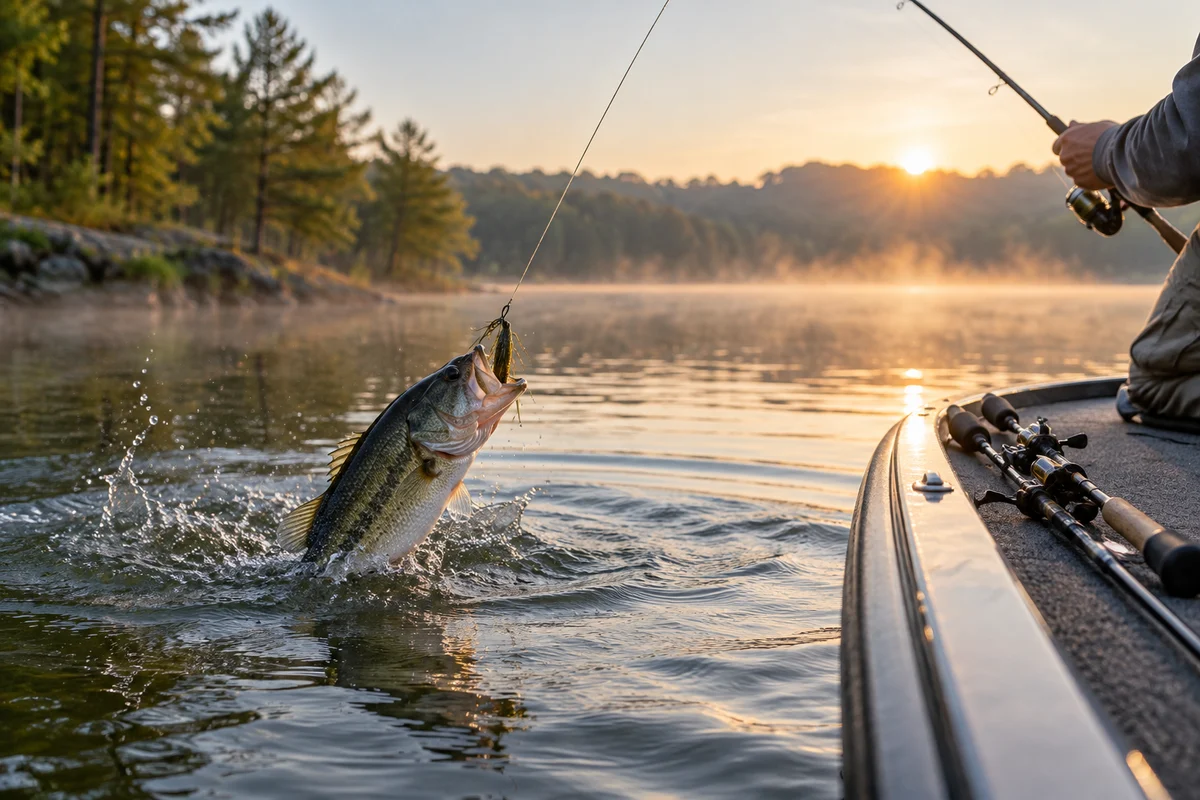
Floating Buzz Bait Review: How to Choose and Fish One
A floating buzz bait can draw bass to the surface, but its performance depends on more than flotation. Learn what to assess and how to fish it around cover.
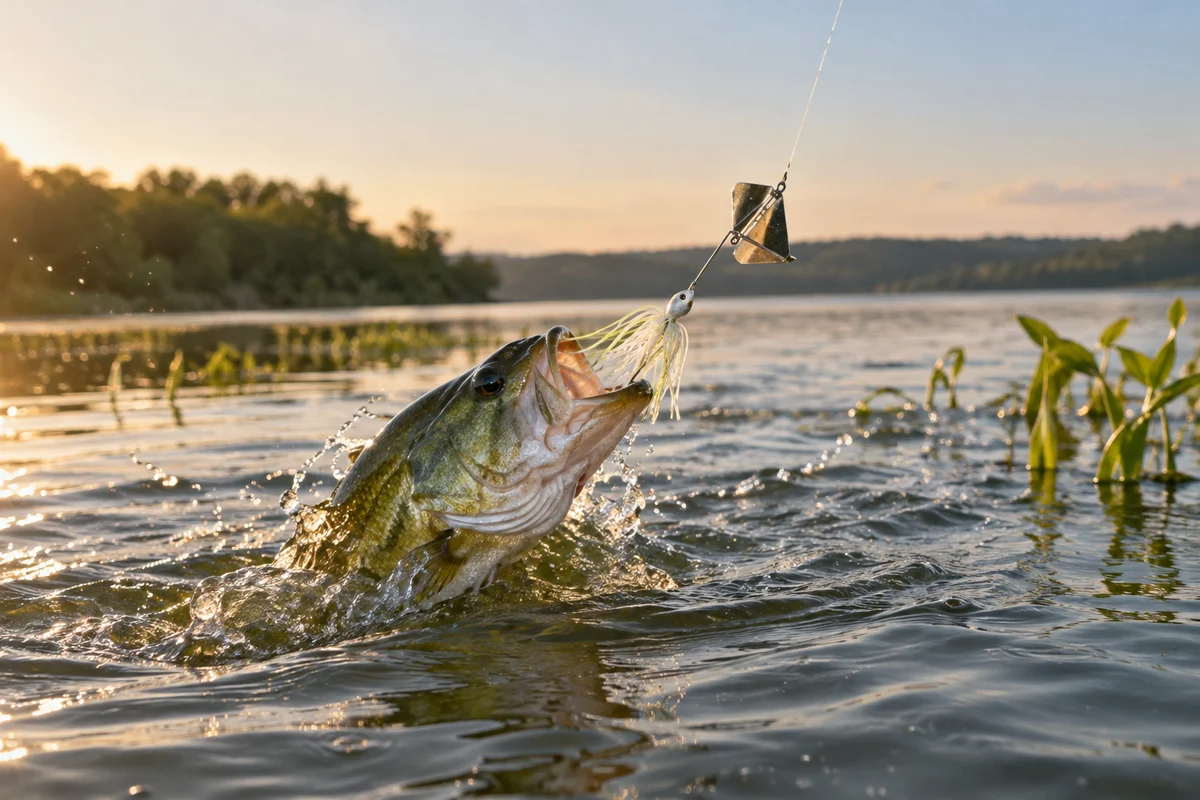
A floating buzz bait review is most useful when it explains what the lure does on the water—not just how it looks in a package. A floating model is designed to stay at or near the surface, where a rotating blade creates commotion as you retrieve. That makes it a tool for covering water and provoking reaction strikes, especially around shallow cover. It is not automatically the best choice for every topwater situation: wind, vegetation, fish activity, and the lure’s ability to start and track cleanly all matter.
What does “floating” mean in a buzz bait?
Buzz baits are typically retrieved continuously. Their blade or blades turn against the water, helping the lure rise and travel at the surface. “Floating” can describe a lure that rests buoyantly when paused, but the practical question is how it behaves during the first part of the retrieve and after you stop. Product descriptions vary, so confirm the manufacturer’s definition rather than assuming every model floats in the same way.
A floating design may be useful when you want to pause near a target, restart after clearing a branch, or keep the lure from sinking during a brief interruption. But many buzz baits are most effective while moving. If the blade does not engage promptly, or the lure rolls onto its side, flotation alone will not solve the problem.
What should a review assess?
Consider these points before choosing a model:
- Startup: Does the blade begin turning with a controlled, short retrieve, or does it take a long pull to engage?
- Surface tracking: Does the lure run upright and predictably at a moderate pace?
- Retrieve range: Can you slow it enough to keep it near a target while maintaining blade action?
- Casting control: Is its weight and shape manageable with your rod and line, especially when placing it beside cover?
- Hardware and finish: Are the components aligned and free of obvious damage? Check the maker’s description for materials and intended use.
These are observations you can make yourself without treating one outing as a universal product verdict. A lure may behave differently with line diameter, rod angle, current, and wind. For comparison with another bass presentation, see this overview of the Ned rig finesse system, which is designed for a very different pace and portion of the water column.
Where does a floating buzz bait make sense?
Look for shallow routes where bass can intercept prey near the surface: the outside edge of emergent vegetation, a pocket in a weed line, a laydown with an open approach, or a bank where shade meets water. The lure’s noise and wake can help fish locate it, but a loud presentation is not always an advantage. In clear, calm water or around pressured fish, a more restrained topwater or subsurface lure may be a better experiment.
Start with a cast that lets the lure settle briefly, then retrieve steadily so the blade engages. Aim to bring it past—not directly into—an obstacle when possible. A clean path can keep the lure working and reduce snags. If you are fishing over thick vegetation, check whether the hook and blade arrangement can pass without collecting leaves; no design is completely weedproof.
A bass striking a small surface object can make dramatic footage, but unusual behavior should not be mistaken for a dependable pattern. This bass-and-duckling video topic is a reminder that striking visuals are not a substitute for observing local conditions and repeated fishing evidence.
How should you tune the retrieve?
Use a short test retrieve beside the boat or bank before making a long cast. Watch for immediate blade rotation, an upright body, and a consistent wake. If the lure skitters or rolls, first check that the line is not wrapped around the blade or hook and that the components are undamaged. Follow manufacturer guidance for any adjustment; avoid bending or altering parts unless the maker explicitly recommends it.
Vary one factor at a time. Begin with a steady, moderate retrieve. If the blade continues to work, try slowing down near a likely holding spot. If it stalls, increase speed slightly or choose a lure designed to engage at a slower pace. A brief pause can be useful around a target if the model remains afloat, but a long pause may simply remove the sound and surface disturbance that make the bait distinct.
Wind creates tradeoffs. A light ripple can make the surface presentation less conspicuous, while stronger chop can hide the wake or make tracking difficult. Cast with the wind when control allows, and keep the lure in a speed range where you can see or feel consistent blade action.
What tackle and safety considerations matter?
Match the rod, reel, and line to the lure’s weight and the cover you expect. A rod with enough backbone to manage a bass near vegetation can help, while a tip that loads smoothly may make accurate casts easier. There is no single setup that suits every angler or waterbody. Check the rod and reel manufacturers’ specifications, and avoid exceeding their stated lure or line limits.
Use a sharp hook and inspect it periodically, especially after contact with wood or rock. Keep fingers clear of the blade and hook when handling the lure, and use pliers to remove a deeply set hook. Wear eye protection while casting, give other anglers space, and follow local fishing and boating rules. Handle fish promptly and release them carefully when that is your plan.
For broader freshwater ideas, browse more outdoor coverage. Regulations, seasonal restrictions, and access rules differ by location; consult the relevant state or regional wildlife agency before fishing.
Common mistakes when judging one
A frequent mistake is evaluating a buzz bait only by its finish or by a single fish caught. Color may matter in some light and water conditions, but dependable operation is more fundamental. Another is expecting the lure to work at any speed. If the blade does not turn reliably at the pace you can maintain, the model may not fit your approach.
Also avoid treating “floating” as a promise that the lure will remain perfectly positioned in current or wind. Buoyancy does not prevent drift. Nor does it mean the bait can be left unattended among vegetation or around people. Keep control of the line and retrieve, and choose another presentation when surface disturbance is not producing a useful response.
A sound review is ultimately a checklist: verify the maker’s claims, test the lure in open water, observe startup and tracking, and judge it in the conditions where you intend to fish. If those basics are reliable and the surface action suits the fish and cover, the lure has a clear role. If not, changing presentation is often more useful than forcing the same retrieve.
Frequently asked questions
Does a floating buzz bait work when paused?
That depends on the specific model and how its maker uses the term “floating.” Check its product information and test it safely in open water. Many buzz baits are intended to create action during a steady retrieve, so a pause may stop the blade’s disturbance.
Is a floating buzz bait suitable for heavy weeds?
It can be fished along weed edges or through openings, but hooks and blades can collect vegetation. Test the lure in a clear area first, keep casts controlled, and choose a presentation suited to the density of the cover.
How can I tell whether the lure is tracking correctly?
Make a short retrieve where you can see it. The blade should engage and the lure should move in a consistent, upright path. Check for line wrapped around components or visible damage if it spins, rolls, or fails to start; consult the manufacturer for model-specific guidance.
Sources & further information
Consult these primary sources for current regulations, technical information and local guidance.