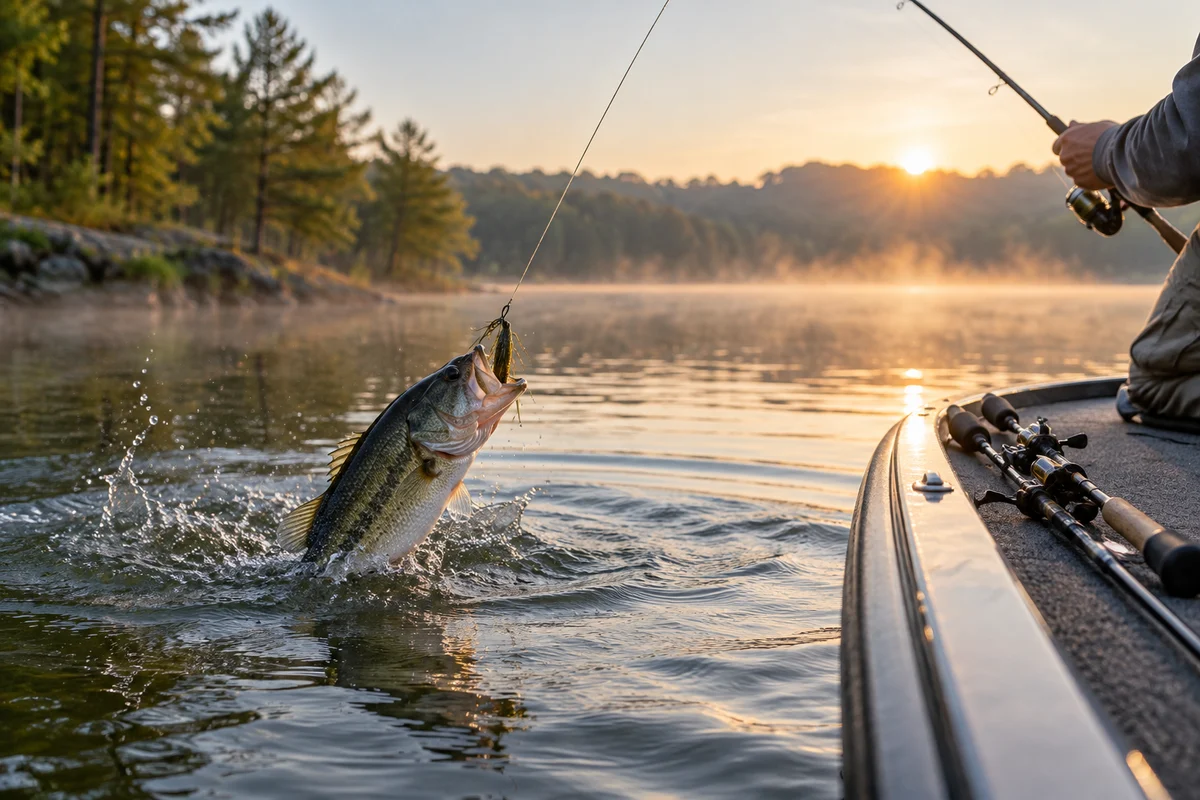
Booyah ToadRunner: How to Fish a Soft-Body Topwater
The Booyah ToadRunner blends a soft, frog-like body with a rotating tail that adds surface disturbance. Here’s how to choose conditions, rig it thoughtfully, and fish it without expecting every bass to react.
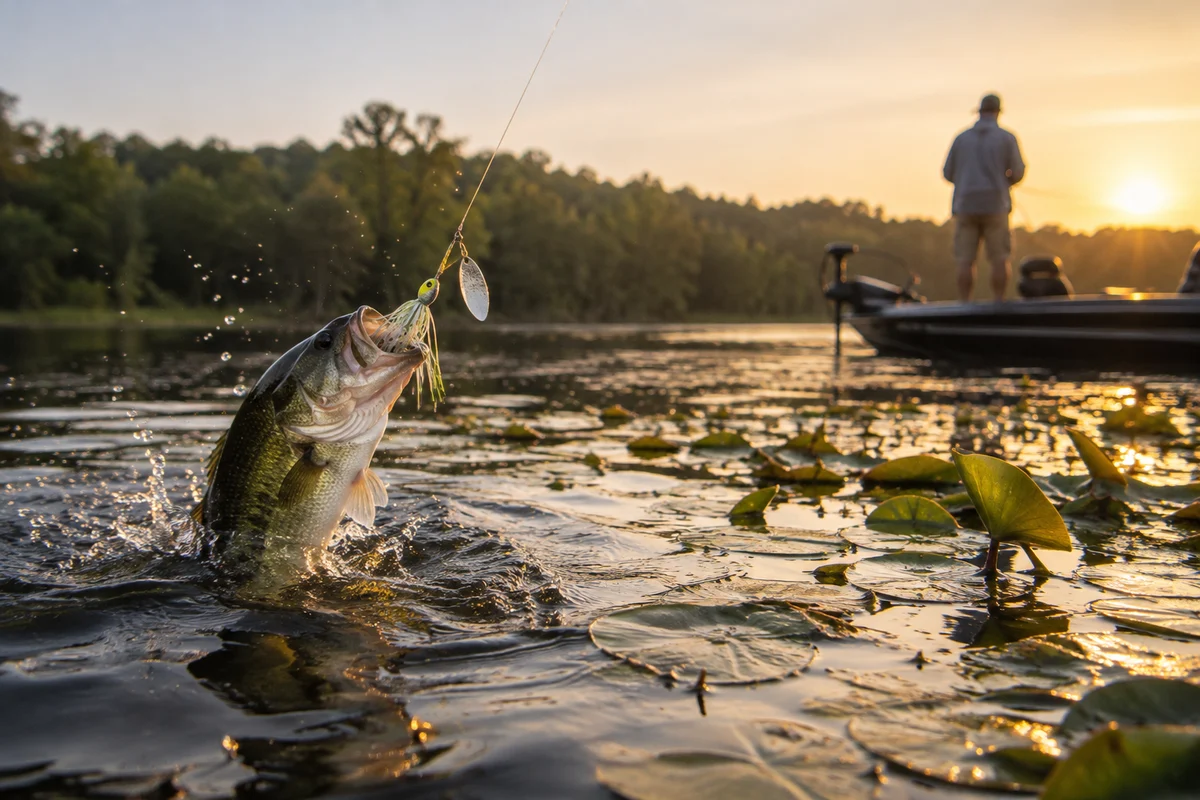
The booyah toadrunner is a soft-bodied topwater lure designed to combine a frog-like profile with a tail that turns and moves water during the retrieve. That mix can be useful when bass are feeding near the surface, especially around shallow vegetation and other cover. Its appeal is not that it works everywhere; it gives anglers another way to present a noisy, moving target when a quiet or steadily walking bait is not drawing interest.
Before fishing one, check the package and manufacturer information for the specific version in hand. Product details can change, and line ties, hooks, body shape, and tail construction should not be assumed from a name alone. The advice below focuses on general soft-body topwater tactics rather than unverified model specifications.
What makes the ToadRunner different?
A conventional soft-plastic toad usually relies on its legs or appendages to create action as it moves across the surface. A hollow-body frog is often worked with pauses and side-to-side motion. The ToadRunner concept adds a rotating tail to a soft, frog-like bait, creating a more continuous disturbance as it comes across the water.
That distinction matters because bass respond to a combination of silhouette, speed, sound, and disturbance. A rotating tail can help a moving bait remain noticeable over a flat or beside a weed edge. It also means the lure is generally presented with forward motion; it is not automatically a substitute for a frog that can pause in a pocket or be worked in place.
Think of it as one option in a topwater rotation, not a universal upgrade. If fish follow but do not strike, change the pace, angle, or profile before concluding the entire category is wrong.
When are surface conditions favorable?
Start in shallow water where bass can reach prey near the surface: the outside edge of emergent weeds, a lane through lily pads, a protected pocket, or a shaded bank. Low light can make surface feeding more likely, but time of day alone is not a rule. Wind, water clarity, forage, and fishing pressure all affect whether a moving topwater draws attention.
A light breeze can add surface texture and make an approaching bait less conspicuous. In stronger chop, however, a small tail’s disturbance may be harder to distinguish, and accurate casts into narrow openings become more difficult. If the surface is rough or the bait is difficult to track, consider a different presentation or a more sheltered stretch.
Look for signs rather than relying on a calendar: baitfish dimpling the surface, a wake along a weed edge, or bass chasing in a pocket. No surface activity does not prove bass are absent. It may simply be a better moment to fish below the surface or try a slower approach. For more ideas and related techniques, browse freshwater bass fishing coverage.
How should you rig and retrieve it?
Follow the lure maker’s instructions for the specific model and use a hook intended for that soft-body bait. Check that the body sits straight and that the tail turns freely before making a long cast. A kinked body or tail fouled with vegetation can make the action inconsistent. After a fish, inspect the bait and reset it if it has slipped out of position.
Cast beyond the target when room allows, then bring the lure across the edge or opening instead of dropping it directly onto cover. This gives the bait time to settle and lets you maintain a steady path. In sparse grass, a moderate, consistent retrieve is a sensible starting point. Over thicker vegetation, keep the bait moving across the surface and avoid forcing it through places where it repeatedly collects weeds.
Vary speed in small steps. If a bass rolls behind the lure, try a brief slowdown or a change in direction on the next cast. If the tail stops turning at a slower pace, that pace may not suit this design. If there is no response, change the cast angle or move to a nearby lane before making a series of identical casts.
Topwater strikes can be startling. Keep the rod controlled and avoid striking at the first splash; wait until the fish has taken the bait and the line comes tight, then set with a firm, measured motion. A hurried swing at a surface boil can pull the lure away before the fish has it.
What tackle and cover considerations matter?
Choose a rod, reel, and line that let you cast accurately and control a fish near the cover you are actually fishing. There is no single correct setup for every angler, waterbody, or version of a lure. A balanced outfit should cast the bait without excessive effort, manage the line around vegetation, and leave enough control to steer a hooked fish away from obstacles.
In open water, anglers may prioritize casting distance and a controlled retrieve. Near thick weeds, accurate placement and the ability to keep a fish from burying into cover can matter more. Match hook and line choices to the lure’s design and local conditions, and avoid assuming that a soft-bodied bait should be treated exactly like a hollow frog.
Inspect line for abrasion after contact with reeds, wood, or rock. Clear grass from the hook and tail regularly. If a lure begins tracking to one side or the tail no longer moves as intended, stop and check the rig rather than compensating with a faster retrieve.
How does it compare with other topwaters?
The ToadRunner’s continuous tail action makes it a natural contrast to a walking bait, which is commonly worked with deliberate side-to-side movement, or a popper, which can be paused and worked in place. A hollow frog can be more appropriate when the goal is to pause over openings or present a different profile. Those are broad categories, not guarantees: each bait’s action depends on its design and how it is fished.
A useful way to choose is to ask what the water calls for. If bass are chasing and you can retrieve across a clean lane, a moving surface bait can cover water. If fish are striking at pauses or holding tight to isolated targets, a bait that can stay in place may provide more control. If the fish are not visibly near the surface, try a subsurface lure rather than endlessly changing topwater colors.
For another look at a moving surface presentation, see this guide to a floating buzz bait. If you are fishing in a different seasonal pattern, the article on spring bass with Wiggle Warts considers a subsurface option instead.
What common mistakes should you avoid?
The first is fishing it through cover that continually fouls the tail or hook. A topwater that arrives at the strike zone carrying a clump of weeds is no longer presenting its intended action. Choose a clearer lane or clean the lure between casts.
The second is treating every surface strike as a reason to speed up. A miss may reflect timing, angle, or the fish’s position, not a need for a frantic retrieve. Make the next cast to the same area from another direction, and keep the lure moving naturally.
The third is overlooking fish handling and local rules. Use suitable tackle, handle landed bass carefully, and follow the applicable regulations for seasons, limits, and release. Keep casts controlled around other anglers, shore users, and overhead branches. A topwater lure has exposed hooks; a safe casting lane matters as much as a productive one.
Finally, do not judge the bait on a single outing. Conditions and fish behavior vary. A simple record of location type, surface conditions, retrieve pace, and whether the lure stayed clean can help you decide when to use it again—without confusing a short-term result with a universal rule.
FAQ
Is the Booyah ToadRunner a topwater lure?
It is designed as a soft-bodied surface presentation with a rotating tail. Confirm the exact model’s intended rigging and use on its packaging or the manufacturer’s information.
Can I fish it in thick vegetation?
You can try it along vegetation edges and through open lanes, but any soft-body lure can collect weeds or become difficult to work in dense cover. Test a short retrieve, check that the tail moves freely, and choose a clearer route if it repeatedly fouls.
Should I pause it after a bass misses?
There is no one response that works for every fish. A brief slowdown or pause may help with some presentations, but if the tail action stops or the bait drifts into cover, a steady retrieve or a changed casting angle may be more effective.
Frequently asked questions
Is the Booyah ToadRunner a topwater lure?
It is designed as a soft-bodied surface presentation with a rotating tail. Confirm the exact model’s intended rigging and use on its packaging or the manufacturer’s information.
Can I fish it in thick vegetation?
You can try it along vegetation edges and through open lanes, but any soft-body lure can collect weeds or become difficult to work in dense cover. Test a short retrieve, check that the tail moves freely, and choose a clearer route if it repeatedly fouls.
Should I pause it after a bass misses?
There is no one response that works for every fish. A brief slowdown or pause may help with some presentations, but if the tail action stops or the bait drifts into cover, a steady retrieve or a changed casting angle may be more effective.
Sources & further information
Consult these primary sources for current regulations, technical information and local guidance.