ShareLunker From Lake Leon: What Anglers Should Know
A reported ShareLunker from Lake Leon invites useful questions about fish identification, documentation, and what the program can—and cannot—tell anglers. Here’s a careful way to evaluate a notable bass report and apply the lessons on your own water.
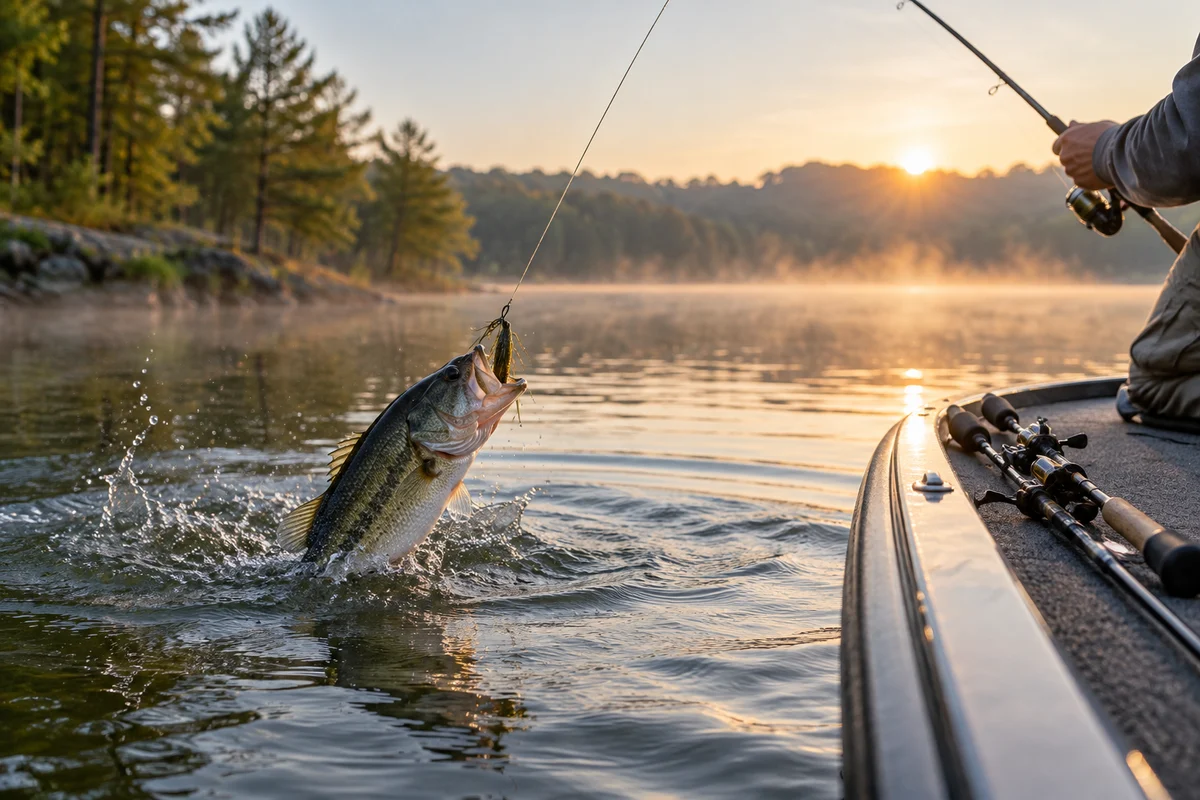
A ShareLunker from Lake Leon is a phrase that points to a notable largemouth bass associated with Lake Leon in Texas, but the words alone do not establish a weight, date, record, or program status. Anglers researching a historic or circulating report should separate the lake connection from the fish’s verified details. That distinction matters: a memorable catch, a documented trophy, a state record, and a fish accepted into a conservation program are not automatically the same thing.
Lake Leon anglers can still take practical lessons from the story. Identify the fish carefully, preserve reliable evidence, handle it with its welfare in mind, and check the current rules and recordkeeping process before describing a catch as an official ShareLunker. Those habits are useful whether you are following a past report or fishing for largemouth bass today.
What does “ShareLunker” mean?
The ShareLunker name is associated with Texas’s largemouth bass management and conservation efforts. The Texas Parks and Wildlife Department (TPWD) administers the program; its current official information is the place to confirm eligibility, reporting procedures, and any program changes. Requirements can change, so a remembered threshold or an old article should not substitute for current guidance.
The key distinction is between a reported catch and an accepted program entry. A social post or short headline may identify a lake but leave out the measurements, weighing method, date, or confirmation status needed to evaluate the claim. Even when a fish is unquestionably impressive, calling it a record or an official program fish requires the appropriate documentation and verification.
For a Lake Leon report, first establish exactly what is being claimed. Is it a large bass caught there? A fish submitted to a program? A state record claim? Or simply a retelling whose original details are no longer readily available? Use precise language until authoritative information resolves the question.
How can anglers verify a Lake Leon bass report?
Start with the best available primary record: an official TPWD announcement, a program entry, or an agency record list. Search by the reported lake name and, if available, the catch date and angler. An agency page is more useful than a copied headline because it can clarify whether the fish was formally accepted and what category the claim belongs to.
Then compare the claim’s details. A sound report should make clear where and when the fish was caught, how it was identified, and whether its weight or length was measured under the relevant rules. If the claim is specifically about a ShareLunker entry, confirm that it appears in program information rather than assuming every large bass qualifies. If it is a record claim, check the recordkeeper’s requirements separately; program participation and record status are different questions.
When a source gives no date, measurement, or verification, treat those details as unknown. Do not fill the gaps with estimates or repeat numbers from unattributed reposts. If you cannot locate an official confirmation, write that the report is unverified—not that it is false, and not that it is confirmed.
What should you document when you catch a trophy bass?
Good documentation is collected calmly and accurately, without prolonging a fish’s time out of the water. Before a trip, review current state regulations and the applicable program or record rules. Have a suitable scale, a measuring board, and a way to record the information ready; check that equipment is functioning rather than discovering a problem after a catch.
| Record this | Why it helps | Practical approach |
|---|---|---|
| Date and location | Establishes the context of the catch | Note the lake and the most precise location allowed by the reporting process; avoid publishing sensitive access details unnecessarily. |
| Species identification | Prevents a mistaken claim | Photograph distinguishing features and use an agency identification guide if uncertain. |
| Weight and length | Supports evaluation of size | Follow the official method and record units; do not round a measurement upward. |
| Scale or measurement evidence | Helps others assess the claim | Photograph the reading clearly, with the fish supported safely and the equipment visible where practical. |
| Witness and contact details | Can support a formal submission | Record names and contact information privately, then follow the official submission instructions. |
| Fish condition and disposition | Clarifies what happened after capture | Note whether it was released or retained as permitted; follow current law and program guidance. |
A photograph can support a report, but perspective can distort apparent size, and an image alone cannot validate a scale reading. Keep original images and notes rather than relying solely on a social-media upload. If a program representative or recordkeeper requests specific evidence, follow that process instead of assuming a generic photo set is enough.
How can you handle a large bass responsibly?
Use tackle and landing gear appropriate to the fish and conditions, and plan the measuring and documentation steps before casting. Wet your hands before handling a bass, support its body rather than suspending it by the jaw for a prolonged period, and keep it out of the water only as long as needed. If you intend to release it, return it promptly and observe whether it can maintain its balance and swim away. Follow local rules and any agency instructions if the fish appears injured or cannot recover.
These are general handling principles, not a substitute for location-specific regulations. Seasons, limits, permitted gear, and special water rules may vary. Consult TPWD’s official regulations and program information before fishing or submitting a catch, especially if you are visiting Lake Leon for the first time.
Trophy fishing also benefits from restraint in how a story is shared. A striking photograph may attract attention to a lake, but avoid implying that a particular technique, lure, or spot guarantees a fish of similar size. Bass behavior changes with season, water conditions, forage, and habitat. Anglers looking at presentation choices can explore our guides to early-season bass lipless crankbaits and fishing a 10-inch worm, while remembering that neither approach guarantees a trophy.
What does a ShareLunker report tell you about Lake Leon fishing?
A verified report can show that a notable fish was associated with the lake under the circumstances recorded. It does not, by itself, describe the lake’s overall bass population, predict future catches, or establish that a fishery is improving or declining. Those broader conclusions require population and management information from responsible fisheries biologists, not inference from one memorable catch.
For anglers, the useful takeaway is narrower: Lake Leon belongs in the conversation when researching Texas largemouth bass, but a single report is not a fishing forecast. Learn about the waterbody through current agency materials, observe conditions on the day, and use legal, adaptable methods. Our freshwater bass-fishing hub gathers more bass topics, including practical lure discussions such as choosing a spinnerbait for bass.
A quick decision framework for repeating the claim
Before sharing a Lake Leon ShareLunker story, ask three questions:
- Is there an identifiable source? Prefer TPWD or another official recordkeeper over an unattributed repost.
- What exactly was confirmed? Distinguish a reported large bass from an accepted program entry or a record.
- Are the important details available? If date, measurements, or verification are absent, say so rather than supplying them yourself.
This approach keeps an interesting fishing story intact without turning uncertainty into fact. If new official information becomes available, update the account with the confirmed details and identify the source. Until then, the careful description is simply that a ShareLunker-related report has been associated with Lake Leon, with specifics requiring confirmation.
Frequently asked questions
Is a ShareLunker from Lake Leon automatically a Texas record?
No. A program entry and a state record claim are separate designations with their own criteria and verification. Check the current TPWD program and record information before using either label.
Where should I confirm ShareLunker eligibility?
Use the official Texas Parks and Wildlife Department ShareLunker information. Eligibility and reporting requirements can change, so confirm the current rules rather than relying on an older summary.
What should I do if a bass report has no weight or date?
Treat the missing information as unverified. Do not estimate or repeat unsupported details; look for an official source or describe only what the available evidence establishes.
Sources & further information
Consult these primary sources for current regulations, technical information and local guidance.