Kentucky Largemouth Bass Record: How to Verify It
A state-record claim is only meaningful when its species, category, and verification match the official rules. Here’s how to check Kentucky’s largemouth bass record and document a possible contender responsibly.
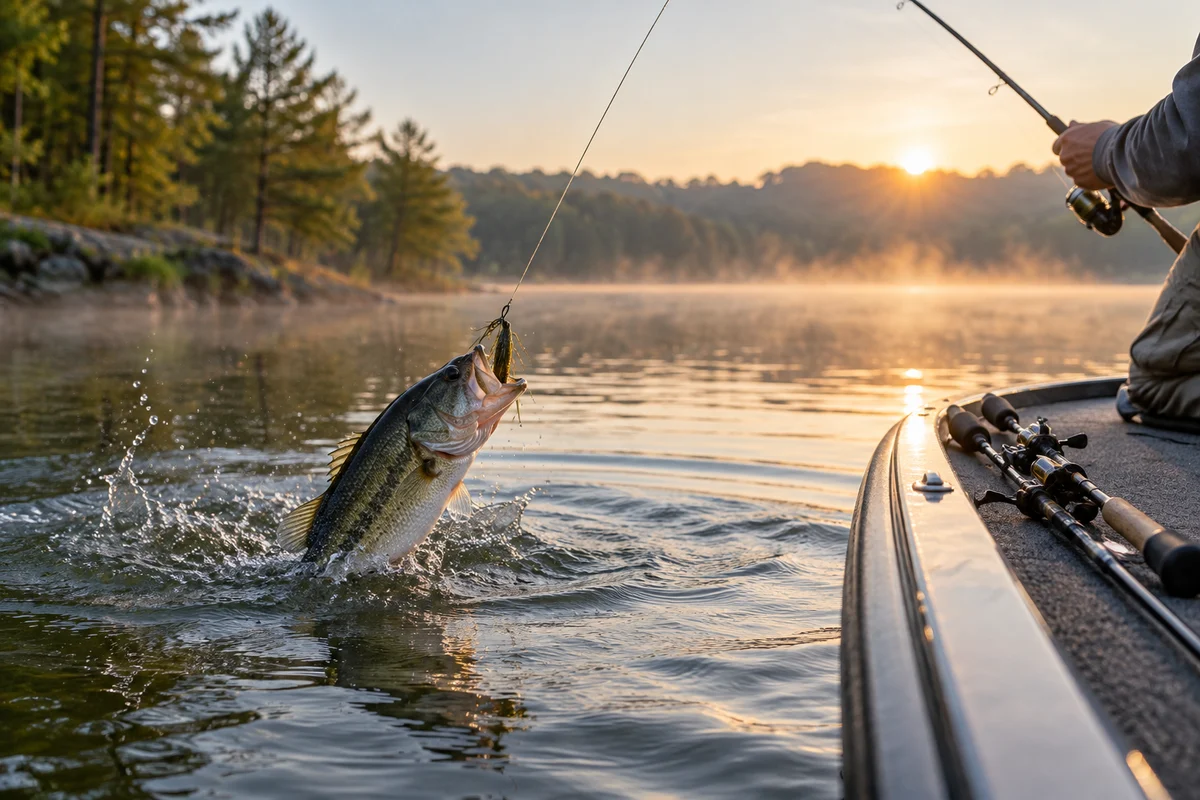
The Kentucky largemouth bass record is a figure worth checking against an official source—not repeating from an old headline, social post, or unsourced list. Record claims can become confusing when pages are outdated or when a fish is described under a different category. The reliable approach is to confirm the current listing with Kentucky’s fish and wildlife agency, read the category and rules attached to it, and keep good documentation if you land an unusually large bass.
This guide explains what to verify and how to distinguish an official state record from a notable catch. It does not assign a current holder, weight, or date: those details should come directly from the agency’s latest record listing.
Where should you check Kentucky’s current record?
Begin with the official Kentucky Department of Fish and Wildlife Resources website. Look for its fishing or fish-records information and follow the agency’s own links and instructions. If a page is difficult to locate, use the agency’s site navigation or contact information rather than treating a search-result snippet as confirmation. Record tables can be revised, and a cached result may not reflect a later update.
When you find a listing, check that it identifies largemouth bass specifically and note the displayed record category, measurement, and any date or method information the agency provides. Read the page’s rules alongside the entry. A number copied without its category—or separated from a note about how the catch was documented—may give the wrong impression.
The International Game Fish Association (IGFA) maintains a separate international records program. Its records and rules are useful context, but an IGFA listing is not automatically the Kentucky state record. Likewise, a lake association’s “biggest fish” page, tournament result, or local news story may document an impressive catch without establishing an official state record.
For broader bass angling context, visit the freshwater bass fishing hub, which brings together related techniques and topics.
Why do record categories matter?
A record is not just a large fish paired with a number. The category defines what is being compared and which rules apply. State programs may distinguish records by species, location or water type, catch method, or other criteria. The exact categories and eligibility standards are set by the responsible agency, so don’t assume that a rule from another state, a tournament, or an international organization applies in Kentucky.
Species identification matters too. Largemouth bass can be confused with other black bass, particularly when a fish is photographed quickly or when identifying features are hard to see. If the species is uncertain, a confident caption is not a substitute for the agency’s identification process. Preserve clear, unaltered photos and follow the official instructions before making a public claim.
Also separate a verified record from a personal best, tournament-winning fish, or unusually large catch. Those can all be meaningful achievements. They simply answer different questions. A tournament’s rules establish its own result; a state record requires acceptance under the state program’s requirements.
What should an angler document after a possible record catch?
Prioritize the fish’s welfare and comply with applicable fishing regulations. If it is safe and lawful to do so, gather the information the state program requires before releasing or transporting the fish. Do not assume that a photo beside a measuring tape, a scale reading, or a witness alone will satisfy the rules; check the agency’s current instructions as soon as practical.
A useful preparation checklist is:
- Confirm the process in advance. Find the current state-record instructions and learn which contact, forms, and verification steps apply.
- Record the circumstances. Note the date, general location, fishing method, and other details requested by the program. Avoid posting sensitive access details publicly.
- Capture clear evidence. Take well-lit photographs that show the fish’s identifying features and the measurement or weighing process, if those are part of the rules. Keep original files rather than relying only on edited or compressed copies.
- Use appropriate equipment. Any scale or measuring device should be suitable for the task and handled as the official program requires. Don’t describe an estimate as an official measurement.
- Follow agency directions promptly. The agency—not a social-media audience—determines which evidence, witnesses, or examination are needed.
This is a planning checklist, not a substitute for Kentucky’s application requirements. Procedures can change, so the official instructions in effect when the fish is caught should control.
How can you assess an old record claim or headline?
Start by asking who published the claim. An official state agency is the strongest source for the state listing; a news article can help explain the story but may repeat information supplied by someone else. Then check whether the report names the species, record category, and verification authority. If those details are absent, treat the claim as unconfirmed until you can find the corresponding agency entry.
Look for a publication or update date, but don’t assume a recent article means the underlying record has been checked recently. Search for the agency’s current record page and compare the details. If the agency does not show a record entry or the information conflicts, contact the agency rather than filling gaps with guesses. A careful “not confirmed” is more useful than repeating a precise weight or holder that cannot be substantiated.
The same habit helps with fishing information generally: distinguish a source’s observation from an official decision. For example, learning how to fish a Hula Popper can inform lure choice, but a successful technique or memorable catch does not establish a state record.
What makes a largemouth bass grow large?
Largemouth bass growth depends on interacting conditions, including available food, habitat, water conditions, competition, and the fish’s age. These factors vary among waters and across seasons, so there is no single lure, lake feature, or tactic that guarantees a trophy fish. Anglers can improve their chances of encountering active bass by paying attention to local conditions and using current regulations and sound handling practices.
For seasonal perspective beyond Kentucky, the guide to Lake Erie smallmouth bass by season covers a different species and fishery. It is useful as a comparison in how seasonal patterns shape fishing decisions, not as a source for Kentucky largemouth record data. For largemouth bass, consult local fisheries guidance and treat any one-day result as an individual catch rather than evidence of a statewide trend.
If your interest is the record itself, keep the questions in order: Is the fish correctly identified? Does it qualify for the category? Was it documented as required? Has the state agency accepted it? Only the final official listing answers whether a catch is the Kentucky record.
How can anglers pursue big bass responsibly?
Preparation is more valuable than making a record claim in the moment. Review Kentucky’s current fishing regulations before heading out, carry suitable measuring and handling equipment, and know how to contact the agency if a qualifying catch seems possible. Handle fish gently and minimize time out of the water, while following any requirements that apply to a record application. Do not keep or transport a fish contrary to regulation simply to seek recognition.
Record programs are one way to celebrate exceptional fish, but they are not the only measure of a worthwhile day. Accurate identification, honest documentation, respect for the fish, and a verified source make a claim useful to other anglers. When those pieces are missing, it is better to describe the catch as notable or unverified and let the official process determine its status.
Frequently asked questions
What is the current Kentucky largemouth bass record?
Check the Kentucky Department of Fish and Wildlife Resources’ current official record listing. This article does not state a holder or weight because those details should be confirmed directly with the agency.
Does an IGFA largemouth bass record count as Kentucky’s state record?
Not automatically. IGFA and Kentucky maintain separate record programs with their own categories and requirements. Verify a state claim through Kentucky’s official agency.
What should I do if I think I caught a record largemouth bass in Kentucky?
Follow current regulations, document the catch as the state program instructs, and contact Kentucky Fish and Wildlife Resources promptly. The agency determines eligibility and required verification.
Sources & further information
Consult these primary sources for current regulations, technical information and local guidance.