How to Fish Hula Popper Lures for More Bass
A Hula Popper can turn a quiet patch of water into a topwater opportunity when you work it deliberately. Learn where to cast, how to pace the retrieve, and what to change after a missed strike.
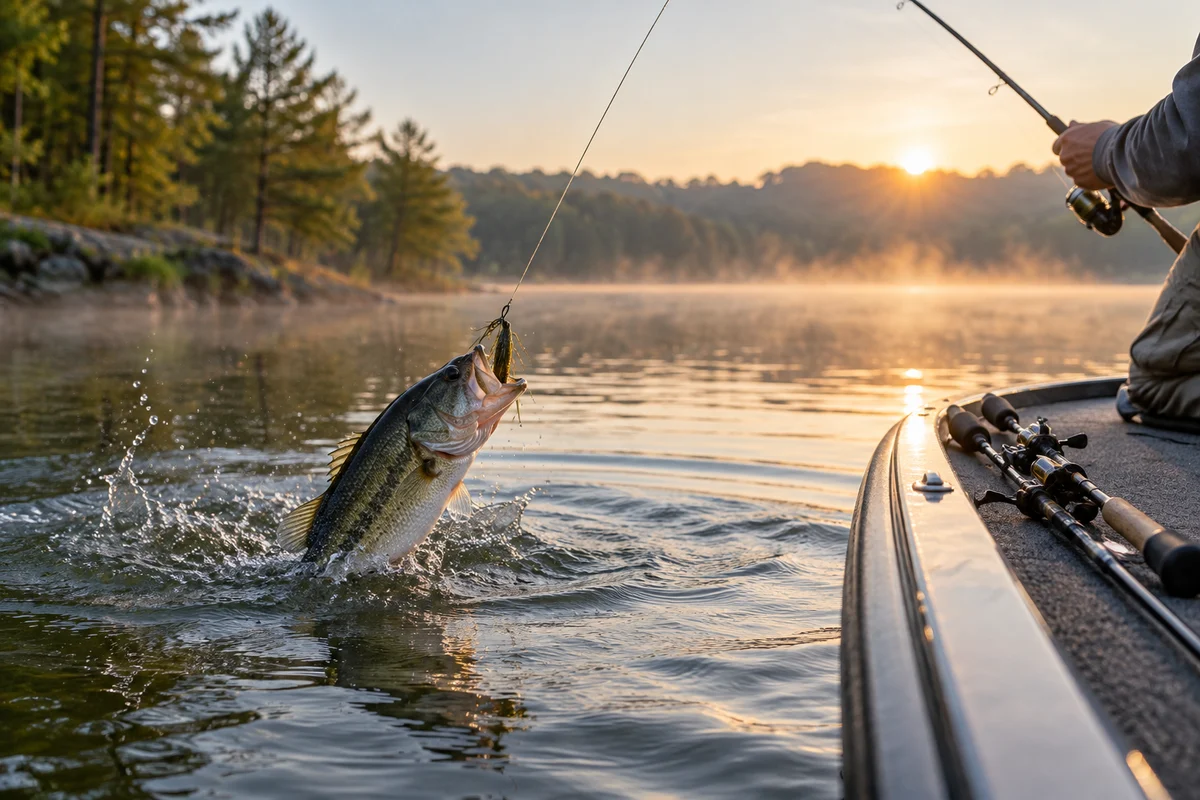
Learning how to fish hula popper lures is mostly a matter of controlling pace and placing the bait where bass can find it. This topwater style lure is designed to make a surface disturbance when worked, but more noise is not always better. Start with likely cover, let the rings settle after the cast, and use short, measured movements. If a fish misses, resist the urge to reel immediately; a pause gives you a chance to make a calm second presentation.
A Hula Popper is a classic popper-style bait. Versions vary, but the recognizable form combines a cupped face with a skirt or trailing dressing that moves in the water. It is useful when bass are willing to look upward, and it offers an alternative to walking or buzzing presentations. For more freshwater context and related bass topics, visit the bass fishing hub.
What does a Hula Popper do on the water?
The cupped front catches water when you twitch the rod, producing a pop, splash, or small push of water depending on the bait and the force of the movement. Its skirt or tail adds another point of motion, especially while the lure pauses. The combination can draw attention without requiring a fast retrieve.
Think of the sound and surface disturbance as adjustable, not fixed. A light twitch may make a modest ripple; a sharper pull can move more water. Wind, waves, line angle, and the lure's condition all affect what happens. Watch the bait beside the boat or shoreline before fishing to learn how it responds to your rod. Avoid assuming every popper needs an aggressive action: the fish, water, and cover should guide your pace.
Where should you cast a Hula Popper?
Look for edges and isolated targets where a bass can approach from cover: the outside of vegetation, a pocket in pads, a shaded bank, a dock edge where fishing is permitted, or a stump or laydown with open water around it. A target with room for the lure to sit and move is easier to fish than a tight tangle that may snag the hooks.
Cast beyond or beside the target when possible, then bring the bait into the likely strike zone. This keeps the landing splash from falling directly on top of a fish-holding spot and gives you control over the final approach. In a narrow opening, make a shorter, accurate cast rather than forcing the lure through heavy cover. Keep an eye on wind direction: a crosswind can bow the line and make small rod movements less precise.
Cover water methodically. Make a few casts from different angles before moving on, because a fish may respond better to a bait that crosses an edge than one that comes straight toward it. If surface activity suggests bass are feeding but a popper is not getting attention, a slower, subtler soft-plastic presentation may be worth trying; see this guide to wacky rigging soft baits.
How do you work the retrieve?
After the lure lands, lower the rod tip enough to keep the line manageable and wait briefly for the landing rings to fade. Then give the bait one short twitch. Let it pause. Repeat with a second twitch or a slightly stronger pop, then pause again. This pop-pause rhythm is a reliable starting point because it lets you see whether bass react to the sound, the still lure, or both.
Change one element at a time. Try a longer pause before increasing the force, or make the pops closer together without making them harder. In calm, clear water, a restrained action can keep the bait from overwhelming a target. In light chop or around noisy cover, a more distinct pop may help the lure stand out. These are starting points, not rules; make a few controlled casts and observe the response.
Keep the rod movement short and use the reel to gather slack between twitches. Pulling the lure continuously toward you can make the presentation less deliberate and shorten the time it spends near a target. Keep enough slack to animate the bait, but not so much that you lose contact or cannot respond to a strike. When a fish boils or swirls nearby, pause, then resume with a small twitch rather than jerking the lure away.
What tackle and line help you control it?
Choose a rod and line that let you cast accurately and manage the lure around the cover you are fishing. The best combination depends on the bait's weight, hook arrangement, cover density, and your own casting setup; check the manufacturer's guidance for the particular lure and rod rather than assuming every model is the same. A balanced setup also makes it easier to repeat small movements without tiring your wrist.
Inspect the hooks, split rings, and skirt before fishing. Replace or repair damaged components according to the manufacturer's instructions, and keep fingers clear of exposed hooks when unhooking a fish. Topwater strikes can happen close to shore or the boat, so avoid swinging a hooked fish toward yourself. Use pliers or an appropriate hook-removal tool when needed, and handle the fish in a way that supports its body and minimizes time out of water.
A popper is one option among surface lures. A buzz bait covers water with a more continuous disturbance, while a popper gives you the option to hold a target in place. This overview of floating buzz bait presentations can help clarify when a moving surface approach may suit your situation better.
What should you do after a missed strike?
A missed strike can happen because the fish misjudged the bait, the lure moved during the attack, or the hooks did not connect cleanly. Do not immediately accelerate the retrieve. Pause for a moment, then twitch the lure once or twice. If the fish remains active, a second cast to the same area from another angle may be more useful than repeatedly throwing at the exact landing spot.
If strikes keep missing, look for simple adjustments: slow the cadence, give the fish more time to locate the lure, or reduce the force of each pop. Check that the hooks are not fouled by weeds and that the lure is sitting and moving as intended. If bass follow without committing, change the angle or move the bait past the edge of cover instead of directly over it. After several unproductive casts, leave the spot and return later rather than making the same presentation indefinitely.
When should you switch lures or conditions?
Topwater success depends on fish activity and the conditions in front of you; there is no universal time or weather rule. Low light, shade, and cover can make a surface target appealing, but bass may also ignore a popper when they are focused deeper or when conditions change. Watch for surface feeding, bait movement, and the way fish respond to your first few casts. Treat those observations as clues rather than guarantees.
If the lure is difficult to control in wind or chop, reposition to a more sheltered bank or choose a presentation that stays in contact with the water more consistently. If fish show interest but will not commit, slow down before changing everything. If there is no sign of interest after covering several likely targets, switch depth or profile. A finesse bait or a compact moving bait can provide a useful contrast; the right choice depends on the cover and the fish's response.
Before heading out, check local fishing rules, including license requirements, seasons, and any water-specific restrictions. Regulations differ by location and can change, so consult the responsible state or local agency for the water you plan to fish. Keep the presentation simple: target a visible edge, let the lure settle, pop with purpose, pause, and adjust based on what the water tells you.
Frequently asked questions
How long should you pause a Hula Popper?
Begin with a pause long enough for the landing rings to settle, then test longer and shorter pauses. Let fish activity, water conditions, and the lure's response guide the cadence.
Can you fish a Hula Popper around weeds?
Yes, when there is enough open water to work it without repeatedly fouling the hooks. Cast along vegetation edges or into clear pockets, and inspect the lure after contact with weeds.
What should you try if bass keep missing the lure?
Pause after the strike, then add a small twitch. On the next cast, slow the cadence, check for fouled hooks, or change the angle so the lure crosses the target differently.
Sources & further information
Consult these primary sources for current regulations, technical information and local guidance.