Catch Spring Bass With Wiggle Warts: A Practical Guide
A Wiggle Wart can cover rocky banks and transitions efficiently in spring. Learn how to choose a starting setup, control depth and retrieve, and adjust without treating one pattern as a guarantee.
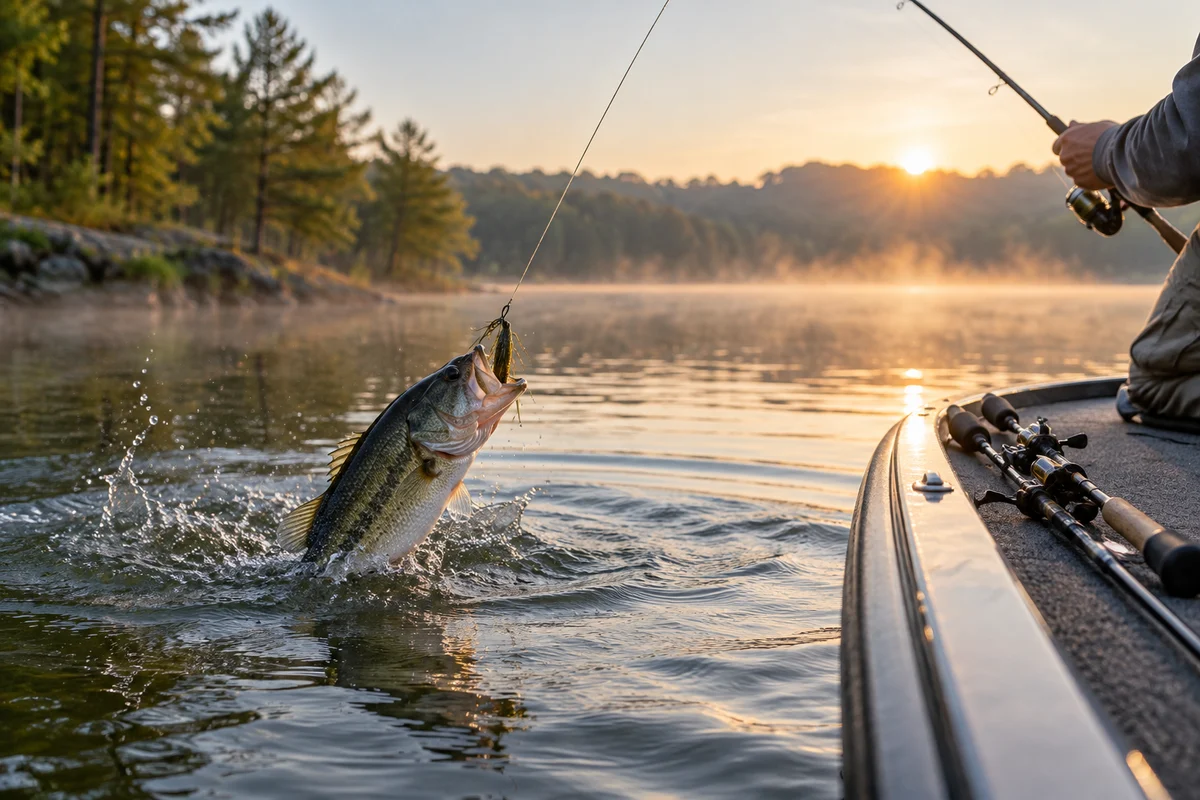
Spring bass with Wiggle Warts are a sensible target when fish are moving around rocky banks, points, and protected coves—but no lure or calendar date guarantees a bite. A Wiggle Wart-style, wide-wobbling crankbait is most useful when its diving range and deflection match the water in front of you. Start by finding hard cover and a workable depth, then adjust retrieve speed, line, and color to visibility and activity. Think of the lure as a search tool, not a promise of a particular catch.
Why a wobbling crankbait can fit spring conditions
As water warms, bass may shift between deeper holding areas and shallower feeding zones. The timing varies with latitude, weather, lake depth, and local conditions. A crankbait that moves with a pronounced wobble can help you cover water and draw attention along rock, gravel, and other firm transitions. Its usefulness comes from presenting a moving target near likely fish—not from a special seasonal formula.
Rock is a practical place to begin because it often creates edges and contact points. Look for a change in bottom composition, a point that reaches toward deeper water, or a protected bank adjacent to a route fish may use. Wind can push baitfish and create a more active shoreline, but it also affects boat control and visibility. Fish the conditions you can handle safely, and do not assume every warming day moves bass shallow.
For a contrasting search approach, see this guide to early-season bass lipless crankbaits. The two styles can cover similar seasonal water, while their running depth and action differ.
Choose depth before choosing a magic color
The most useful first decision is whether the lure can run near the cover without constantly plowing into it or passing well above it. Check the manufacturer’s published information for the particular model; similar-looking crankbaits can differ in buoyancy, diving behavior, and construction. Water depth, line diameter, casting distance, and retrieve speed also influence how a crankbait runs, so treat published depth ranges as guidance rather than an exact guarantee.
Use a map or known shoreline contours to identify a manageable stretch. If the bank drops quickly, make casts that cross the slope rather than repeatedly running parallel in one depth band. On a gradual flat, work the edge where the bottom changes or where isolated rock interrupts otherwise uniform ground. If the lure keeps digging into bottom, slow down, change the cast angle, or move to slightly deeper water. If it never approaches likely cover, try a shallower route or a lure with a more appropriate running range.
The right color is usually a visibility decision, not a secret code. In clearer water, natural baitfish or craw-like tones may look less conspicuous. In stained water, a more visible color can help fish track the bait. Local forage and water color matter more than a universal list of “best” colors. Start with one reasonable option and change it only when the presentation, location, or light conditions suggest a reason.
Set up for contact and control
Use a rod and line that let you cast accurately, feel the lure contacting cover, and keep steady pressure during a fight. A moderate-action casting rod is a common crankbait choice because it can help absorb surges, but anglers should match rod power and line to their reel, lure weight, cover, and experience. Consult equipment makers’ recommendations rather than assuming one setup suits every model.
Line choice affects both handling and running depth. Thicker line can resist a lure’s dive compared with thinner line of the same general type, while stretch and abrasion resistance vary by material. Around sharp rock, inspect the line regularly and retie if it is nicked or abraded. Keep knots sound and hooks sharp, and use tackle that is appropriate for the fish and local regulations. Do not compensate for unsuitable equipment by forcing a lure through snags.
Before fishing, check that the lure’s hooks are secure and that no point is exposed while handling it. Keep fingers clear when removing a crankbait from a fish; pliers make hook removal safer. If a bass is deeply hooked or the fishery has special handling rules, follow local guidance and prioritize the fish’s welfare.
Make the retrieve respond to the bottom
A steady retrieve is a useful baseline. Cast beyond the target, bring the lure down toward its working depth, and keep it moving with enough control to feel its wobble and occasional contact. When it ticks rock, continue smoothly rather than jerking hard. A brief pause or slight change in pace can make the lure behave differently, but repeated aggressive snaps may foul hooks or wedge the bait into cover.
Deflection—contact that makes the lure change direction—can create a momentary change in its movement. You can encourage it by casting across a rocky edge or bringing the bait past an isolated obstruction. Do not deliberately grind the lure into every rock. If it hangs, reduce tension and try a calm change in angle; pulling harder often tightens the snag. A lure retriever can help where safe and lawful, but avoid leaning overboard or entering hazardous water to recover tackle.
Vary one factor at a time. If several casts produce no response, first alter the angle or depth. Then test a modest speed change or move to another nearby piece of cover. This makes it easier to learn whether fish are absent, inactive, or simply outside the lure’s path. For more bass context, browse freshwater bass-fishing coverage, including seasonal approaches and related techniques.
Find fish without overcommitting to a bank
Start with a short stretch that offers both access to deeper water and a hard-bottom feature. A point, channel swing, rocky transition, or protected pocket can be worth checking, but conditions decide which one matters. On a bright, calm day, fish may hold deeper or close to cover. Wind or cloud cover can change where baitfish gather and how confidently you can approach a shoreline. These are clues to test, not rules that locate bass automatically.
Make several deliberate casts that cover different angles. If a stretch produces no signs, move rather than repeating identical casts indefinitely. If you catch a fish, inspect the immediate area for similar rock, depth, and exposure, then test comparable locations. One fish does not prove a whole-lake pattern, and weather shifts can quickly make a productive bank less useful.
Fishing pressure matters too. A heavily worked shoreline may call for a quieter approach, a different angle, or a pause from that area. Avoid crowding other anglers, respect access boundaries, and keep a safe distance from docks and other people. Check local rules for seasons, size limits, permitted waters, and any restrictions on tackle or access before fishing.
Common mistakes and practical adjustments
A frequent mistake is choosing a lure by color while ignoring depth. Another is retrieving at one speed regardless of contact: a bait that plows continuously may be too deep for that route, while one that never reaches the target may be too shallow or moving on an unsuitable angle. Correct the path first, then fine-tune color or pace.
Avoid assuming a particular spring temperature or date applies everywhere. Lakes differ, and a cold front can alter fish position and activity. Keep a simple mental record of water clarity, wind, depth, cover, and response. That information is more useful than declaring a pattern from one cast or one fish.
If the crankbait is repeatedly snagging, move the cast line, choose a less obstructed route, or switch to a presentation better suited to the cover. If fish follow but do not strike, try changing speed or leaving the area briefly. For a slower option when bass are less responsive, compare the approach with fishing a 10-inch worm. It is a different presentation, and the best choice depends on conditions rather than a fixed ranking.
Respect the fishery and finish carefully
Handle bass with wet hands, support the fish rather than suspending it by the jaw for an extended period, and return it promptly when releasing it. Use a net when needed to reduce handling, and follow local rules on harvest and release. Keep discarded line and damaged tackle out of the water; line can harm wildlife and create hazards for other anglers.
A Wiggle Wart is most useful when its depth, action, and route fit the situation. Begin around rock and transitions, make controlled casts across likely paths, and let contact and fish response guide the next adjustment. The method is adaptable, but the result is never guaranteed; thoughtful location choices, safe handling, and attention to local regulations matter as much as the lure itself.
FAQ
What conditions are good for fishing a Wiggle Wart for spring bass?
Rocky banks and transitions are reasonable places to test it when bass are feeding or moving between depths. Water clarity, wind, temperature trends, and local fish behavior all affect the result, so use these as starting clues rather than guarantees.
How do I keep the lure near rocky cover without snagging constantly?
Choose a running depth suited to the water, cast across the feature, and retrieve with enough control to feel contact. If it digs in repeatedly, alter the angle or move slightly deeper; avoid forceful pulls that can worsen a snag.
Should I use the same color in every lake?
No. Match visibility and local forage as a practical starting point: natural tones can suit clearer water, while a more visible option may be easier for fish to track in stained water. Test modestly and let conditions guide changes.
Frequently asked questions
What conditions are good for fishing a Wiggle Wart for spring bass?
Rocky banks and transitions are reasonable places to test it when bass are feeding or moving between depths. Water clarity, wind, temperature trends, and local fish behavior all affect the result, so use these as starting clues rather than guarantees.
How do I keep the lure near rocky cover without snagging constantly?
Choose a running depth suited to the water, cast across the feature, and retrieve with enough control to feel contact. If it digs in repeatedly, alter the angle or move slightly deeper; avoid forceful pulls that can worsen a snag.
Should I use the same color in every lake?
No. Match visibility and local forage as a practical starting point: natural tones can suit clearer water, while a more visible option may be easier for fish to track in stained water. Test modestly and let conditions guide changes.
Sources & further information
Consult these primary sources for current regulations, technical information and local guidance.