Why Am I Not Seeing Deer? Fix Your Field Plan
When deer sightings dry up, the cause is often a mismatch between your schedule, access, wind, and the animals’ current use of cover. This guide offers a systematic way to diagnose a quiet hunt without assuming deer have vanished.
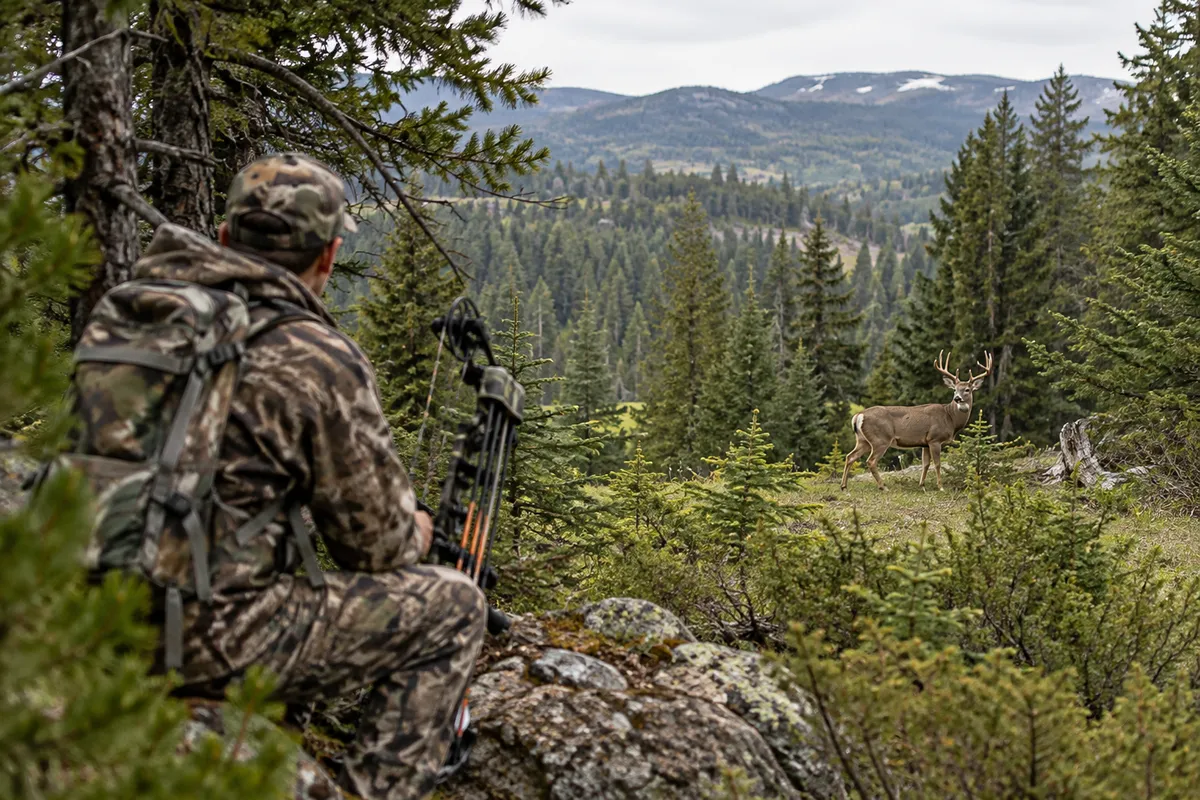
A quiet hunt can make it feel as if the woods have emptied overnight. If you’re asking why am I not seeing deer, start by separating what you know from what you’re guessing: deer may be present but moving outside your hours, responding to pressure, using a different route, or simply difficult to detect in dense cover. A few deliberate observations can reveal more than repeatedly changing locations at random.
The goal is not to guarantee a sighting. Deer movement varies with season, weather, food, hunting pressure, and local conditions. Instead, use a repeatable process to make each outing informative, reduce avoidable disturbance, and decide whether to stay put or adjust.
Are deer present, or are you missing the signs?
Begin with evidence gathered without pushing through likely bedding cover. Look for fresh tracks, droppings, browsed vegetation, trails crossing soft ground, and feeding sign. None proves a deer will pass your position at a particular hour; sign can persist after animals have shifted their routine. Compare several clues and note whether they appear fresh relative to rain, snow, wind, or other changes you can identify.
Use a map and observe from a distance where possible. A trail that looks prominent may be used mostly at night, while a faint route along cover or terrain may be more useful during legal shooting hours. Avoid treating a single track or camera image as a complete picture. Trail cameras, where legal, can help establish time patterns, but check local rules and minimize visits that leave scent or disturb the area.
If you are planning the broader season rather than troubleshooting one sit, review these steps to prep for deer season and organize scouting, permissions, equipment, and local regulations before the woods get busy.
Is your schedule aligned with movement?
Deer can be active at different times depending on conditions and disturbance. A common mistake is to judge a place from a narrow slice of the day. If your schedule permits, compare an early sit, a late sit, and a location that offers safe access near likely feeding or travel cover. Follow legal hours and local hunting rules; do not enter or remain in the field outside permitted times.
Keep a simple log rather than relying on memory. Record arrival and departure times, wind direction, temperature trend, precipitation, visibility, entry route, sign observed, and any deer or other wildlife seen. After several outings, patterns may emerge: perhaps the area is quiet during midday but has recent evening sign, or perhaps a particular access route repeatedly crosses fresh tracks.
A log also prevents a misleading conclusion from one unusual day. Weather can change quickly, and a brief shift in wind or a noisy approach may matter more than a broad seasonal theory. Treat each observation as a clue, not a rule that applies everywhere.
Could access or wind be giving away your position?
Deer have keen senses, and a route that is convenient for a person may cross the very cover they use. Think through your approach as carefully as your stand or viewing spot. Can you reach it without walking through bedding cover, crossing a likely trail, or passing close to a feeding area? Is there a quiet exit that avoids disturbing the same area after the hunt?
Wind is not a switch that makes a location usable or unusable, but it affects how scent travels. Check the actual wind before leaving home and again at the site; terrain, vegetation, and changing weather can make conditions different from a forecast. If the wind carries your scent toward likely deer activity, consider another position or a different outing rather than forcing the setup. Do not rely on scent-control products to overcome poor access or unfavorable conditions.
| What you notice | Possible explanation | Low-impact next step |
|---|---|---|
| Fresh sign, no daylight sightings | Activity may occur outside your observation window | Adjust timing where legal and practical; log results |
| Sign fades near your route | Access may cross a travel area, or animals shifted | Reconsider entry and exit; observe from farther away |
| Tracks appear after rain or snow | Recent movement is evident, but timing remains uncertain | Compare sign in multiple locations; avoid overreading one trail |
| No fresh sign across several visits | The area may be less useful now, or sign is hard to detect | Scout edges and alternative cover from a distance |
| Wind repeatedly carries toward cover | Scent may reach animals before you see them | Choose a safer wind or skip that location |
Has hunting pressure or disturbance changed the pattern?
Deer may alter where and when they move when people, vehicles, dogs, or other disturbance increase. Pressure is not limited to hunting: trail use, farm activity, construction, and repeated scouting can all change how an area feels to wildlife. Look for a change in sign distribution, new human activity, or movement concentrated in thicker cover. These clues are suggestive, not proof of a specific cause.
Respond by reducing disturbance. Limit unnecessary trips, use established access when appropriate, and avoid repeatedly walking through the same cover to check for sign. If a location has become crowded or noisy, a quieter area with legal access may be a better choice. Learn the property boundaries and permissions before moving; never cross onto private or restricted land without authorization.
The deer-hunting hub is a useful place to explore related deer topics, but local wildlife-agency guidance should lead on seasons, licenses, access rules, and legal methods. Regulations vary by jurisdiction and can change.
Is the habitat changing seasonally?
Food and cover are not static. Harvest, frost, snow, water levels, leaf fall, and changing crops can influence where deer find food or shelter. A route that made sense earlier may no longer connect the same resources. Rather than assuming deer have left the broader area, look for transitions: edges where cover meets open ground, sheltered travel corridors, and places with fresh sign near changing food sources.
Do not trespass or damage habitat while scouting. In public areas, check posted rules and agency maps; some lands restrict access or close particular areas. The U.S. Fish and Wildlife Service provides information about national wildlife refuges and other federal wildlife resources, while state wildlife agencies are the proper source for local seasons and regulations.
When the question is about a past harvest or how an animal is evaluated, this related explainer on how deer are aged at check stations offers a different perspective on deer management and field records. It is not a substitute for current rules from your state agency.
A practical decision framework for the next outing
Before changing everything, use a short sequence:
- Confirm the basics. Verify legal season dates, access permission, and any site-specific restrictions.
- Read conditions. Check wind, weather changes, visibility, and recent disturbance; recheck on arrival.
- Look for several kinds of sign. Compare tracks, droppings, browse, and trails rather than trusting one clue.
- Review your route. Identify where your approach might cross cover or travel paths, and plan a quiet exit.
- Change one variable. If you move, alter timing, access, or position—not all three at once—so the next outing teaches you something.
- Record the result. Note what changed and what you observed, including a blank sit.
If fresh sign remains but sightings do not, test a different time or a lower-impact vantage point. If both sign and sightings are absent across multiple visits, scout a different area where access is legal. If wind is consistently unfavorable, do not force a sit simply because you have already arrived. Patience matters, but so does recognizing when a plan is not producing useful information.
When should you stop scouting and wait?
More scouting is not always better. Repeated visits can educate deer to your presence, especially in small areas. Once you have a plausible route, safe access, and a suitable wind, a quiet sit may provide more value than another walk through the cover. Conversely, a site with no current sign and heavy disturbance may deserve a pause.
There is no universal number of empty outings that proves a location is unproductive. Habitat, season, property size, weather, and observation quality differ. Use the evidence you have, avoid claiming certainty from sparse data, and prioritize safety and lawful conduct. The useful answer to “why am I not seeing deer?” is often a better question: what specific observation would tell me whether timing, access, conditions, or location needs to change? Each careful outing can help answer it.
Frequently asked questions
Can deer be nearby even if I do not see tracks?
Yes. Hard, dry, or heavily used ground may show little sign, and deer can travel through cover without leaving obvious tracks. Check several types of evidence and avoid treating a lack of tracks as proof that deer are absent.
Should I move spots after one quiet sit?
Not automatically. Review wind, access, timing, and fresh sign first. Change one factor at a time when practical so you can learn whether the adjustment helped.
Can weather explain why I am not seeing deer?
Weather may influence movement and visibility, but its effects vary by location and conditions. Record weather alongside sign and activity over multiple outings instead of relying on a single forecast or assumption.
Sources & further information
Consult these primary sources for current regulations, technical information and local guidance.