Doe Bleat Deer Call: When and How to Use One
A doe bleat can suggest ordinary deer communication, but it is no guarantee of a response. Learn when to try one, how to avoid overcalling, and what field conditions matter more.
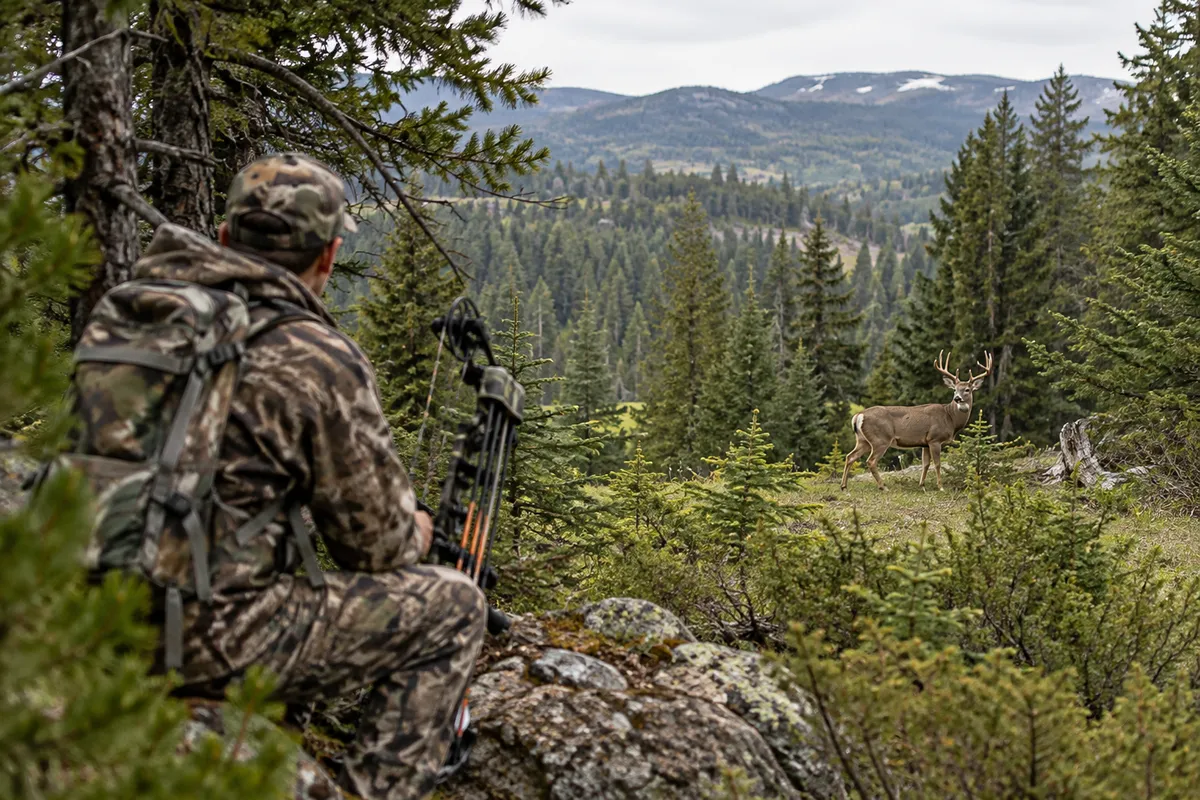
A doe bleat deer call can add a natural-sounding option to a whitetail hunt, but it is not a remote control for deer. Does vocalize in different circumstances, and other deer may hear a call without approaching—or may not react at all. The practical question is not simply whether a bleat sounds convincing; it is whether the timing, setting, wind, and your position make a response plausible.
Use a call as one small part of a larger plan. Identify the season and local rules, choose a setup with safe visibility, and make sure your scent and movement are not giving away your position. For broader planning, see the deer hunting hub and its guidance on the rest of the hunt.
What does a doe bleat communicate?
A bleat is a vocalization, not a single-purpose signal. Deer vocal behavior varies with age, social context, and circumstance. A short, soft sound may be associated with contact or reassurance, while more insistent vocalizations can occur in other contexts. The sound alone does not tell you exactly what a deer is doing or what it will do next.
That uncertainty matters in the field. A call is best understood as a possible social cue that may attract attention or prompt a deer to investigate. It cannot reliably imitate every individual or situation, and the meaning a deer assigns to it depends on what else it senses. A deer that smells a hunter, spots movement, or hears an unnatural sequence may leave regardless of the sound.
When might a doe bleat call be useful?
A bleat may be worth trying when deer are nearby but not committed, when an animal is moving through cover and might pause, or when a quiet sound could plausibly fit the local activity. It can also be an option during periods when deer are interacting socially. None of these situations guarantees success; local pressure, weather, visibility, and individual behavior all affect the outcome.
Think about the setting before calling:
- Season and local behavior: Deer movement and social interactions change through the year. Do not assume a call has the same relevance in every month or region.
- Distance and cover: A sound is more useful when a deer could hear it and has a reasonable route to investigate without crossing an obvious open barrier.
- Wind direction: If the wind carries your scent toward likely deer travel, a call will not solve that problem. Favor a position where the wind is less likely to expose you.
- Hunting pressure: In heavily pressured areas, deer may react cautiously to unfamiliar sounds. Reduce calling rather than escalating volume or frequency.
- Safety and identification: Call only where you can identify the area and maintain safe firearm or bow handling. Follow local regulations on calls and hunting methods.
A useful comparison is to treat the call as a prompt, not a plan. If the setup is poor, improve the setup rather than trying to make the sound do more.
How should you use a doe bleat in the field?
Start with restraint. Make one brief calling sequence at a natural volume, then remain still and listen. Allow time for a deer to respond indirectly: it may stop, look toward the sound, circle downwind, or approach quietly. Those possibilities are not proof that the call caused the behavior. Avoid fidgeting to search for movement; use cover and a deliberate scan.
If nothing happens, pause before deciding whether another call makes sense. Repeating the same sound frequently can make the setup seem unnatural and can increase the chance that you move or reveal yourself. There is no universal interval or number of calls that works everywhere. Let the terrain, observed deer behavior, and your ability to stay concealed guide the choice.
| Field condition | Reasonable approach | What to avoid |
|---|---|---|
| Deer nearby but not alarmed | Try one restrained sequence, then watch and listen | Calling repeatedly to force a response |
| Wind favors your position | Stay still and let the sound carry naturally | Assuming a call masks scent |
| Deer already moving away alertly | Usually stop calling and reassess | Pursuing with louder or more frequent calls |
| Poor visibility or uncertain background | Do not call until you can hunt safely | Drawing or handling equipment without a clear target area |
| High pressure or unfamiliar terrain | Use less sound and observe first | Treating a call as universally effective |
A call should not distract from safe shot decisions. Identify the animal and what lies beyond it before taking any shot, and follow all applicable rules. If a deer appears, the call has not changed the need for patience, a clear view, and a responsible decision.
Choosing and learning a call
Bleat calls come in different designs, and their sound, operation, and maintenance vary. Rather than assuming a device is realistic based on its label, listen to its sound in a controlled setting and learn the maker's operating instructions. Do not practice where an accidental sound could create confusion or interfere with other hunters. Specifications and availability can change, so consult the manufacturer or the original manual for product-specific details.
A simple practice routine can help you avoid exaggerated sequences:
- Learn the device's intended operation from its instructions.
- Listen to recordings from reputable wildlife education sources, keeping in mind that individual deer sounds vary.
- Practice briefly in a safe, non-hunting setting and aim for a modest, consistent sound rather than theatrical repetition.
- In the field, use the call only when the conditions and your position make sense.
This is not a substitute for observing deer. Quietly watching how animals use trails, openings, and bedding cover can help you decide whether calling is appropriate. The steps to prep for deer season cover wider planning considerations, while how deer are aged at check stations explains one way wildlife agencies assess harvested animals. Check current agency guidance for season dates, permitted equipment, and local restrictions.
Why a deer may ignore the sound
A deer may not hear the call, may not interpret it as relevant, or may simply continue what it was doing. Wind, vegetation, terrain, distance, and background noise affect how sound carries. A deer may also detect your scent or movement before the call matters. Even a well-timed call can produce no visible response.
A response is not always an approach, either. A deer that turns its head, pauses, or changes direction might be reacting to the sound—or to something else. Avoid overreading a single behavior. If an animal becomes wary, stop calling and give it space rather than trying to provoke a stronger reaction.
A practical decision framework
Before making a sound, ask four questions: Is calling legal here? Can I hunt this position safely? Is the wind reasonably favorable? Does the sound fit what I have observed? If any answer is no, wait or reposition when lawful and safe. If all answers are yes, one quiet attempt followed by careful observation is a sensible test—not a promise.
Keep notes after the hunt: weather, wind, habitat, time, deer behavior, and whether you called. A few observations can help you understand your own area without turning an anecdotal result into a rule. Do not infer that a call caused a deer to appear simply because the events happened in sequence.
Responsible calling is ultimately about judgment. Use the doe bleat as an optional way to communicate, respect the uncertainty of animal behavior, and let concealment, lawful practice, and safe decisions take priority over sound.
Frequently asked questions
Will a doe bleat call bring a buck in?
Sometimes a deer may investigate a bleat, but there is no reliable guarantee. Wind, pressure, season, cover, and the animal's behavior all matter.
How often should I use a doe bleat call?
There is no universal schedule. Try a restrained sequence, stay still and listen, then decide based on conditions rather than repeating calls automatically.
Can I use a doe bleat call during any deer season?
Rules vary by jurisdiction and can change. Check your state or local wildlife agency's current regulations for permitted calls and hunting methods.
Sources & further information
Consult these primary sources for current regulations, technical information and local guidance.