Brewster Buck: How to Read the Famous Whitetail Story
The Brewster buck name is tied to a widely discussed giant whitetail, but a nickname and a dramatic point count are not the same as a verified record. Here is how to evaluate the story, understand antler scoring and separate documentation from speculation.
What does “Brewster buck” refer to?
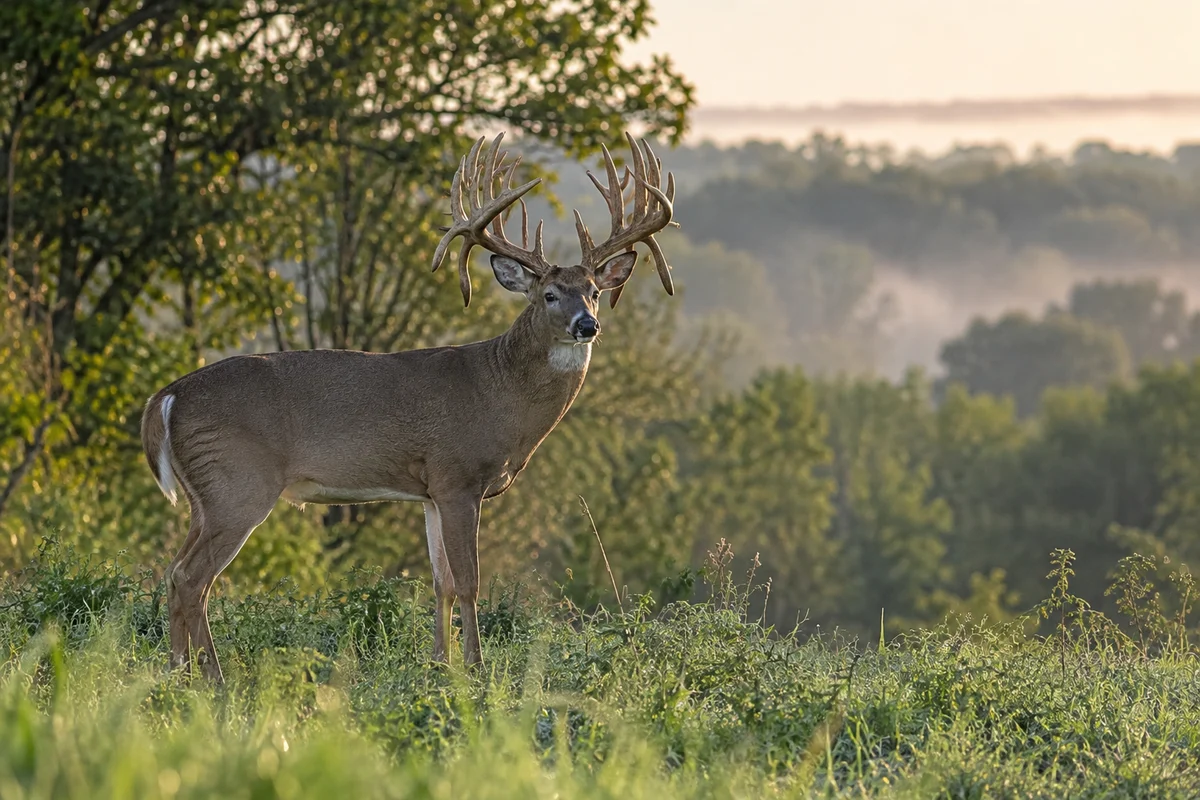
“Brewster buck” is commonly used for the high-profile whitetail associated with Luke Brewster. The phrase draws attention because the deer is described in public discussion as an unusually large-antlered buck. But a nickname is not an official record entry, and repeating a memorable number without its category, source and measurement status can leave readers with the wrong impression.
This article treats the name as a starting point for understanding trophy-buck claims, not as proof of a particular score or ranking. Headlines and retellings can compress several different things—an initial estimate, a gross score, a final net score, a state record claim or a national record category—into one phrase. Those are not interchangeable. When a specific claim matters, look for a record organization’s entry or a state wildlife agency’s documentation rather than relying on an unsourced caption or repost.
For broader context on the animal and the decisions that shape deer hunting, start with ODU Magazine’s deer hunting hub. It brings together practical and explanatory coverage without requiring every notable buck story to stand as a verified record.
Why can one buck have several different scores?
Antler scoring is a measurement system, not simply a count of visible points. A trained scorer measures features such as main beams, tines, circumferences and the distance between antler tips, following the rules of the organization or record category being used. The final number depends on which measurements are included and how the system treats differences between the two sides.
A gross score is generally the total before deductions for differences or asymmetry are applied. A net score reflects those deductions under the relevant rules. The same set of antlers can therefore be described with more than one score without anyone necessarily having made a math error; the speaker may be citing a different stage of measurement or a different scoring category. Comparisons are meaningful only when the category and method match.
Typical and non-typical classifications also matter. A typical frame follows a more familiar branching pattern, while irregular or abnormal growths can affect classification and scoring. A large number of points by itself does not determine whether antlers qualify as typical, establish a record, or make one deer directly comparable with another. The official category and measurements do that work.
If you encounter a number attached to the Brewster buck, ask whether it is a preliminary estimate or an official score, whether it is gross or net, and which category and record body are being cited. Without those details, the number may be interesting conversation, but it is not a complete record claim.
What evidence makes a record claim credible?
A strong claim has a traceable chain of documentation. That usually means the deer’s identity and harvest information can be connected to the person submitting it, the measurements were taken under the scoring organization’s rules, and the final result is published or otherwise confirmed by the relevant authority. A clear source matters more than how often a figure has been repeated.
For a state record, the state’s own program or wildlife agency is the place to confirm the category and current entry. For a national organization’s record, use that organization’s official record resources and scoring standards. The Boone and Crockett Club publishes information about its North American big-game records and scoring system; its categories should not be casually mixed with those of another organization.
A careful reader should also note what the evidence does not establish. A score entry does not by itself explain the deer’s age, habitat, genetics, management history or exact circumstances. Nor does a photograph reveal a reliable score: perspective, antler position and image cropping can make proportions difficult to judge. If an account supplies no official entry or transparent measurement context, describe it as a reported or celebrated buck rather than presenting its ranking as settled fact.
Does antler size tell you how old a deer was?
Not on its own. Antler growth is influenced by several factors, including age, nutrition, health and genetics, and those influences do not operate as a simple ruler. A large rack does not prove that a deer was a certain age, and a smaller rack does not establish that it was young. Age estimates require evidence beyond the antlers.
Wildlife professionals may estimate a harvested deer’s age by examining its teeth, although methods and available services vary by location. Check-station procedures can differ among jurisdictions, so a hunter should consult the relevant agency rather than assume every station offers the same examination. ODU Magazine’s explainer on how deer are aged at DNR check stations describes why age assessment is a separate question from antler scoring.
That distinction is useful when evaluating any trophy story. Score describes antler measurements under a particular system; age estimation addresses the animal’s life stage; harvest records establish when and where a deer was legally taken. One kind of evidence should not be used as a substitute for another.
What can hunters learn from a famous buck story?
A remarkable deer can prompt useful questions about habitat, hunting pressure and management, but one animal cannot demonstrate that a management approach will produce the same result elsewhere. Land size, food availability, cover, weather, local deer density and rules all differ. A single success story is an illustration, not a controlled comparison or a guarantee.
Long-term habitat work is usually more informative than chasing a single headline. Hunters and land managers can consider the condition and variety of available cover, the effects of access and disturbance, and the local population goals set by wildlife authorities. For background on how organized deer-management ideas developed, see this history of the Quality Deer Management Association. The history can help explain a management philosophy, but it should not be treated as a prescription for every property.
For an individual season, preparation and legal compliance are more actionable than trying to reproduce someone else’s trophy result. Review the current regulations for the place you hunt, confirm tagging and reporting requirements, and make a plan for safe firearm or archery use. The deer-season preparation checklist offers practical planning context; agency rules remain the authority for current requirements.
How should you check a Brewster buck record claim?
Use a short verification checklist before sharing a score or calling any deer a record:
- Identify the claim. Is it a state, national or organization-specific record, and in which category?
- Find the primary source. Look for an official record entry or a statement from the responsible wildlife agency or record organization.
- Read the score label. Confirm whether it is gross or net and whether it is a preliminary or final measurement.
- Check the classification. Typical and non-typical categories are not interchangeable.
- Separate facts from interpretation. A confirmed score does not automatically verify claims about age, habitat or management.
- Check local rules independently. For hunting regulations and reporting, consult the agency responsible for the jurisdiction. The Illinois Department of Natural Resources is an official starting point for Illinois information; hunters elsewhere should use their own state agency.
The Brewster buck remains an attention-getting reference in whitetail conversation. The most useful way to discuss it is precise: identify the claim being made, name the scoring context, and distinguish an official record from a popular retelling. That approach gives the deer its due without turning an uncertain detail into fact—and makes any record story easier to understand, compare and verify.
Frequently asked questions
Is the Brewster buck an official world-record whitetail?
Do not infer an official world-record status from the nickname or a repeated score. Confirm the claim against the relevant record organization’s current entry, including its category and scoring method.
Does a high point count establish a buck’s score?
No. Point count is only one descriptive feature. Formal scoring uses multiple measurements and category rules, and gross and net scores can differ.
Can antlers alone tell a deer’s age?
No. Antler size is not a reliable stand-alone age test. Age estimates use other evidence, such as tooth examination where that service is available.
Sources & further information
Consult these primary sources for current regulations, technical information and local guidance.