Illinois State Record Tiger Muskie: How to Verify the Claim
A headline about a giant tiger muskie from Goose Lake is not, by itself, proof of an Illinois record. Here is how to assess the fish’s identity, the location and the documentation needed to verify a record claim.
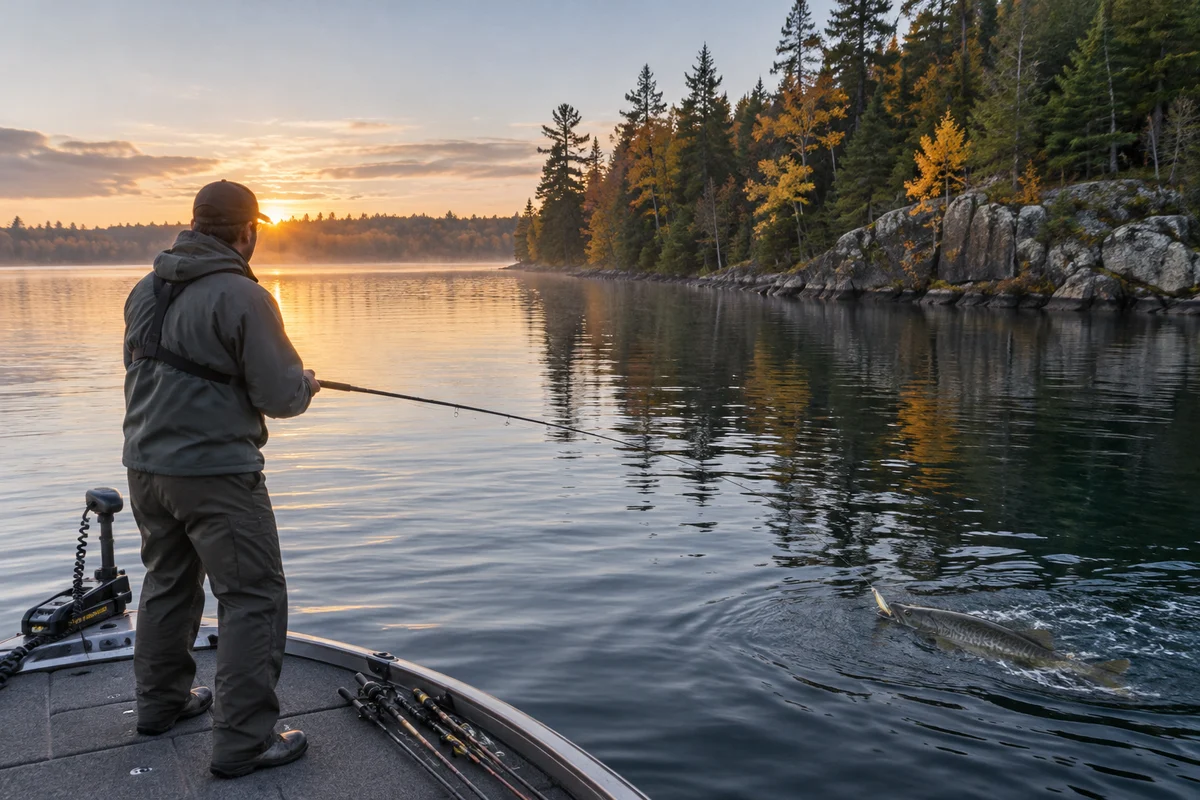
The phrase Illinois state record tiger muskie can describe a record claim, but a headline alone cannot establish that a fish was officially measured, identified or accepted. A responsible check starts with the original documentation: which Goose Lake, what fish species, what measurement, and which record authority reviewed the catch? Without those details, the story should be treated as an unverified claim—not as a confirmed state record.
Tiger muskies are a hybrid of muskellunge and northern pike. Their appearance can resemble either parent, so identification and record category matter. This guide explains what to look for and where to verify it, without assuming that a particular Goose Lake catch set a record. For broader species and fishing context, visit the muskie fishing hub.
What does “state record” actually mean?
A state record is not simply the largest fish someone reports catching within state borders. It is a recognition issued under a specific program’s rules, and those rules define eligible species, qualifying waters, required evidence and accepted measurements. A state agency record and an International Game Fish Association record are separate recognitions; satisfying one program’s requirements does not automatically establish a record under the other.
Before repeating a claim, find the exact record category and its official listing. Check whether the program distinguishes tiger muskellunge from pure muskellunge or northern pike, and whether it recognizes records by weight, length, or another method. The current listing and rules from the Illinois Department of Natural Resources are the appropriate starting point for an Illinois state claim. The IGFA maintains a separate international record program with its own requirements.
A record can also change. An older article may describe a catch as a record at the time, while a later accepted catch may supersede it—or the original claim may never have been formally submitted. Cite the governing record authority and the date its listing was checked rather than relying on a recycled headline.
How can you tell a tiger muskie from its parent species?
A tiger muskie is the hybrid of a muskellunge and a northern pike. The name refers to the cross, not simply to any large pike-like fish with striking bars. Tiger muskies commonly show dark vertical markings against a lighter body, but color and pattern vary; appearance alone should not carry the full burden of record identification.
A clear set of photographs can help an expert assess the fish’s body pattern and features, but documentation should also include the fish’s full length and visible distinguishing characteristics. For an official claim, follow the record program’s species-identification instructions and preserve any required evidence. If identification remains uncertain, report the uncertainty rather than choosing the more impressive category.
The difference matters because northern pike, muskellunge and their hybrid are not interchangeable record labels. Readers interested in related species can compare the practical context in how to fish for pike and read about a tiger muskie record claim from Utah. Those stories do not verify an Illinois catch; they illustrate why species and jurisdiction must be kept distinct.
What evidence would verify the Goose Lake story?
First establish which Goose Lake the story means. The name alone is not a unique location identifier. An Illinois record claim needs a precise waterbody identification—ideally the county and other location details—and confirmation that the water qualifies under the applicable state program. Do not infer a location from a short headline or assume that every lake with the same name is the one intended.
Then look for a primary record entry or an official announcement that identifies the fish, angler, catch location, accepted measurement and record category. Supporting material may include dated photographs, witness information, a measurement record and the program’s acceptance notice. The exact evidence required varies, so use the current official instructions rather than treating this list as a substitute for them.
If an article gives no weight or length, no county, and no link or reference to an official record entry, those omissions prevent readers from independently checking the claim. They do not prove that the catch did not happen; they mean the record status remains unsubstantiated from the information presented. Keep the distinction between “reported caught,” “submitted for consideration” and “officially recognized.”
Why do weight, length and handling details matter?
Record programs need measurements that can be checked against their rules. A weight claim is meaningful only when the method and required verification meet the program’s standards; a length claim likewise depends on how and where the fish was measured. A number copied from a caption, without a record authority or supporting method, is not equivalent to an accepted record measurement.
Fish handling also matters. If a fish is being considered for a record, anglers should consult the relevant program before the trip so they understand its documentation requirements. Handle the fish carefully, minimize time out of water, and follow local regulations and conservation guidance. These are sound practices regardless of whether a record application is planned.
When a record program requires a retained specimen or other particular procedure, check those requirements and current state rules in advance rather than improvising after the catch. Conversely, do not claim that a fish was released, weighed on certified equipment or accepted by an authority unless a reliable source documents those facts. A careful account distinguishes what is known from what is missing.
What makes Goose Lake a useful clue—and a limitation?
The lake name can help narrow a search, but it is not enough to establish the location of a catch. Several places may share a common name, and an article may omit county, access point or other identifying details. Search official state materials and the record program’s entry for a matching location, while checking that the fish category and claimed year also align.
This is especially important when a legacy headline is the only traceable reference. Older web pages can be copied, shortened or detached from their original context. Repetition across websites does not turn an assertion into independent confirmation. Seek a primary agency record or a contemporaneous, attributable announcement; if none can be found, describe the status plainly as unverified.
For fishing context beyond record research, the muskie fishing in Indiana guide offers a neighboring-state perspective, not evidence about Illinois records. Keep geography, species and record authority attached to every claim so readers do not mistake a related story for confirmation.
How should readers report the claim accurately?
Use wording that matches the evidence. If an official record page lists the catch, identify the authority, category and listing when describing it. If a source merely reports a large fish, say it was reported as a catch and avoid calling it the state record. If key details cannot be located, state that the claim could not be independently verified from the available documentation.
A concise verification checklist helps:
- Identify the official record program and its current category.
- Confirm that the fish was identified as a tiger muskie under that program’s rules.
- Establish the exact Illinois waterbody, not just a shared lake name.
- Find the accepted measurement and the program’s official record entry or decision.
- Separate the date of the catch from the date a record was recognized or updated.
That approach preserves the interest of a remarkable fish story without turning an unconfirmed headline into a fact. Until a primary record source supports the Goose Lake claim, the accurate conclusion is limited: the headline describes an alleged record catch, but the record status is not established here.
Frequently asked questions
Is the Goose Lake tiger muskie an Illinois state record?
A headline alone does not establish official record status. Verify the fish, exact lake, measurement and category against the current Illinois record listing or the governing program’s documentation.
What is a tiger muskie?
A tiger muskie, also called a tiger muskellunge, is a hybrid of muskellunge and northern pike. Identification should follow the relevant record program’s requirements rather than relying only on a fish’s color pattern.
Where should I check Illinois fish records?
Start with the Illinois Department of Natural Resources and its current state-record information. For a separate international record claim, consult the IGFA’s own categories and rules.
Sources & further information
Consult these primary sources for current regulations, technical information and local guidance.