Bass Eats Duck: What a Surface Strike Can—and Can’t—Tell Anglers
A dramatic surface encounter can make bass seem like opportunistic giants. Here is what the observation can—and cannot—tell anglers about feeding behavior, habitat, and responsible fishing.
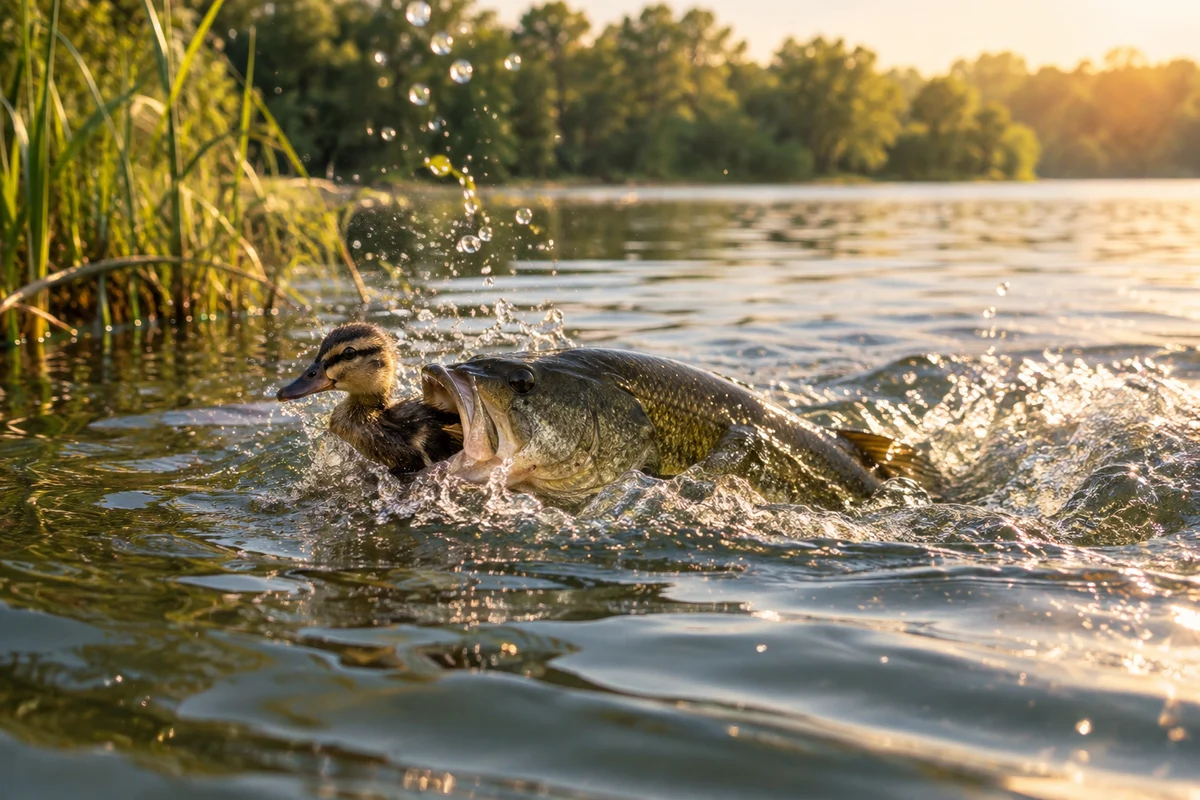
A bass eats duck moment sounds like a clear-cut feeding event, but a brief surface video rarely tells the whole story. A fish may seize, investigate, or simply strike at a moving object; without a clear view of what happened before and after, the clip cannot establish that a duckling was swallowed. The useful takeaway is broader: largemouth bass are opportunistic predators, and anglers can learn from surface activity without turning one dramatic encounter into a rule about fish behavior.
Can a bass really eat a duckling?
Large largemouth bass can take surprisingly substantial prey when opportunity, size, and conditions align. Their diet commonly includes fish and other aquatic animals, while young bass rely more heavily on small invertebrates and other available prey. A vulnerable animal at the water’s edge could attract a strike, but a video alone may not reveal whether the fish captured, injured, or consumed its target.
Scale is difficult to judge in water. A fish close to the camera can look much larger than it is, and a splash can conceal the key moment. Even when an attack is visible, the distinction between a strike and successful feeding matters. Treat a dramatic clip as an observation, not proof of a routine food source or a verified account of what the fish swallowed.
This is also not a reason to approach nesting or brooding waterfowl. Disturbing wildlife to provoke a reaction can put animals at risk and may violate local rules. Watch from a distance, do not bait wildlife, and leave a site if birds show signs of stress.
Why do bass strike near the surface?
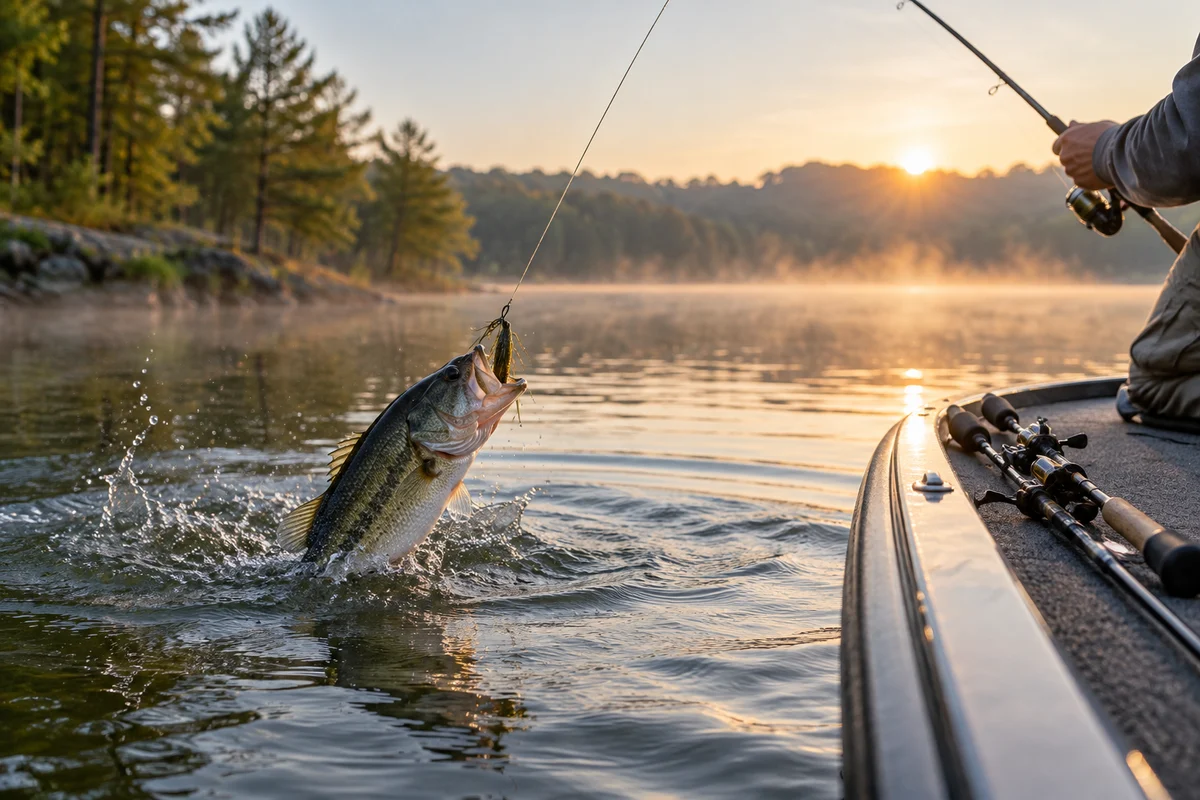
Bass use a mix of feeding opportunities and behavioral responses. They may pursue prey near the surface, react to movement, or strike at an object that enters their territory. A visible splash does not by itself identify the fish’s motivation. Light, water clarity, cover, and the movement of the object all affect what an angler can see—and what a fish may perceive.
Surface activity can be especially noticeable around shallow cover, weed edges, fallen branches, or points where small fish gather. Birds feeding or moving through the same area may signal that prey is present, but they do not guarantee bass are actively feeding. Look for repeated signs, such as baitfish scattering or several fish breaking the surface, rather than making a decision from one isolated splash.
What can anglers learn from unusual prey encounters?
The practical lesson is to pay attention to location and timing, not to imitate a rare event literally. If bass are feeding near the surface, a lure that stays in the strike zone and moves naturally may be more useful than a heavy presentation that drops below the activity. Match the approach to the water and fish behavior, and keep casts clear of birds and other wildlife.
For anglers comparing topwater options, this overview of a floating buzz bait can help explain how a lure’s buoyancy and retrieve style affect its presentation. A surface lure should be retrieved with control, especially around vegetation and shorelines used by waterfowl. If birds are close, wait until they move or choose another area rather than casting into their path.
A surface commotion also does not mean every bass nearby will respond to the same lure. Fish can be selective, and pressure, weather, and forage availability change the picture. If a fast surface retrieve gets no response, slow down, change the angle, or move on. Avoid repeatedly casting at a fish or wildlife encounter simply to recreate a clip.
How should a fishing presentation change around cover?
Cover offers bass places to ambush prey, but it also raises the chance of snagging vegetation, branches, or wildlife. Make accurate casts toward open pockets and edges, not into a group of birds. Keep hooks controlled while handling tackle, and retrieve a lure promptly if it comes near an animal. If a bird becomes entangled, do not make a risky grab; contact local wildlife authorities or a licensed rehabilitator for guidance.
When fish are holding close to cover but not chasing on top, a slower, compact option may be appropriate. The Ned rig finesse system is an example of a presentation anglers consider when they want to work more deliberately rather than imitate a surface disturbance. The right choice depends on local regulations, habitat, and conditions—not on a single unusual wildlife clip.
How can anglers observe wildlife responsibly?
Use binoculars or a zoom lens rather than approaching animals. Keep dogs leashed where required, give nests and young animals a wide berth, and never feed wildlife or use bait to draw a bird into a strike zone. If an encounter is unfolding naturally, observe quietly and leave the animals room to move. A short recording is not worth disrupting feeding, nesting, or escape behavior.
Fishing rules vary by location and season. Check the relevant state wildlife agency for bass seasons, license requirements, protected areas, and rules about handling wildlife. For broader freshwater fishing and habitat context, explore more bass-fishing coverage. Ethical observation and lawful fishing go together: anglers protect the resource by leaving wildlife undisturbed and following local regulations.
What a video can’t establish
A short clip usually lacks the context needed to identify the fish, measure it reliably, confirm the animal involved, or establish the outcome. Camera perspective distorts scale; edits may omit what happened next. A clip may show an attempted strike but not ingestion. Unless a reliable observer documents the full event and relevant details, claims about an exceptional meal should remain unverified.
That caution does not make the encounter uninteresting. It points to a more useful question: what conditions bring predators and prey together at the surface? Observing cover, forage, and repeated activity can inform an angler’s choices, while recognizing uncertainty keeps an unusual sighting from becoming a misleading claim.
A sensible takeaway for anglers
Bass are adaptable predators, and surface strikes can happen for several reasons. A report that a bass eats duck should be treated carefully unless the footage clearly supports that conclusion. Watch wildlife from a distance, fish around—not through—birds, and choose presentations based on conditions rather than spectacle. The best observation is one that leaves the animals and their habitat undisturbed.
Frequently asked questions
Do bass commonly eat ducklings?
A dramatic surface strike does not establish how common such an event is. Bass are opportunistic predators, but a video may not show whether the fish captured or consumed the animal.
Should anglers cast toward waterfowl if bass are feeding nearby?
No. Keep casts away from birds and give wildlife space. Wait for the area to clear or fish another location; never use bait or a lure to provoke an interaction.
What should I do if a bird is hooked or entangled?
Avoid unsafe attempts to grab or handle a distressed wild bird. Contact local wildlife authorities or a licensed wildlife rehabilitator and follow their direction.
Sources & further information
Consult these primary sources for current regulations, technical information and local guidance.