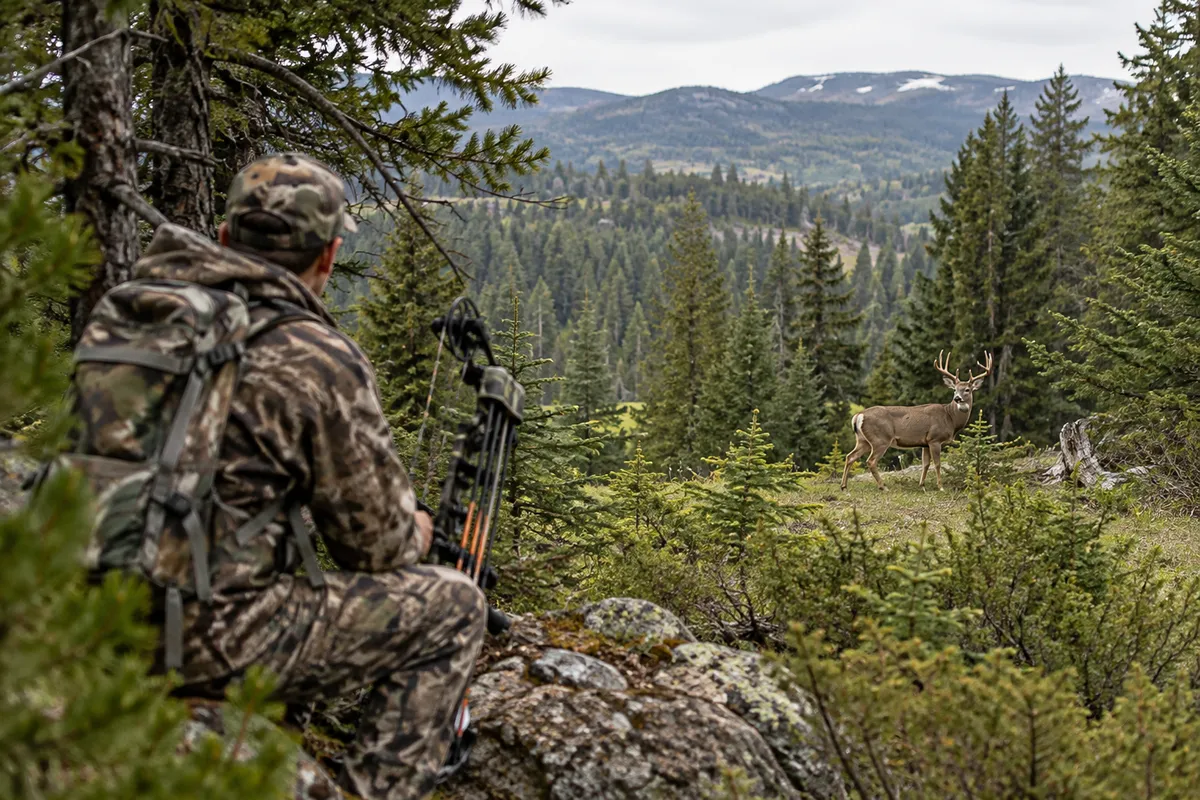
51-Point Buck: How to Evaluate an Unusual Antler Record
A report of a 51-point buck can prompt questions about antler points, scoring rules, and records. Here is a careful way to assess such claims without treating an intriguing number as verification.

A 51-point buck is an arresting description, but the number alone does not establish a record. “Points” may be counted under different conventions, while formal antler scoring considers measurements and eligibility rules that a headline may not mention. Without a verifiable registry entry and documentation, it is best to treat a dramatic number as a claim—not a confirmed record. This guide explains what to ask, how to separate a point count from a score, and how to keep the focus on responsible deer hunting.
What does “51-point buck” mean?
In ordinary conversation, a point is often described as a projection from an antler beam. But people do not always count the same way. One person may include small projections that another excludes; some descriptions count both antlers together, while others use a different convention. A report may also use “point” loosely rather than following a named scoring system.
That matters because a point count is not a standardized antler score. A buck described as having many points is not automatically larger by every measurement, and the count does not reveal antler spread, beam length, mass, symmetry, or the condition of the specimen. Ask what was counted and how before comparing the number with another deer.
A useful first question is simple: Is “51” a field estimate, a count made from photographs, or a figure recorded during an official measurement? Those are different levels of evidence. A photograph can help readers see why a deer attracted attention, but perspective, overlapping tines, and image quality can make a precise count difficult.
Does the number prove a giant record?
No. A sensational point count does not, by itself, establish a state, national, or world record. Record programs generally use defined categories, measurement procedures, documentation, and eligibility rules. Which rules apply depends on the organization and the kind of entry. A reader should not assume that every unusual deer has been submitted, accepted, or compared within the same category.
The International Game Fish Association is associated with fishing records, not deer-antler records. For deer, identify the relevant wildlife agency or recognized antler-record program and consult its own current guidance. Do not substitute a social-media post, a headline, or an unattributed image caption for a registry result.
A careful account distinguishes four things: a reported point count, a measured antler score, an official entry, and a ranking within a defined category. They are related only when evidence connects them. If a source does not identify the measuring organization, category, and verification status, describe the claim as unverified rather than repeating it as a record.
How do antler scoring and point counting differ?
Scoring systems can account for more than the number of projections. Depending on the system and category, measurements may include antler beams, tine lengths, circumference, spread, and deductions for asymmetry. The rules may also specify how abnormal points are treated and how a specimen is classified. The result is a measurement under a particular rule set, not a universal translation of “points.”
For that reason, avoid converting a point count into a score or comparing a claimed total with another record from a different category. Even two entries with similar-looking antlers may be evaluated under different rules. The meaningful comparison is between documented entries measured under the same applicable standards.
If you are reading a report, look for the name of the scoring system, the category, the measurement date if available, and whether the result is preliminary or final. If those details are absent, the fairest conclusion is that the number is an interesting description, not enough information to rank the deer.
What evidence helps verify an unusual deer claim?
Start with the original source. A trustworthy account should identify where the information came from and avoid presenting hearsay as a measured result. If the claim concerns a record, check whether the relevant record organization lists the specimen or explains its verification process. If the claim is tied to a harvest, state wildlife regulations and reporting requirements are also relevant; requirements vary by jurisdiction and season.
Useful documentation may include clear photographs from multiple angles, a consistent account of how the antlers were counted, and measurements made according to the named program’s rules. Those materials do not automatically make an entry official. The record organization’s own procedures decide what documentation it accepts and whether it confirms an entry.
Be cautious with reposted photographs that lack a photographer, location, date, or original caption. Images can circulate with changed descriptions, and a picture cannot establish legal harvest, ownership, or record status. Avoid filling gaps with guesses about the hunter, place, animal, or score. When a detail cannot be confirmed, leave it out.
How should hunters respond to an extraordinary buck?
A surprising animal is not a reason to rush a decision. Follow local hunting laws, seasons, licensing requirements, tagging and reporting rules, and safe firearm or archery practices. Regulations differ across states and can change, so consult the wildlife agency responsible for the specific location rather than relying on a generalized article.
Ethical decisions begin well before a shot: know the target and what lies beyond it, identify a safe direction, and do not take a shot when conditions or identification are uncertain. Respect property boundaries and access rules. If a deer is encountered outside an open season or under circumstances that raise legal questions, contact the appropriate wildlife authority instead of making assumptions.
Preparation is practical, not glamorous. Review steps to prep for deer season for a checklist-oriented approach, and explore the deer hunting hub for related guidance. If deer sightings are part of the question, why you may not be seeing deer offers another angle on observation and expectations. None of these resources substitutes for current local regulations.
What does a high point count say about deer management?
A striking rack can invite speculation about age, genetics, habitat, or management, but a single report cannot establish any of those explanations. Antler growth is influenced by multiple factors, and a number without verified measurements and biological context is not a population study. Avoid claims that one animal proves a particular management strategy works—or that it signals a trend.
Deer management is local. Wildlife agencies set rules in response to regional conditions, and hunters can support sound management by following regulations, reporting harvests as required, and treating wildlife respectfully. A dramatic antler description may be a conversation starter, but conservation conclusions require broader evidence than one animal or one photograph.
The same care applies to the word “record.” It is reasonable to say that a deer was reported as having an unusually high point count. It is not reasonable to call it a verified record unless the evidence and the appropriate record authority support that statement. Precise language protects readers from rumor and gives genuine documentation room to speak for itself.
A practical checklist for reading the claim
Before sharing a 51-point buck story as fact, ask: Who first reported the count? What counting convention was used? Is there a named scoring system and category? Has a recognized program verified the entry? Are photographs and measurements attributable to a reliable source? Does the account separate confirmed facts from speculation?
If the answers are unavailable, the story can still be described accurately: a report claims a buck had an extraordinary number of points, but the count or record status has not been independently verified. That wording preserves the unusual nature of the report without turning uncertainty into a false ranking.
For readers, the distinction is straightforward: point count describes projections under a stated convention; score reflects measurements under a defined system; record status depends on verification and category rules. Until those pieces are documented, the most responsible conclusion is that the claim remains a claim.
Frequently asked questions
Is a 51-point buck automatically a world record?
No. A point count alone does not establish a record. Verification depends on the relevant category, measurement rules, documentation, and the record program’s decision.
Does a higher point count always mean a higher antler score?
No. Scoring may include several measurements and rules beyond tine count. Comparisons are meaningful only when entries use the same scoring system and category.
Where should I check current deer hunting rules?
Check the wildlife agency for the state or jurisdiction where you plan to hunt. Seasons, permits, reporting requirements, and other regulations vary by location and can change.
Sources & further information
Consult these primary sources for current regulations, technical information and local guidance.