Scent Blaster: What Scent Dispersal Can—and Can’t—Do
A scent blaster is only one part of a hunting scent plan. Learn how to think about dispersal, wind, placement, and realistic expectations without treating any device as a substitute for sound fieldcraft.
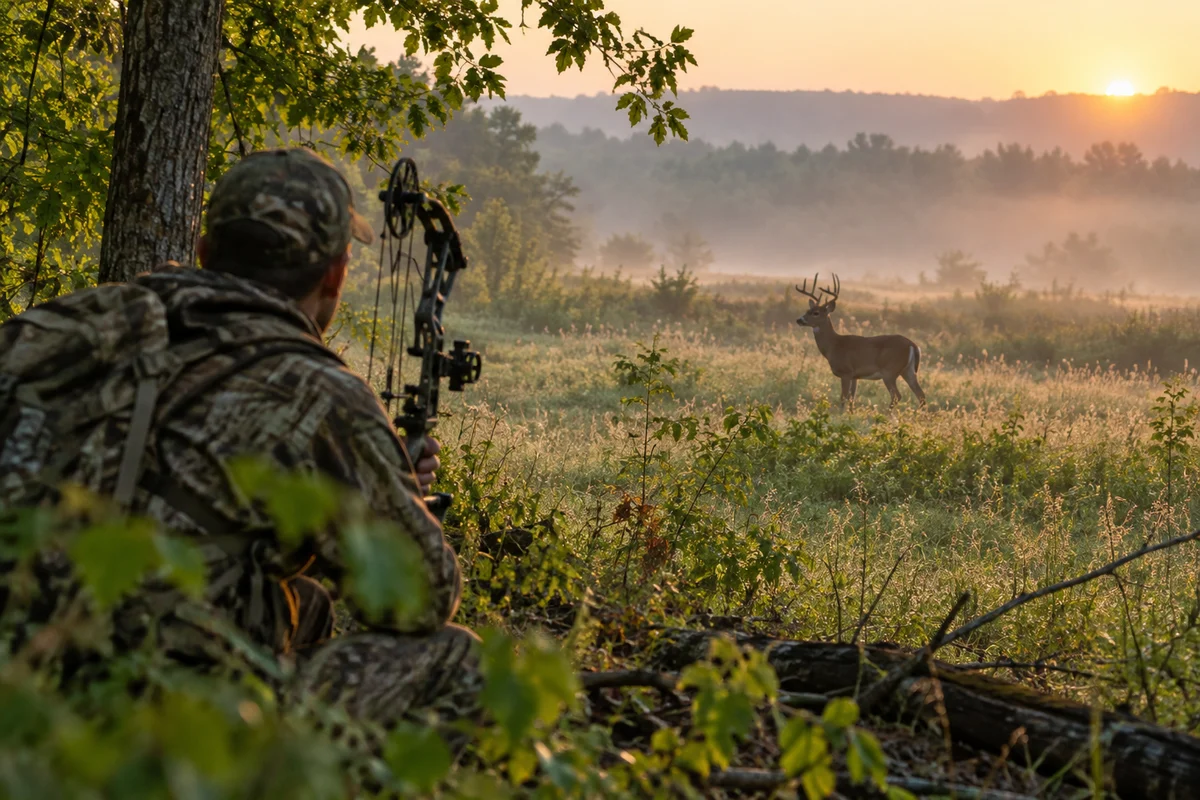
A scent blaster is intended to disperse or distribute odor in a hunting area, but the name alone does not establish how a particular model works. Designs, instructions, and availability can vary, so begin with the specific manufacturer’s manual rather than assuming that every product uses the same method. More importantly, no scent-dispersal device can make wind direction, animal behavior, or your own approach irrelevant.
For deer hunters, scent management works best as a set of modest, practical choices: avoid unnecessary odor, understand the air movement at your stand, and do not expect an attractant or device to overcome unfavorable conditions. This guide explains how to evaluate a scent blaster without making unsupported claims about its performance.
What does a scent blaster do?
The phrase generally describes equipment intended to spread scent through an area. That broad description is not enough to determine whether a device uses evaporation, airflow, a replaceable scent source, or another approach. Check the product label and manual for the actual mechanism, approved substances, setup requirements, and safety cautions.
Keep three concepts distinct:
- Attractant: A scent intended to prompt interest or investigation. Its effect depends on the animal, context, season, and local conditions.
- Cover scent: An odor intended to blend with or mask other odors. Masking should not be treated as erasing human scent.
- Scent control: Measures to reduce avoidable odor on clothing and equipment. These are preventive, not guarantees.
A device may be marketed around one or more of these ideas, but marketing language is not evidence that it will consistently change an animal’s behavior. For broader context, compare a dispersal device with the principles in our guide to scent control for deer hunting.
Does dispersing more scent attract more game?
Not necessarily. More odor in the air does not automatically mean more animals, more encounters, or a better chance of a responsible shot. A scent’s appeal is species- and situation-dependent, and animals may ignore it, investigate from a different direction, or avoid an unfamiliar odor. Wind and terrain also influence where scent travels.
The phrase “gets more scent out” describes a hoped-for function, not a measurable result unless a maker provides clear, relevant test information. Even a documented output rate would not, by itself, prove that game responds more often. Avoid treating a product name or a dramatic claim as a field guarantee.
A useful way to assess claims is to ask:
- What exactly is dispersed, and is that substance labeled for the intended use?
- Does the manufacturer explain the device’s operation and limitations?
- Is there independent, controlled evidence of an animal response, rather than only a demonstration of odor output?
- Can the device be used legally and safely in the place and season you hunt?
If those answers are unclear, keep expectations low and choose a simpler plan.
How should wind and placement shape your plan?
Treat wind as a moving condition, not a fixed compass direction. At a stand or blind, check prevailing direction before leaving home, then reassess near the site. Local terrain, vegetation, temperature changes, and obstacles can make air movement differ from the forecast. A lightweight wind indicator can help reveal direction at your position, but it does not map every current through a valley or timber edge.
Place yourself so likely animal travel routes are not routinely downwind of your approach or waiting position. Consider access and exit as carefully as the stand location: crossing a trail or bedding area on the way in may matter more than any device you carry. If conditions shift toward a route you need to keep undisturbed, consider leaving or relocating rather than adding more scent.
A scent blaster should not be used to justify placing an attractant where baiting or feeding is prohibited. Rules can differ by jurisdiction, species, season, and disease-control area. Check current state wildlife regulations before using any scent, bait, or dispenser. The ODU Magazine hunting and archery hub is a starting point for related field topics, not a substitute for official local rules.
A field decision framework
| Field condition | Sensible response | What not to assume |
|---|---|---|
| Wind is steady and carries your scent away from likely travel | Keep access quiet; use equipment only as its manual and local rules allow | That an attractant will guarantee an approach |
| Wind is variable or swirling | Reassess the location or wait for a better setup | That dispersal can cancel changing airflow |
| Your route crosses likely animal movement | Change the route, timing, or stand plan where practical | That cover scent erases a ground-level scent trail |
| Regulations on scent or bait are unclear | Pause and verify with the wildlife agency | That a product’s availability means it is legal everywhere |
| Device instructions or scent contents are uncertain | Do not improvise; consult the manufacturer | That models with similar names operate alike |
This framework favors decisions you can control: location, access, timing, and compliance. It does not promise a harvest.
What should you check before using one?
Read the manual for the exact model. Confirm whether it is designed for outdoor use, how its scent source is handled, whether it has restrictions near heat or open flame, and how it should be stored. Do not substitute chemicals or use a scent in a way the label does not permit. Keep containers secured away from children, pets, food, and drinking water, following the product’s safety directions.
Inspect the device before a trip. Look for damage, leaks, missing parts, or unclear labels. If a model requires batteries or another power source, follow its stated handling instructions; do not infer operating time or output from a product name. When the manual is unavailable, ask the manufacturer for current documentation rather than relying on a secondhand description.
Also account for other hunters and land users. Avoid placing scent near trails, property boundaries, camps, or public-use areas where it could create confusion or nuisance. Pack out used containers and follow land-manager requirements.
When is ordinary scent control the better choice?
Often, the best investment is a consistent routine rather than another device. Keep hunting clothes separate from fuel, food, pets, and household odors. Store gear in a clean, dry place; handle it with clean hands; and avoid unnecessary trips across the area you plan to hunt. These steps reduce avoidable contamination, although they cannot make a person odorless.
Some hunters also use wind-aware equipment and natural cover. Those tools are useful only when matched to the actual situation. For example, a blind can help with concealment, but it does not automatically control scent or compensate for poor access. See our overview of natural ground blinds for deer hunting for how concealment choices fit into a broader setup.
A scent-dispersal device may be worth considering when its purpose is clear, its instructions are available, and its use is legal. It is less compelling when the plan depends on a device to solve a bad wind, an exposed approach, or an uncertain regulation. Hunters interested in additional equipment context can also read our overview of scent control for deer hunting, while remembering that product details and availability may change.
How can you judge whether it helped?
Keep observations modest and specific. Note wind direction and changes, where you entered, how the device was set up according to instructions, and whether animals were observed. Do not credit a single encounter—or a quiet sit—to one product; animal movement has many causes. If you compare outings, recognize that weather, location, pressure, timing, and individual animals differ, so informal notes are not controlled proof.
The most dependable conclusion is a limited one: a scent blaster may distribute a scent as its design intends, but that does not establish that it attracts more game. Verify the model’s actual operation, follow the label and local regulations, and build the hunt around wind-aware access and sound judgment. If those fundamentals are unfavorable, skip the device and change the plan.
Frequently asked questions
Does a scent blaster guarantee that deer will come closer?
No. A device may disperse scent, but animal response varies and cannot be guaranteed. Wind, location, season, and other conditions still matter.
Can a scent blaster overcome a bad wind?
No. Dispersal does not cancel changing air movement or erase the scent trail created by access. Reassess or relocate when wind puts likely travel routes at risk.
Are scent devices legal everywhere?
No universal rule applies. Check current wildlife regulations for your jurisdiction, species, season, and location before using any scent or dispenser.
Sources & further information
Consult these primary sources for current regulations, technical information and local guidance.