Natural Ground Blinds for Deer Hunting: Build Better Cover
A natural blind can soften a hunter’s outline, but good concealment depends on placement, wind, and clear shooting lanes—not a wall of brush. Use this practical approach to plan a low-impact, safe setup that fits the terrain and local rules.
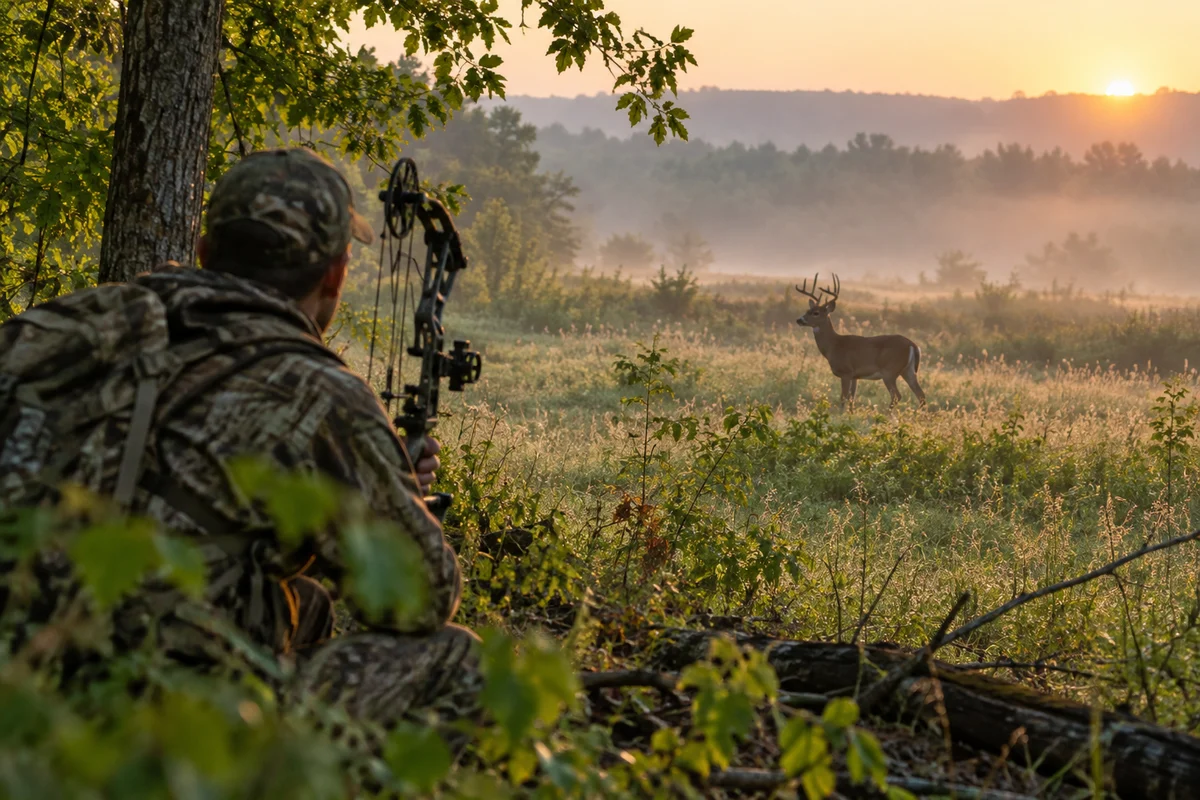
Natural ground blinds for deer hunting work best when they look like a natural part of the landscape rather than a brush fort dropped into it. The goal is to break up your outline, reduce movement that deer can notice, and preserve a clear view of the area you intend to watch. Start with the site, wind, and safety; then use only enough natural material to blend your position into existing cover. A carefully chosen location can be more effective—and less disruptive—than piling on branches. For broader seasonal context, visit the hunting and archery hub.
What makes a natural blind effective?
A useful blind interrupts the recognizable shapes of a person: head, shoulders, and arms moving against open sky or a uniform background. It does not need to be opaque. In fact, dense cover can make it harder to see, move quietly, or maintain a safe field of view. Think of the blind as a visual screen around your position, with deliberate openings for observation.
The best cover is usually already present: a fallen tree, brush edge, tall grass, or the shadow beside a trunk. Additions should make that background less uniform without making it look newly disturbed. Vary the height and angles of stems, and avoid an artificial straight edge. From your seat, check what a passing deer might see at eye level as well as what a person approaching from another direction could see.
A natural blind cannot compensate for constant movement or poor scent and wind decisions. Choose a setup that lets you sit comfortably and turn your head slowly, rather than one that forces frequent repositioning. If your gear creates a conspicuous shape or shine, plan around it; a discussion of camo patterns and visual blending can help you think about how colors and pattern scale relate to surroundings, but no pattern replaces good placement.
How should you choose a location?
Look for a spot with a useful view and a natural backdrop, not simply the thickest vegetation. A brushy edge, the lee side of a downed trunk, or a gap between trees may provide concealment while leaving room to see. Consider the likely approach routes, but do not assume deer will follow a fixed trail. Choose a position that lets you observe a broader area without repeatedly shifting your body.
Wind direction matters because scent can travel beyond what you can see. Check the forecast and observe local conditions; terrain, vegetation, and changing temperatures can make airflow less predictable than a simple map suggests. Avoid a setup where the likely wind carries your scent toward the area you hope to watch. Have another location in mind if conditions change rather than trying to solve a bad wind by adding more cover.
Also consider access and disturbance. A blind that requires noisy travel through the area you plan to observe may undermine its purpose. Use established paths where practical, avoid trampling sensitive vegetation, and do not place a blind where it could interfere with other hunters, public access, livestock, or a landowner’s use. On public land, confirm whether constructing or leaving a blind is allowed; rules differ by agency and location. The Pennsylvania Game Commission is one example of an official agency to consult for local regulations, but hunters should check the authority responsible for the land where they will hunt.
How do you build cover without overbuilding?
First sit or kneel where you plan to hunt and identify the background behind your outline. Add a modest screen to the sides and, if needed, behind you. Keep the front open enough to observe and make a safe decision. Use materials already on the ground when permitted. Do not cut live trees, strip bark, or collect vegetation from protected areas unless rules and landowner permission allow it.
Make the blind stable and quiet. Loose branches that scrape in a breeze or shift when touched can draw attention. Set material so it is not likely to fall across your view, gear, or route out. Keep the entrance simple, and avoid creating a narrow tunnel that forces noisy movement. Before hunting, sit inside for several minutes and test ordinary actions—reaching for binoculars, adjusting a layer, or turning to check a direction. If a motion exposes your silhouette, move the screen or change your position rather than adding a dense wall.
Natural cover can also conceal a hunter from other people. That is a safety concern, not just a camouflage benefit. Keep your position distinguishable to companions, follow blaze-orange requirements wherever they apply, and never assume that a brush screen makes you invisible to other hunters. The guide to sport optics offers considerations for choosing viewing equipment; whatever you use, confirm what you are seeing before acting and maintain a clear, safe background.
How can you keep sightlines and movement safe?
Plan observation lanes before adding material. They should be wide enough to identify what is present, not just narrow gaps that show a fragment of an animal. Keep vegetation, equipment, and branches from crossing the line of sight. Do not create a blind that encourages a shot toward a trail, road, building, or another area where people may be present. If you cannot identify a target and what lies beyond it, do not take the shot.
A seated position can reduce your outline, but it should still allow a stable, comfortable posture and an unobstructed view. Avoid placing a seat where you must twist sharply or rise suddenly to see. Account for the direction you will face when entering and leaving. If hunting with another person, agree on each person’s location and safe directions before settling in, and do not rely on vague hand signals through thick brush.
Check local rules on visibility, hunter orange, blind construction, and permitted hunting methods before the season. Requirements can vary by state, species, land manager, and season. For public-land details, use the specific agency’s current regulations and site notices rather than assuming a rule from another location applies. A natural blind is not permission to occupy a site or alter it.
What should you do about scent, weather, and upkeep?
Treat a natural blind as a place to minimize disturbance, not as a scent-proof enclosure. Wind remains the key consideration. Choose a position that is workable for the expected conditions, and leave if the wind makes the setup unsuitable. Avoid repeatedly walking around the site to reinforce it; that can add noise and scent while disturbing cover.
Weather changes the blind. Wind can loosen branches, rain can flatten grass, and snow can alter both visibility and the appearance of the ground. Recheck the view and stability when you arrive, from a safe position. Remove or secure anything that blocks your view or could fall. Do not use a blind that has become unstable, and do not climb onto deadwood or lean on uncertain branches.
If a location is used again, keep the site low-impact. Take out all personal gear and waste, and leave materials only where the rules permit. On private land, ask the landowner before building or maintaining a blind. On public land, follow the managing agency’s instructions about temporary structures and removal. A tidy site respects the land and prevents a concealed setup from becoming a hazard to the next visitor.
When is a natural blind the wrong choice?
Skip the setup if the cover leaves you unable to see clearly, creates an unsafe shooting direction, or requires an approach that repeatedly disturbs the area. It may also be a poor fit where vegetation is sparse, where the ground is wet or unstable, or where regulations prohibit constructing a blind. A naturally concealed position behind existing cover can be a better choice than building one.
Before settling in, make a final check: Can you see the area without moving much? Is the wind acceptable? Is your route in and out safe? Are you visible enough to other people where required? Can you identify a target and its background? If any answer is no, adjust the location or wait. Natural ground blinds are most useful when they support careful observation and sound judgment, not when concealment becomes the only goal.
Frequently asked questions
Do natural ground blinds need to be fully enclosed?
No. A partial screen that breaks up your outline while preserving a broad, unobstructed view is often more practical. Keep enough visibility to identify what is present and maintain safe directions.
Can I cut branches to build a natural deer blind?
Do not assume you can. Rules vary by land manager, and private land requires the landowner’s permission. Use permitted materials, avoid damaging live vegetation, and check current local regulations.
How often should I check the wind at a ground blind?
Check conditions before choosing the site and again as they change during the hunt. Terrain and weather can alter airflow; if the wind makes the location unsuitable, relocate or leave rather than relying on added brush.
Sources & further information
Consult these primary sources for current regulations, technical information and local guidance.