Saltwater Fishing Tips: Read the Water, Fish Smarter
A practical framework for turning tide, wind, water clarity, and bait into a thoughtful saltwater fishing plan. Learn what to observe, how to adapt, and when conditions call for a change.
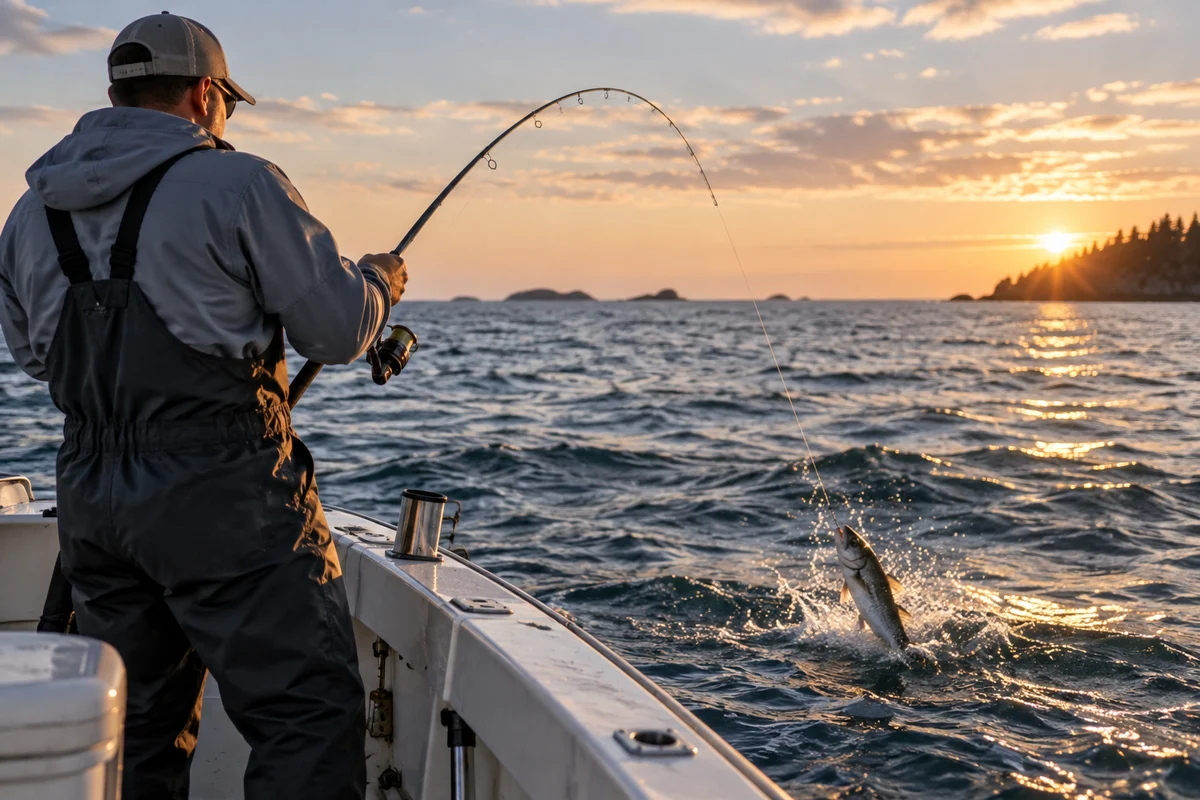
Saltwater fishing tips work best as a way to make decisions, not as a promise that a particular lure or tide will produce fish. A changing shoreline gives you clues: water moving around a point, bait gathered near a seam, or a sudden shift in clarity. Read those clues, start with a manageable plan, and adjust one variable at a time. Whether fishing a bay, estuary, beach, or tidal river, the same habit applies: observe first, then choose where and how to fish.
What should you check before leaving?
Start with the practical constraints. Check the marine forecast, wind direction and strength, tide predictions, access rules, and current regulations for the species and location. A forecast is a planning tool, not a guarantee; conditions can change quickly, especially at exposed beaches, inlets, and open water. If wind, current, or visibility makes the route or fishing position unsafe, choose sheltered water or postpone the trip.
Confirm that your license covers the water you will fish and that you understand local size, season, possession, and gear rules. Saltwater boundaries and regulations can vary by state, species, and even the side of a boundary line. The NOAA Fisheries site is a useful starting point for federal fisheries information, but state wildlife or marine agencies are the authority for many local rules.
Pack for the conditions rather than the ideal forecast: water, sun protection, suitable footwear, a communication method, and a way to keep catch cool if retention is legal and intended. From a boat, wear a properly fitted life jacket and follow safe boating practice. On shore, avoid wet rock, unstable banks, and surf that can reach farther up the beach than expected.
How do tide and current help you choose a spot?
A tide chart describes predicted water levels, but the fish experience moving water. Look for places where current is redirected or slowed: a point, channel edge, creek mouth, jetty, or the lee side of a modest piece of structure. These areas can concentrate drifting food or create a boundary between faster and slower water. They are clues, not guarantees; local depth, bottom shape, weather, and species all matter.
Rather than assuming that high or low tide is always best, note when water begins to move and how the flow reaches your chosen spot. On a first visit, observe the water from a safe position. Does it push along the bank, spill across a flat, or form a visible seam? A seam is a line where water with different speeds or clarity meets. Fish may travel along such edges, while bait may collect nearby.
Current can also make a familiar presentation ineffective. If a bait or lure races past the area, use a slower retrieve, a different casting angle, or a presentation that stays in the target zone longer. If it hangs up repeatedly, change position or reduce how close you fish to the obstruction. Avoid wading into channels or crossing moving water based on a tide chart alone; depth and flow can change faster than they appear.
For more saltwater context, see the saltwater fishing hub and its related guides, including how to avoid a shark attack and how to clean striped bass. Those topics address different parts of a day on the coast, but the common thread is preparation: know the conditions and rules before committing to a plan.
What signs of bait and water should you read?
Watch for small, repeatable clues rather than searching for dramatic surface action. Baitfish dimpling or scattering, birds repeatedly working a small area, a line of foam, or a change from clear to stained water may help you decide where to make your first casts. One brief splash or a passing bird is weak evidence. Repeated activity in the same zone is more useful.
Water clarity affects how visible a lure or bait may be. In clear water, a natural profile and controlled presentation can make sense; in stained water, contrast, vibration, or a slower approach may help fish locate it. These are starting points, not rules. Avoid making several changes at once: if you change location, lure, speed, and depth together, you will not know which adjustment mattered.
Look for a transition: sand meeting grass, a shallow flat dropping into a channel, or a calm pocket beside moving water. Fish may use edges to travel or feed, but avoid assuming every visible feature holds fish. Give a promising area a few deliberate casts, cover a slightly different angle, and move on if there is no sign of life.
How should you choose tackle and presentation?
Match tackle to the likely fish, current, structure, and local regulations. A setup that is too light may prolong a fight and make responsible release harder; one that is unnecessarily heavy can reduce enjoyment and presentation control. Check line, knots, hooks, drag, and any leader before fishing. If fishing around rough structure, inspect the line for abrasion after contact.
Choose a presentation you can control. A soft plastic, spoon, plug, or natural bait can all be appropriate in different places, but no category is universally superior. Consider what fish are feeding on, how fast the water moves, and whether you need to work near the surface, through the water column, or close to bottom. Keep a small selection rather than changing tackle after every cast.
| Observation | First adjustment to try | What to learn |
|---|---|---|
| Strong current carries the presentation away | Cast across or slightly up-current; slow the retrieve | Whether the target is on a seam or behind cover |
| Clear water and visible fish activity | Reduce disturbance and make a longer, controlled approach | Whether fish respond to a subtler profile |
| Stained water with little visible activity | Try a more visible or vibrating presentation | Whether fish can locate it at the chosen depth |
| Repeated snags near structure | Change angle or fish the edge rather than the center | Whether the fish-holding zone is safely reachable |
| No bait, movement, or bites after a careful pass | Check depth and move to another feature | Whether the first area was simply unproductive |
The table is a decision aid, not a formula. Species behavior, water temperature, season, and local conditions can override any general pattern. Keep notes on location type, tide stage, wind, clarity, and what you changed. A brief log helps distinguish a useful pattern from a memorable coincidence.
How can you fish responsibly and safely?
Know what you are allowed to keep before the first cast. Use the current official rules, identify fish carefully, and release prohibited or unwanted fish promptly. Wet hands, minimize time out of water, and use tackle suited to the fish so the fight does not become unnecessarily prolonged. If you are unsure of identification, consult an official agency guide rather than guessing.
Handle hooks and fish with care. Keep a de-hooking tool and suitable pliers accessible, and avoid placing fingers near teeth or a hook under tension. Do not leave discarded line, bait packaging, or hooks on the shore. Dispose of fish waste according to local rules and keep bait containers secure from wildlife.
For surf or jetty fishing, continually reassess footing and wave action. For boat fishing, account for weather, fuel, communications, and the experience of everyone aboard. If the situation feels beyond your ability or equipment, change the plan. No fish is worth an avoidable risk.
What is a simple field decision framework?
Use this sequence when you arrive:
- Check safety and legality. Reconfirm conditions, access, and species rules.
- Observe before casting. Note current direction, clarity, bait signs, and safe access.
- Choose one feature. Start at a seam, edge, point, or channel transition that you can fish safely.
- Make controlled presentations. Vary casting angle or retrieve speed one at a time.
- Review evidence. Look for repeated activity, follows, bites, or a clear reason to change.
- Move or stop. Try a nearby feature if conditions are safe; leave if they are not.
This approach keeps the day useful even when fish do not cooperate. You can learn how water moves through a place, identify safer access, and avoid burning time on guesses. For another saltwater angle, the shark-safety guide offers practical awareness for coastal settings, while the striped bass cleaning guide is relevant after a legal harvest. Always follow current local rules and use sound judgment in changing conditions.
Frequently asked questions
Is an incoming or outgoing tide better for saltwater fishing?
Neither is best everywhere. Look at how moving water reaches a specific feature, and consider local species, access, and conditions rather than relying on tide direction alone.
What should I change first if I am not getting bites?
Check whether your presentation is reaching the likely depth and staying in the area long enough. Then change one factor, such as retrieve speed or casting angle, before switching locations.
How do I know whether a coastal fishing spot is safe?
Check current weather and water conditions, assess footing and access from a safe position, and avoid exposed or moving water beyond your ability. Tide predictions do not replace on-site judgment.
Sources & further information
Consult these primary sources for current regulations, technical information and local guidance.