Rotating Power Minnow Ice Fishing: How to Use One
A rotating power minnow can add a swimming, turning profile to an ice-fishing presentation. This practical guide covers setup, cadence, depth, and ways to respond to follows without assuming every model behaves alike.
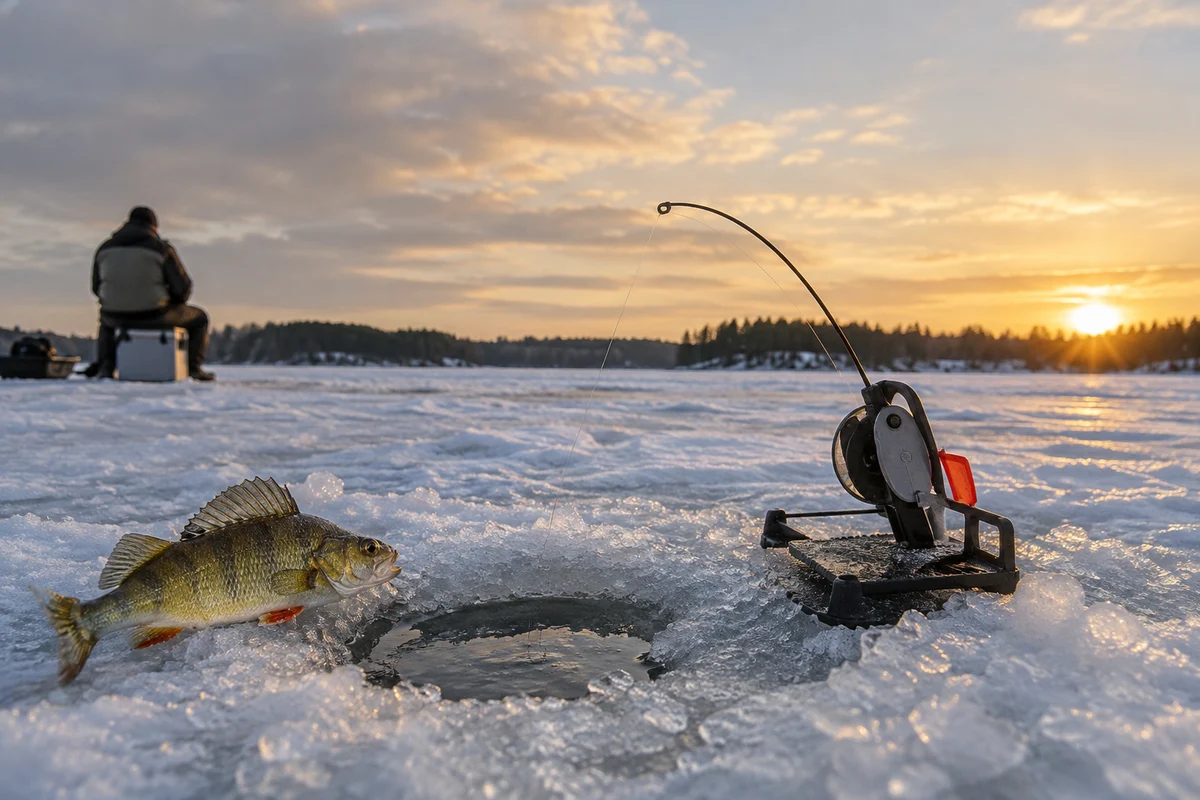
A rotating power minnow ice fishing presentation is meant to suggest a small baitfish that swims and turns rather than simply hanging beneath the hole. That movement can draw attention from suspended or actively feeding fish, but the lure’s exact action depends on its design, line, and how you work it. Treat the name as a style of presentation, not a guarantee of identical performance across products.
The useful question is not whether a rotating lure is universally better than a jig. It is when its movement fits the fish’s mood, how to control it at depth, and what to change when a fish follows without committing. Start with a safe hole and a manageable rod-and-line setup, then let the fish’s response guide the cadence.
What does a rotating power minnow do under the ice?
A rotating minnow-style lure is designed to move through the water with a swimming or turning action. Compared with a compact jig held nearly in place, it can create a broader visual signal and cover a little more water vertically. Some versions are intended to be jigged; others may respond to a lift, drop, or steady retrieve. Check the package instructions or the manufacturer’s manual for the specific model rather than inferring action from the name.
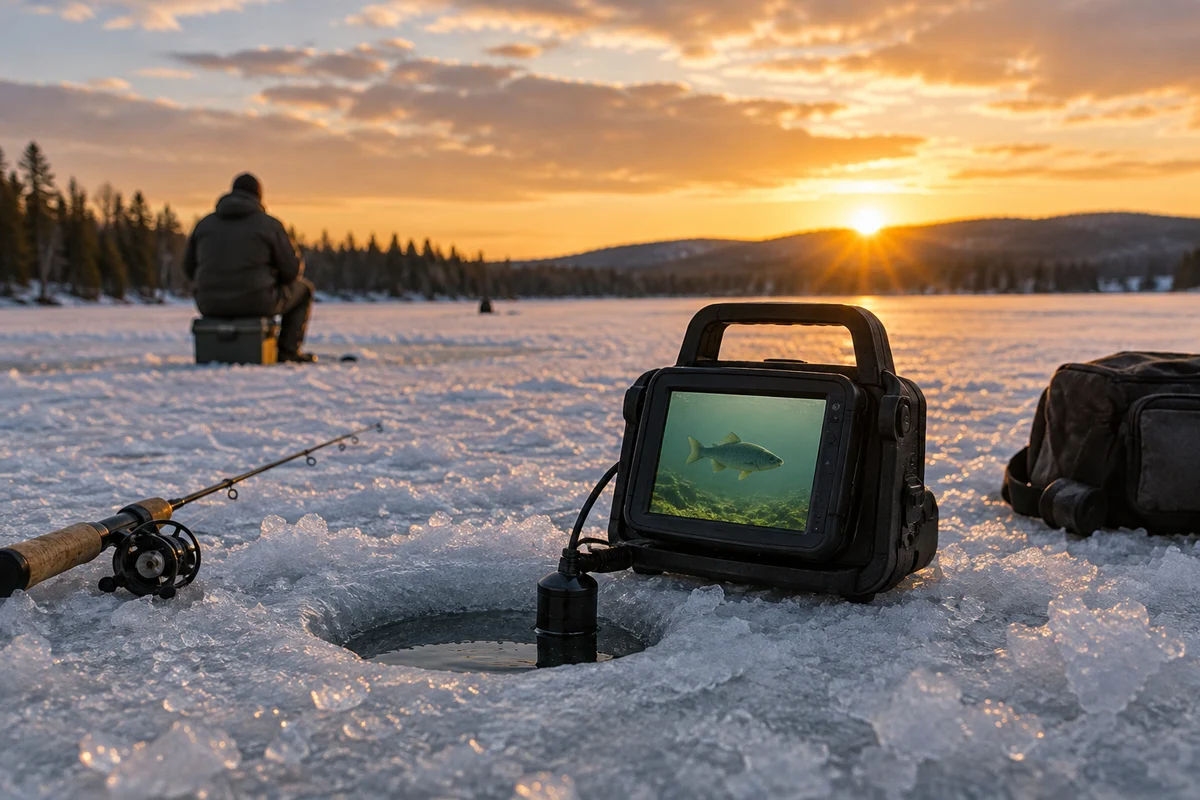
Water clarity, light, current, line diameter, and lure size all affect what fish perceive. In clear water, a restrained presentation can look more natural. In stained water or low light, a stronger movement may help a fish locate the lure, though visibility is never assured. A sonar or underwater camera can show a reaction, but it cannot tell you with certainty why a fish refused.
This lure belongs in a broader ice-fishing toolkit. The ice-fishing hub collects related seasonal guidance, while jigs for ice fishing offers a contrasting approach when a small, controlled presentation is more appropriate.
How should you set up the lure?
Use tackle that keeps the lure’s movement clear without making the system awkward. A short ice rod with a responsive tip lets you impart deliberate lifts and notice light contact. Match line and rod to the lure’s stated range and the fish you expect; if the product documentation does not provide a useful range, avoid overloading the rod and test the lure in shallow water first.
Tie the lure using the connection recommended by its manufacturer. A bulky knot, damaged line, or hardware that restricts movement can alter the action. Inspect hooks and line before lowering it, and keep spare tackle organized so a change does not become a cold-weather scramble. These practical ice-fishing tackle storage ideas can help keep small lures, leaders, and tools accessible.
Before fishing at depth, lower the lure near the hole and watch its movement. Try a modest lift and a controlled drop. If it spins erratically, fouls the line, or fails to move as expected, check the connection and instructions. Do not assume that a lure is defective until you have ruled out a twisted line or an unsuitable knot.
Which cadence should you try first?
A reliable starting point is a short lift followed by a pause. Let the lure settle, then repeat with a slightly different lift height or pause duration. Avoid making every movement identical: fish may respond to a brief burst of activity followed by stillness, or to a slow, steady action. Change one variable at a time so you can connect a response to the adjustment.
| Fish response | First adjustment | What to observe |
|---|---|---|
| No marks or signs of fish | Check another depth or nearby area | Whether fish are present at all |
| Fish appear but ignore the lure | Reduce lift height and lengthen the pause | Whether they approach more closely |
| Fish follow, then turn away | Pause, then make a smaller movement | Whether the fish stays interested |
| Lure twists or line coils | Retrieve and inspect the line and connection | Whether the action is clean in shallow water |
| Fish react only during a quick move | Repeat a brief burst, then pause | Whether the response is consistent |
This is a decision aid, not a promise of results. Sonar readings can be confusing, and fish may be present outside the transducer’s cone. If you see no response, changing location or depth may be more productive than cycling endlessly through lure movements.
How do you handle follows without strikes?
A fish that approaches but does not take the lure has given you useful information: it noticed the presentation. First, stop exaggerating the action. Hold the lure still briefly, then make a small movement. If that fails, lower the lure a little or bring it gradually above the fish, keeping the bait within view rather than jerking it out of range.
Next, consider whether the profile is too large or the action too busy for the conditions. Switching to a smaller, more restrained option can be sensible. The pinhead minnow is a related minnow-profile choice to compare, but do not assume its action or size suits every target species; check its current product information.
A rotating lure is not automatically the best choice for every fish. When a fish is feeding close to bottom or seems wary, a compact jig held steady may be easier to control. When fish are roaming or suspended, a moving presentation may help attract attention. Make the choice from observed fish position and response rather than a fixed rule about species or season.
What conditions call for a different approach?
Use a more subtle cadence when fish follow at a distance, visibility is high, or repeated movement appears to spook them. Try a more active search presentation when fish are moving through the area and you need to locate a willing fish. These are starting hypotheses, not universal conclusions: depth, forage, weather, fishing pressure, and local fish behavior can change the outcome.
If the lure’s rotation creates line twist, retrieve and address it rather than continuing to fish with a compromised setup. Inspect line for loops, abrasion, or weakened sections. Keep hooks controlled while changing tackle, and use appropriate tools rather than handling sharp points carelessly. Follow local rules for hook limits, seasons, and waters, and consult the relevant state or provincial fish and wildlife agency for current regulations.
Ice safety comes first. Ice thickness and quality can vary over short distances and change with current, snow cover, temperature, and shoreline conditions. No single thickness guideline guarantees safety. Check local authorities’ advice, avoid traveling alone when possible, carry appropriate safety equipment, and do not venture onto ice you cannot assess confidently.
A simple field decision framework
- Verify the lure’s intended use. Read its directions and confirm the rod and line are appropriate.
- Test the action shallow. Make sure it moves cleanly and does not twist or foul.
- Find the fish and depth. Do not confuse an empty screen with a lure problem.
- Begin with lift, pause, and controlled drop. Keep the first movements modest.
- Read the response. No fish suggests a location or depth change; a follow suggests a cadence or profile adjustment.
- Change one thing at a time. Compare action, pause, depth, or lure size separately.
- Stop when conditions or safety are uncertain. No lure is worth taking an avoidable risk.
The main advantage of a rotating power minnow is its potential to combine a baitfish-like profile with movement. Its main limitation is that the action is model-specific and conditions decide whether that movement helps. Verify the product’s instructions, test its behavior, and let actual fish responses—not the product name—determine what you try next.
Frequently asked questions
How do I fish a rotating power minnow through the ice?
Check the model’s instructions, test its action near the hole, then try short lifts followed by pauses and controlled drops. Adjust based on fish response.
Why does a rotating minnow twist my fishing line?
Line twist can result from the lure’s action, a connection that restricts movement, or already-twisted line. Retrieve it, inspect the line and knot, and consult the product directions.
Should I use a rotating power minnow when fish follow but do not bite?
Try a longer pause and smaller movements first. If fish continue to refuse, consider changing depth or switching to a more subtle, smaller presentation.
Sources & further information
Consult these primary sources for current regulations, technical information and local guidance.