Best Ice Fishing Tackle Storage: A Simple, Reliable System
The best ice fishing tackle storage is not one oversized box. It is a compact, labeled system that keeps small gear easy to find, protected from moisture, and ready to carry.
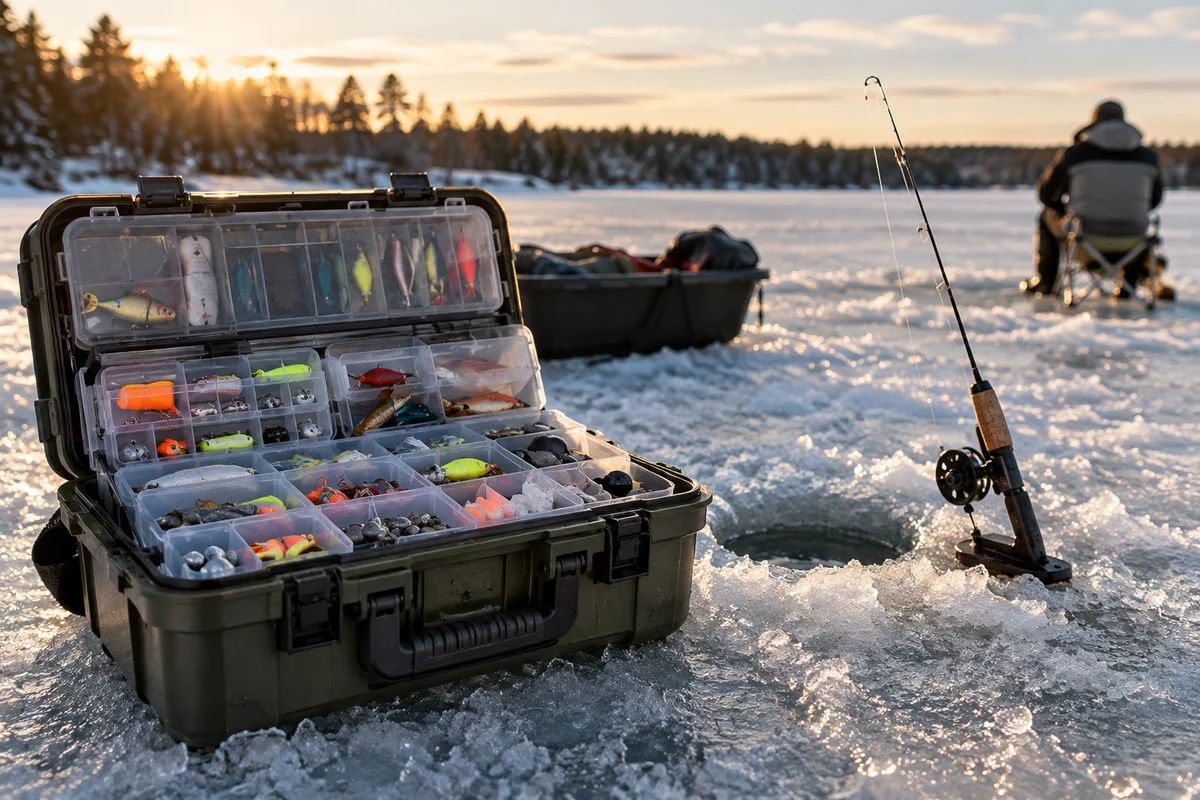
The best ice fishing tackle storage system keeps the gear you use most within reach, separates wet items from dry ones, and stays manageable on the walk from the vehicle to your fishing spot. You do not need a complicated collection of organizers. A small set of durable, clearly labeled containers—matched to your fishing style and the space in your shelter or sled—can prevent tangled line, rusty hooks, and the mid-trip search for one missing jig.
Start by sorting tackle into groups you actually reach for: jigs and hooks, terminal tackle, line and leaders, tools, and spare electronics accessories. Then choose containers around those groups, rather than buying a large box first and trying to make everything fit. For more ideas on equipment and trip planning, explore more freshwater ice-fishing coverage.
What should an ice-fishing tackle system include?
A useful setup usually has three layers. The first is a compact daily-use tray for the lures and small items you expect to use during that outing. The second is a reserve organizer holding backups and less frequently used tackle. The third is a dry pouch or case for items that should not share space with damp line, snow, or bait residue.
The daily tray should be small enough to open beside your hole without taking over the seat or shelter floor. Reserve tackle can remain in a sled or vehicle until needed. Keep tools—such as forceps, line cutters, and a small measuring tool—in a dedicated pocket or tool roll, not loose among hooks. A consistent location matters: when each item has a home, you can replace it quickly and notice when something is missing.
For anglers who use electronics, separate cables, adapters, and other accessories from sharp tackle. A sonar setup may involve components that are easier to protect and identify when they have their own padded or zippered compartment; see this overview of a T-Pod sonar setup for related equipment context.
How do you choose boxes and organizers?
Prioritize secure latches, dividers that stay in place, and materials that tolerate cold. A box that opens unexpectedly in a sled can scatter small tackle across snow or slush. Dividers should be tall enough to keep hooks and jigs from migrating between compartments when the box is carried vertically. Before committing, close a sample organizer with the gear inside and gently turn it in different directions; this simple check can reveal loose dividers or a lid that does not seal well.
Compartment size is more important than the advertised number of sections. Tiny compartments can be useful for small jigs, but they are frustrating for bulky lures or leaders. Adjustable dividers help, though some designs leave gaps that allow items to slide through. If you use a variety of lure shapes, consider a few medium compartments rather than dozens of miniature ones.
Do not assume a waterproof label means the container is suitable for every condition. Seals and closures vary, and cold can make some plastics less forgiving. Keep electronics and other moisture-sensitive items in a separate protective case, and inspect seals periodically. A dry bag can provide an extra layer for the reserve kit, but it is not a reason to store dripping gear without drying it first.
How should jigs, hooks, and line be stored?
Separate lures by type or purpose, not by an elaborate classification you will forget. One tray might hold the jigs you commonly use for the day, while another contains heavier options or less frequently used patterns. If you fish different species, dedicate a small section or labeled container to each approach. This reduces unnecessary handling and helps keep hooks from catching one another.
Keep hooks covered and avoid filling compartments so tightly that removing one lure pulls several others with it. If a lure has a treble hook, use a compartment large enough to let it lie without snagging adjoining tackle. Small hook covers can be useful, but check that they fit securely and do not create a new loose piece that can disappear in the snow.
Line and leaders benefit from a separate spool or leader wallet. Keep labeled spools together and note the line type or intended use on the container. Avoid winding loose leader material around tools or stuffing it into a lure compartment, where it can tangle with hooks. After a trip, allow damp line and leaders to dry before closing them away for storage. Replace damaged or badly kinked sections rather than assuming a cold-weather knot or leader will perform as intended.
For a focused look at lure choices, browse this guide to jigs for ice fishing. The point of an organizer is not to carry every option; it is to make a sensible selection accessible and keep the rest orderly.
How can you keep tackle dry and prevent rust?
Moisture comes from snow, slush, wet gloves, and condensation as temperatures change. At the end of a session, remove wet lures and tools from closed containers when practical. Dry them before returning them to long-term storage. A small absorbent cloth in the sled can help with quick cleanup, but it should also be dried between trips. Do not rely on a sealed box to make wet tackle safe from corrosion.
Use a simple inspection routine after fishing: empty loose snow from the daily tray, check hooks for rust or damage, dry tools, and return each item to its labeled place. If a lure has been exposed to water or bait residue, rinse or clean it according to its material and then dry it thoroughly. Keep any cleaning products away from children and follow their labels.
A separate, washable pouch for bait-related items can keep residue away from clean tackle and clothing. If you transport bait, follow local rules for bait use and disposal; requirements differ by location and can change. Never dump unused bait or bait water into a lake unless local guidance explicitly allows it.
How much tackle should you bring onto the ice?
Carry a working selection, not the entire collection. A useful daily kit is the amount you can reach without leaving the hole unattended or unloading the sled. The right amount depends on the target species, conditions, and how far you travel, but a short list of likely lures and a few backups is easier to manage than a box packed with every possibility.
Before leaving, check the forecast and local ice conditions, tell someone your plan, and bring the appropriate safety equipment. No storage arrangement makes ice safe. Ice thickness varies across a lake and can change around currents, inlets, outlets, vegetation, and other features. Follow local authorities’ guidance, use flotation and a buddy system where appropriate, and turn back when conditions are uncertain.
If you fish from a shelter, keep the daily tray and tools in a stable spot where they cannot slide into a hole or obstruct an exit. A shelter such as a Fish Trap X2 overview can prompt useful planning about interior space, but confirm dimensions and features with the manufacturer rather than assuming a particular layout will fit your gear.
What are common tackle-storage mistakes?
The first is overpacking. Extra tackle adds weight and makes it harder to find what matters. The second is mixing sharp items, line, tools, and electronics accessories in one compartment. The third is putting wet gear away and forgetting it until the next outing. Each problem is easier to avoid with a small daily tray, a separate reserve container, and a brief post-trip drying routine.
Another common mistake is using labels that do not match how you fish. A system with technically precise categories is not helpful if you cannot remember where a lure belongs. Use plain labels such as “small jigs,” “leaders,” or “tools.” Review the kit at the end of the season, remove damaged items, and adjust the layout based on what you actually used.
Finally, test the packed system before a long walk. Carry it as you would on a fishing day and check whether the lid stays closed, the box is easy to access, and fragile accessories are protected. Make changes at home, where a dropped lure is a minor inconvenience rather than a lost item on the ice.
A practical setup to maintain
For many anglers, a compact daily tray, a labeled reserve organizer, a separate line wallet, and a dry tool pouch are enough. Choose durable closures and compartments suited to your actual lures, keep moisture-sensitive items apart, and return gear to the same place after each trip. That modest routine is more dependable than a complicated storage system that is difficult to keep organized.
Frequently asked questions
Should ice-fishing tackle go in a waterproof box?
A water-resistant or sealed case can help protect gear from splashes, but it does not remove moisture already inside. Dry wet tackle before storage, and use a separate protective case for electronics or other moisture-sensitive items.
How do I keep small jigs from tangling?
Use compartments sized for the jigs, avoid overfilling them, and keep hooked lures from sharing space when their hooks can snag. Check that dividers remain secure when the box is turned or carried upright.
Can I leave my tackle box in a cold vehicle?
Many anglers transport tackle in cold weather, but inspect the container and its contents before relying on them. Cold can affect some plastics and seals; protect fragile or moisture-sensitive accessories and follow the care guidance from their manufacturers.
Sources & further information
Consult these primary sources for current regulations, technical information and local guidance.