Redhead Turkey Decoys: Choosing a Remote Combo
A remote jake-and-hen decoy combo can suggest a social scene, but terrain, pressure, visibility, and safe setup matter more than adding motion. Use this field guide to assess the setup and make a deliberate choice.
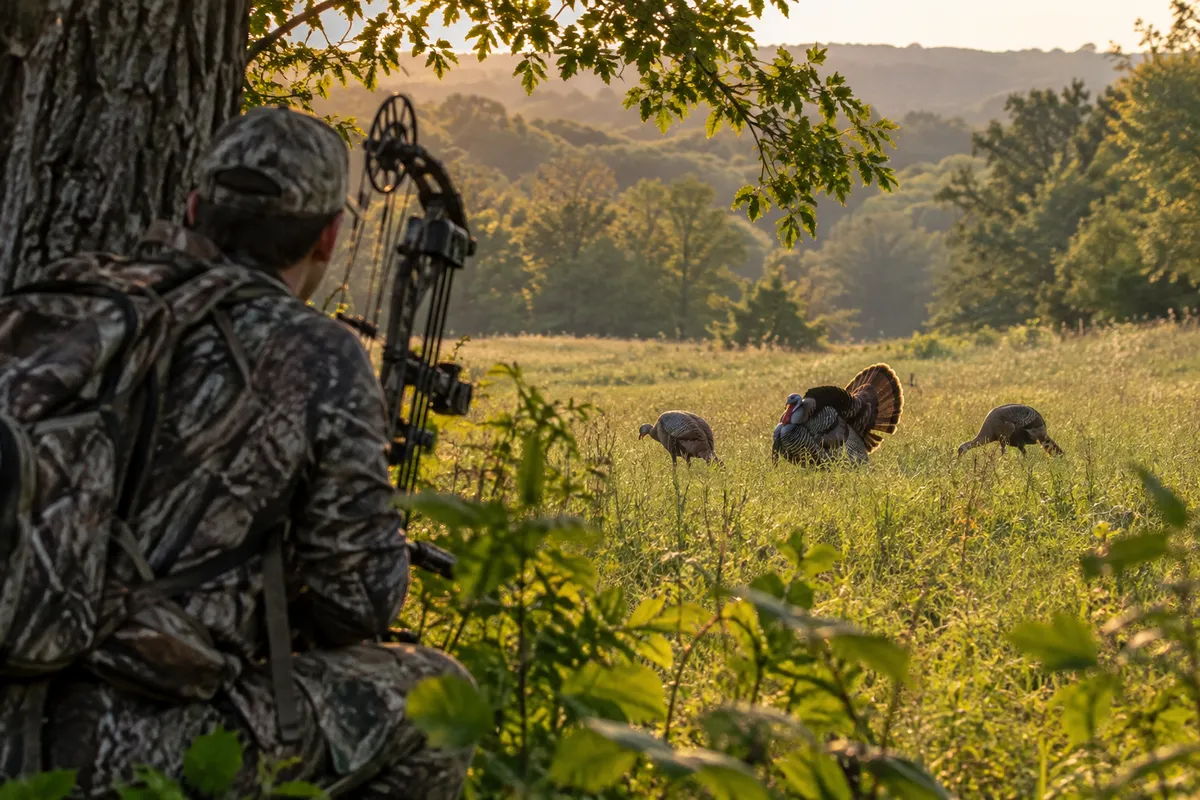
Redhead turkey decoys are best considered as a way to present a visual scene—not as a guarantee that a turkey will approach. A remote “Crazy Jake” and mating-hen combination, as described in the Reality Series product name, brings together a jake-style bird and a hen in a breeding posture, with remote movement intended to add realism. Exact controls, motion, included components, and availability can vary by product version; consult the maker’s current information and the original manual rather than inferring specifications from the name.
The practical question is not whether more motion is always better. It is whether a two-bird display makes sense in the place, light, and hunting conditions where you can use it safely. Start by identifying the likely approach and sightlines, then decide whether the scene is useful or unnecessarily conspicuous.
What does a jake-and-mating-hen setup communicate?
A jake beside a hen can suggest a social interaction that may attract a curious or competitive gobbler. It is a different visual message from a lone hen decoy: the pair presents both a potential flock member and a breeding-related scene. That can be useful when birds are responsive to visible activity, but it can also appear too assertive or unnatural in places where turkeys are wary or where the setup is easily seen from several directions.
Decoys do not replace calling, concealment, or sound judgment. A turkey may ignore them, approach from an unexpected direction, or be deterred by a scene that feels wrong. A realistic-looking display can also attract people who mistake movement or shape for game. Treat every setup as a visibility and identification responsibility, not merely a presentation choice.
If you are comparing the jake posture with other options, the background on a jake turkey head can help clarify what that style of decoy is intended to represent. For a simpler visual setup, think about whether one hen decoy—or no decoy at all—better fits the terrain and hunting pressure.
When is remote movement useful, and when is it a drawback?
Remote movement may be useful when the decoy can be positioned in a visible opening while you remain concealed at a safe distance. Motion can make a stationary shape seem more lifelike, but the value depends on how it looks from the turkey’s likely approach. A repetitive or abrupt movement can appear unnatural. In windy vegetation, changing light, or thick cover, movement may be hard to see or may attract attention without helping you identify the bird clearly.
Consider these field conditions before choosing a remote combo:
| Field condition | Possible advantage | Reason to simplify or leave it out |
|---|---|---|
| Open field edge with a clear, controlled sightline | A pair may be easy to see and interpret | The decoys may also be conspicuous to other people |
| Tight timber or brush | A small opening can frame a limited display | Restricted visibility makes identification and safe shot decisions harder |
| Heavily pressured area | A different posture may stand out | Unfamiliar or conspicuous movement can make wary birds avoid the setup |
| Wind or uneven ground | A stable, low-profile arrangement may remain usable | Motion, balance, or remote operation may be unreliable; check the manual |
| Long walk or changing locations | Remote control can reduce the need to approach the display | Extra equipment adds setup, transport, and troubleshooting tasks |
This is a decision aid, not a promise of animal behavior. If the scene does not look natural from the direction you expect a turkey to approach, move it, reduce the display, or hunt without decoys.
How should you plan a safe setup?
Begin with local regulations. Rules for decoy use, legal hunting hours, equipment, and seasons vary by jurisdiction and can change. Check the current wildlife agency rules for the exact area and season; the ODU Magazine turkey-hunting hub is a starting point for related field topics, not a substitute for those official rules.
Before setting out, use a simple checklist:
- Choose the location first. Identify a safe, stable place to sit and a clear area where you can see and identify a bird. Avoid placing a decoy where someone on a trail, road, or neighboring property could mistake it for a live target.
- Keep people and decoys distinct. Wear the required fluorescent orange when transporting decoys and moving through the area, as required by local law and safe practice. Do not stalk a sound or movement; positively identify the target and what lies beyond it before any shot.
- Set the decoy from cover. Place it without crossing an unsafe line of fire or exposing yourself to an unseen approach. Keep the hunting position and potential shot direction consistent with local rules and your own safe limits.
- Check the device before the hunt. Follow the original manual for operation, battery handling, weather limits, and setup. Do not assume the product has a particular range, runtime, or control feature from its title.
- Have a no-decoy plan. If visibility, wind, public access, or other hunters make the scene uncertain, pack it away. A decoy is optional equipment, not a reason to accept a questionable setup.
The National Wild Turkey Federation offers general turkey-hunting and safety information, while the U.S. Fish and Wildlife Service provides broader wildlife resources. For binding season and equipment requirements, use your state or tribal wildlife authority.
How do you judge the product without guessing at specs?
Treat the product name as a description, not a specification sheet. Before relying on a remote decoy, verify the exact model and version, what is included, how the remote and motion operate, what power source it uses, and any stated limitations. Check the manufacturer’s current materials and the manual for storage, weather exposure, assembly, and maintenance guidance. If documentation is missing or unclear, contact the manufacturer rather than filling gaps with assumptions.
A useful evaluation framework is to ask four questions:
- Does the posture fit the situation? A jake-and-hen scene may be inappropriate where a lower-key hen presentation is more plausible.
- Can you see the decoy and the approach safely? If not, a remote feature does not solve the problem.
- Can you operate and retrieve it without disturbing the area or creating a hazard? Account for access, terrain, and other people.
- Is the extra gear worth the complexity? A simple decoy or no decoy may be more dependable on a short walk or in changing conditions.
For calling context, compare your setup with advice on how to choose a turkey call. Calls and decoys work as separate parts of a presentation; matching sound and visual cues can be helpful, but neither should lead you to take an uncertain shot. The Blackout ground blind is another related topic for thinking about concealment and sightlines, though any blind must be set up and used in line with local rules and safe visibility.
What should you do after the hunt?
Retrieve every decoy, stake, remote, and battery-related item. Confirm the area is clear before packing up, and follow the manual for cleaning and storage. If the equipment has been exposed to rain or mud, use only the care instructions provided by its manufacturer. Store it so moving parts and power components are protected, and check the setup before its next use rather than assuming it remains ready.
A remote jake-and-mating-hen combo is most useful when its visual message fits the conditions and you can place and use it with dependable visibility. The simplest sound decision may be to leave it in the pack. In turkey hunting, sound setup, legal awareness, and positive identification matter more than any particular decoy feature.
Frequently asked questions
Are Redhead Reality Series remote decoys still available?
Availability and product versions can change. Check the manufacturer or authorized product documentation for current status, included parts, and the correct manual.
When might a jake-and-hen decoy combination be a poor choice?
Consider leaving it out in tight cover, uncertain sightlines, high-pressure areas, or places where other people could mistake the decoys for live birds. Local rules also control what equipment is allowed.
What should I verify before using a remote turkey decoy?
Confirm the exact model, operating instructions, power requirements, weather limits, and safe setup guidance in the current manufacturer information and original manual. Do not assume features from the product name.
Sources & further information
Consult these primary sources for current regulations, technical information and local guidance.