Rob Roberts Benelli Turkey Gun: A Field-Use Guide to the SBE II
A practical, safety-first guide to evaluating the Benelli SBE II Turkey Edition topic, separating verified model details from assumptions and building a responsible field setup.
The phrase rob roberts benelli turkey gun points to a specific intersection of turkey-hunting conversation: a Benelli Super Black Eagle II (SBE II), a turkey-oriented configuration, and a name associated in some discussions with shotgun setup work. A legacy page slug alone does not verify who owned, modified, tested, or reviewed a particular shotgun. This guide therefore focuses on what a hunter can responsibly evaluate: the gun’s documented configuration, safe fit and function, pattern performance, and the rest of a turkey setup. Confirm model-specific details with Benelli or a qualified service professional rather than treating an old title as proof.
What does the phrase identify—and what does it not?
“Benelli SBE II” identifies a model family; “Turkey Edition” may refer to a particular finish or configuration, but exact features can vary by year and market. The words “Rob Roberts” in a search phrase are not evidence that a specific shotgun was worked on by a particular person or business. Without a verifiable product record or firsthand documentation, ownership, custom work, and performance claims should remain unconfirmed.
Start with the markings and paperwork for the individual firearm. Record the exact model designation and any barrel or choke markings, then compare them with the manufacturer’s materials. Do not assume two SBE II shotguns have identical barrels, sights, stocks, or included accessories because their names are similar. If information is missing or a component’s identity is unclear, ask Benelli or a qualified gunsmith to inspect it.
What should a hunter verify before field use?
Treat the shotgun as loaded until you have personally checked it. Keep the muzzle pointed in a direction where an unintended discharge cannot injure someone, keep your finger outside the trigger guard, and open the action when practical during handling and transport. Identify the ammunition only from its packaging and markings; never rely on a loose shell’s appearance. Use only ammunition and components that the firearm’s manual specifies as compatible.
Inspect for obvious damage, obstruction, or a part that does not fit or operate normally. If the firearm has been altered, stored poorly, or has an uncertain service history, do not try to diagnose a mechanical problem through trial and error. Stop and have a qualified professional evaluate it. Read the manual for the exact model and follow its handling, cleaning, and maintenance directions. These checks are basic safety practices, not a substitute for formal training or manufacturer guidance.
For broad firearm-safety education, the NSSF safety resources offer general guidance. Local hunting regulations govern lawful use in the field and can differ by jurisdiction, season, and area; consult the relevant wildlife agency before a hunt.
How do fit and handling affect a turkey setup?
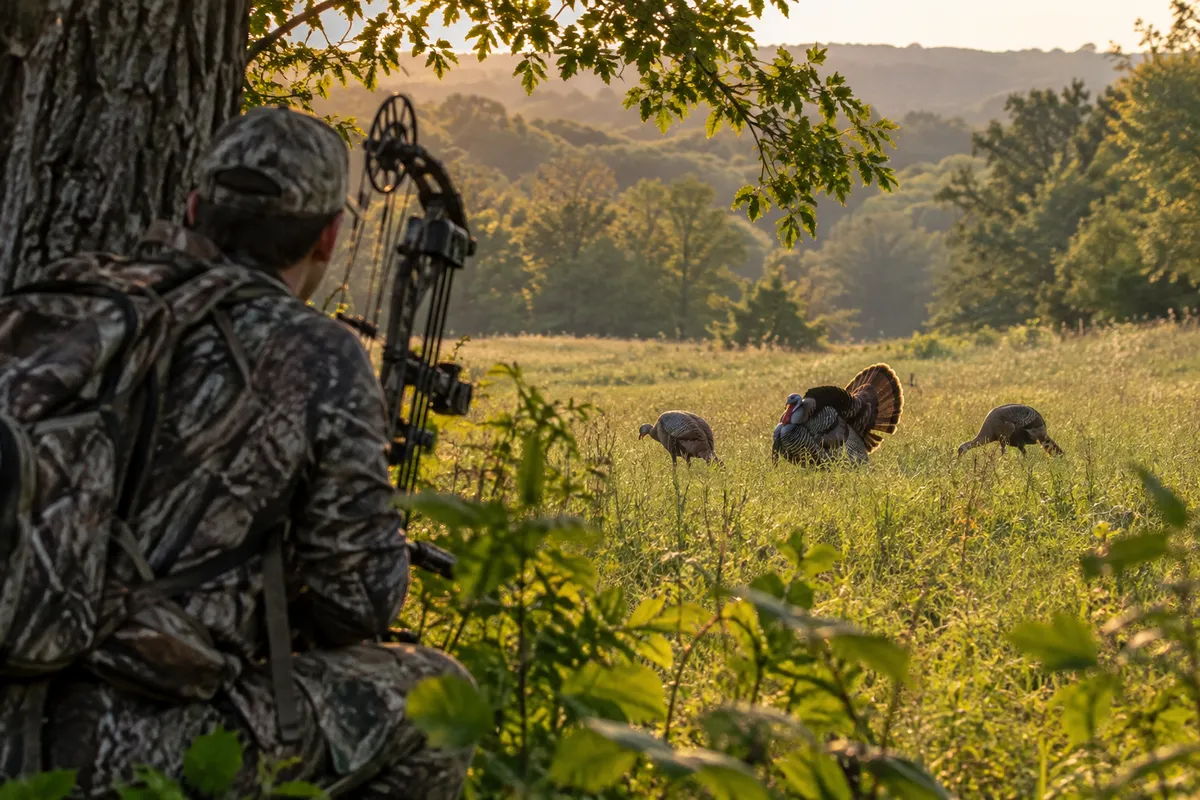
Turkey hunting often involves sitting still, working within limited visibility, and raising a shotgun only when a lawful, positively identified target is present. A setup that feels manageable from a safe, stable seated position can be more useful than one selected for appearance. Check that the stock reaches your shoulder comfortably, the sights are visible without an awkward head position, and the gun can be held without sweeping the muzzle across a companion or an unsafe direction.
Practice should take place only at an appropriate range, following its rules and the firearm manual. If the gun’s fit makes it difficult to maintain control or see the aiming system, seek instruction from a qualified professional. Avoid adding accessories or changing components without confirming compatibility and understanding how the change affects safe operation. Keep the setup simple enough that you can identify its parts and use them consistently.
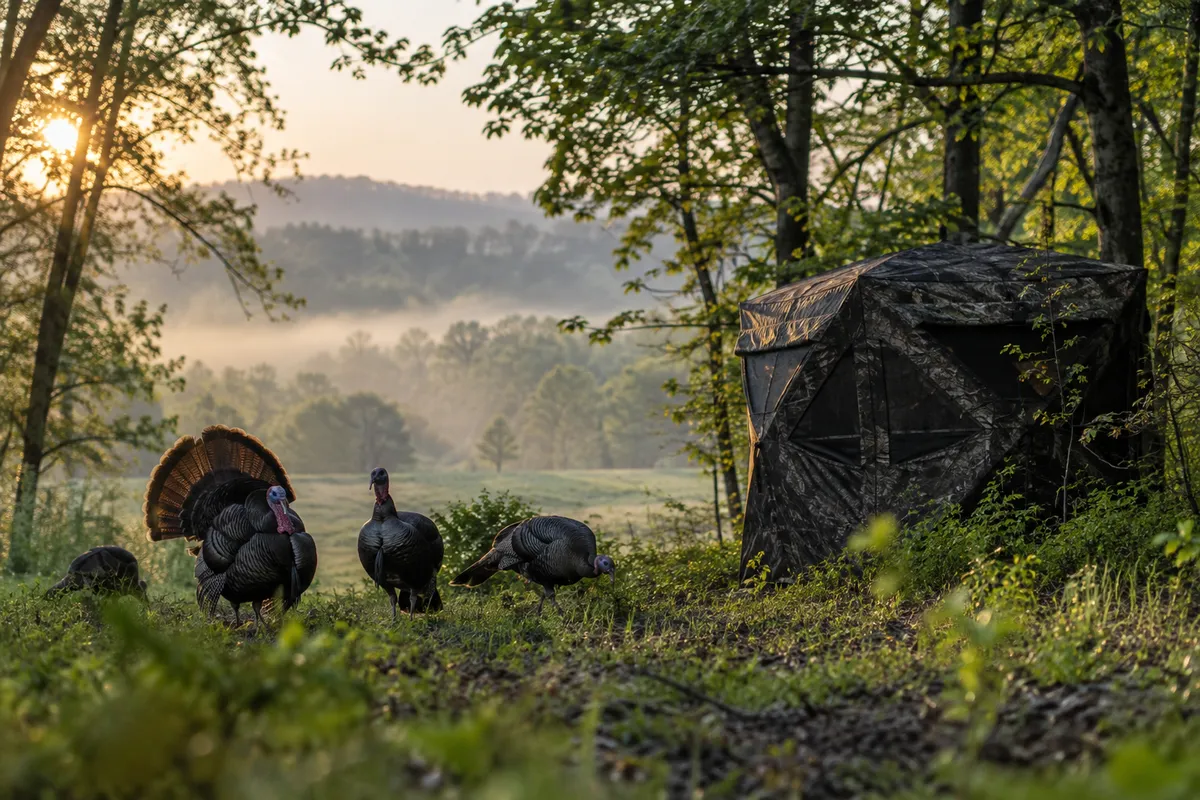
A blind and calling plan also affect how much movement is needed. Consider the terrain, wind, visibility, and safe lanes before settling in. Our guide to a Blackout ground blind can help frame concealment and setup considerations; concealment never replaces target identification or muzzle discipline.
How can a hunter evaluate pattern performance responsibly?
A turkey load’s pattern is a property of the specific combination of firearm, barrel, choke, ammunition, and distance—not a guarantee attached to a model name. Do not infer a dependable effective range from a product label, an online anecdote, or someone else’s results. A responsible evaluation uses a legal, established range, suitable targets, manufacturer-approved components, and the methods recommended by qualified instructors or the firearm maker.
Follow the range’s safety procedures and local rules. Use the exact ammunition intended for hunting, if lawful and compatible, and assess results at distances that reflect realistic field conditions. If a pattern is uneven or inconsistent, do not compensate by taking longer shots. Recheck that the components are appropriate and consult the manufacturer or a qualified professional. A clean, ethical opportunity at a conservative distance matters more than stretching a setup’s limits.
Turkey ammunition rules vary. Some places restrict shot materials, gauges, or other equipment, and regulations can change. Check current rules with your state or provincial wildlife agency before selecting ammunition. Do not assume that a load legal in one area is allowed elsewhere.
How do calls and decoys fit around the shotgun?
The shotgun is only one element of a turkey hunt. Calling, positioning, concealment, patience, and a safe shot opportunity matter at least as much. Choose a call you can use without excessive movement and learn its sound before hunting. A guide to choosing the right turkey call can help compare call styles and practical considerations without promising that any call will attract a bird.
Decoys should be placed where they do not draw a hunter’s aim toward a person, road, building, or other unsafe background. Think through the approach and exit route before putting a decoy out, and avoid moving while another hunter may be looking in your direction. Decoys are optional; local conditions and regulations may make a simple calling setup the better choice.
Keep communication clear when hunting with others. Agree on locations, boundaries, and what to do if a person or an unidentified sound appears. Never move toward a sound or shape while aiming. If there is doubt about what you see, do not take a shot. More practical turkey-hunting coverage brings calls, concealment, and field decisions together.
What claims deserve a second look?
Be cautious with claims that a particular “edition” came with a specific choke, sight, finish, or performance level unless an authoritative source confirms it for that exact model and production period. Likewise, a name in a URL does not substantiate custom work, ownership, endorsements, or a field test. Product configurations can vary, and a discontinued model’s current parts or service situation should be confirmed directly with the manufacturer.
Avoid treating a pattern result from another firearm as a prediction for yours. Nor should a tight-looking pattern on paper be used as a reason to ignore range limits, legal restrictions, or uncertainty in the field. Safe hunting rests on identification, appropriate distance, a sound backstop, and compliance with regulations—not on a model’s reputation.
A practical decision checklist
Before taking an SBE II into turkey season, confirm the exact model and read its manual; check condition and compatibility with a qualified professional if anything is uncertain; review current local rules; and practice safely with the intended configuration at a proper range. Make sure the gun fits your seated setup and that the sighting system is usable without unsafe movement. Plan a conservative shot opportunity and treat any uncertainty as a reason not to fire.
The useful takeaway from the rob roberts benelli turkey gun search is not an unverified story about a particular firearm. It is a reminder to distinguish a model name from documented features, check the individual gun, and build a legal, controlled hunting setup around safe handling and responsible decisions.
FAQ
Is every Benelli SBE II Turkey Edition configured the same way?
Not necessarily. Features can vary by specific model and production period. Verify the markings and documentation for the individual firearm, and confirm uncertain details with Benelli.
Does the phrase “Rob Roberts Benelli turkey gun” prove a custom modification?
No. A search phrase or legacy URL does not establish ownership, custom work, or testing. Look for reliable documentation and have any uncertain component assessed by a qualified professional.
Can another hunter’s pattern results establish a safe range for my shotgun?
No. Pattern performance depends on the specific firearm, compatible components, ammunition, and conditions. Evaluate your own setup safely and follow manufacturer guidance, range rules, and local hunting regulations.
Frequently asked questions
Is every Benelli SBE II Turkey Edition configured the same way?
Not necessarily. Features can vary by specific model and production period. Verify the markings and documentation for the individual firearm, and confirm uncertain details with Benelli.
Does the phrase “Rob Roberts Benelli turkey gun” prove a custom modification?
No. A search phrase or legacy URL does not establish ownership, custom work, or testing. Look for reliable documentation and have any uncertain component assessed by a qualified professional.
Can another hunter’s pattern results establish a safe range for my shotgun?
No. Pattern performance depends on the specific firearm, compatible components, ammunition, and conditions. Evaluate your own setup safely and follow manufacturer guidance, range rules, and local hunting regulations.
Sources & further information
Consult these primary sources for current regulations, technical information and local guidance.