Blackout Ground Blind: Choosing and Using a Turkey Hide
A dark-interior blind can make close-range turkey hunting more comfortable, but concealment depends on placement, setup, and safe visibility. Here’s how to evaluate a blackout ground blind and use one responsibly.
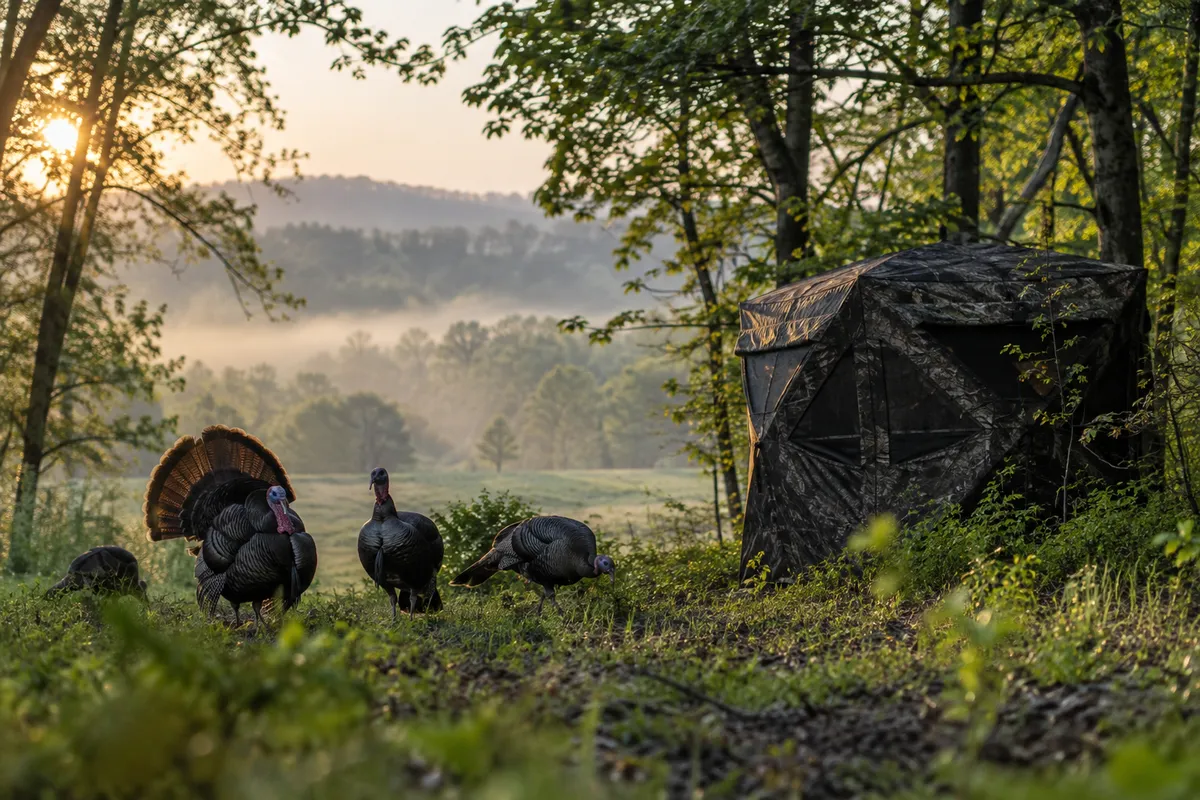
A blackout ground blind can help a turkey hunter stay concealed while shifting posture, handling calls, or waiting through a long sit. The dark interior is only one part of the equation: where the blind sits, how its windows are managed, and whether it is used safely matter just as much. Treat it as a portable hide, not a guarantee that turkeys will overlook movement or that a poor location can be fixed with darker fabric.
What “blackout” means in a ground blind
The term generally describes a darker interior intended to limit light passing through the fabric and reduce silhouettes inside. It is not a universal performance rating, and brands may use the term differently. Without a specific model and verified manufacturer details, do not assume a particular fabric construction, degree of light blocking, weight, or setup time.
A darker interior may make it less likely that a bird sees a hunter’s outline when daylight is bright outside. However, open windows, motion against a bright background, and an exposed blind profile can still draw attention. Check the maker’s product information for the exact design and care guidance, then evaluate the actual blind in the field before relying on it for concealment.
When a blind is useful—and when it is not
A blind can be useful when a hunter expects to remain in one location, is hunting with a young or mobility-limited companion, or needs a more protected place to call from. It can also make it easier to keep movement controlled while changing calls. A stationary setup may be especially practical where local regulations allow it and the surroundings offer a safe, lawful placement.
It is less useful when the plan requires frequent repositioning or when the only available location blocks visibility of the approach. A blind does not make a hunter invisible, and it can be conspicuous in open country. Before setting up, ask whether the natural terrain, a tree, or another lawful position offers better concealment with fewer obstructions. Use a calling approach that suits the location; our guide to choosing a turkey call can help match call style to conditions without treating any call as a guarantee.
How to choose a location
Start with the terrain and likely approach routes, not with a desire to hide the blind at any cost. Choose a spot that lets you see the area you intend to watch while keeping the blind out of a skyline or isolated against a contrasting background. Existing vegetation and natural edges can break up its outline, but do not cut vegetation or place equipment where that would violate land rules or damage sensitive habitat.
Consider wind, rain, drainage, and footing. A low area may collect water; a ridge may expose the blind to stronger gusts. Look for a level, stable place that allows the door and windows to function without snagging on brush. Keep the entrance clear, and avoid placing the blind where its frame or fabric could obstruct another person’s route.
On public land, check the managing agency’s current rules before leaving a blind unattended or setting it up. Requirements can differ by property and season. On private land, get permission and agree on boundaries and access with the landowner. Do not assume that a familiar location remains open or that a past season’s rules still apply.
Set up for visibility and controlled movement
Follow the manufacturer’s instructions for anchoring and use. Secure the structure with the supplied or recommended system, especially where wind can catch broad fabric panels. Inspect the frame, seams, and tie-down points before the hunt; a damaged or unstable blind can fail when conditions change.
Open only the windows needed for the view and calling position. A large opening may improve visibility but can also create a bright outline behind the hunter. Arrange seating and gear before settling in, so routine movement is limited. Keep calls, water, and other permitted essentials within easy reach, and make sure no item blocks a safe exit.
Do not let concealment compromise awareness. Know who is nearby, identify the background behind any intended direction of travel, and keep equipment handled in a way that follows the applicable hunting and firearm-safety rules. Never point a firearm at a person, occupied blind, road, or other unsafe direction. A blind’s fabric is not a safe backstop. If visibility is poor, people may be in the area, or you cannot clearly identify what is beyond the target, do not take a shot.
Visibility, color, and hunter identification
Camouflage helps break up a hunter’s outline, but it does not replace required hunter-orange clothing or other identification rules. Regulations vary by jurisdiction and may distinguish between seasons, species, and circumstances. Check the current rules for the exact location and activity before heading out, including requirements that apply to companions.
Make your presence known to other hunters when appropriate and lawful. Avoid setting a blind near a trail, access point, or location where another person might reasonably expect to walk. If you arrive and discover someone already nearby, do not crowd their position; relocate or leave. A concealed setup is not a reason to assume an area is unoccupied.
Weather, maintenance, and common mistakes
Wind can strain poles and anchors, while rain can make the ground slippery and reduce visibility. Reassess conditions during the hunt and leave if the blind becomes unstable or the weather makes travel unsafe. Do not wait for a failure to decide whether the setup can handle changing conditions.
After use, dry the blind fully before storage to reduce the chance of mildew and material damage. Follow the manufacturer’s cleaning and storage instructions rather than applying unapproved treatments that could affect fabric or coatings. Inspect zippers, hubs, poles, and anchor points before the next outing, and replace damaged components as directed.
Common mistakes include choosing a spot for concealment while ignoring sightlines, opening every window, failing to anchor the blind, and assuming a dark interior eliminates movement. Another is treating a decoy or blind as a substitute for safe identification. If using a decoy, position it where it is visible from the intended viewing area but not where another hunter could mistake it for a live bird. Review local rules and think through the approach from more than one direction. For context on how a decoy fits into a broader setup, see our overview of the Crazy Jake turkey decoy.
A practical pre-hunt check
Before settling in, confirm that the location is permitted, the blind is stable, the exit is clear, and the windows provide a safe field of view. Check the forecast and your route back out. Tell a companion where you will be, and agree on a clear way to communicate without startling nearby hunters. Keep your setup orderly and avoid leaving gear behind.
The best blackout ground blind is not necessarily the darkest or largest model. It is one whose documented features suit the conditions, whose placement respects land and safety rules, and whose user can remain aware of the surroundings. For more outdoor coverage, explore the turkey-hunting hub and related field guides.
Frequently asked questions
Does a blackout ground blind make a hunter invisible to turkeys?
No. A dark interior may reduce a visible silhouette, but exposed openings, movement, placement, and contrast can still reveal a blind. Evaluate the setup from likely approach directions.
Can I leave a ground blind on public land?
Rules vary by land manager and location. Check the current regulations for the specific property before setting up or leaving any equipment unattended.
What should I check before hunting from a ground blind?
Confirm permission and local rules, anchor the blind as directed, maintain a clear exit and safe sightlines, check weather, and make sure required hunter identification rules are followed.
Sources & further information
Consult these primary sources for current regulations, technical information and local guidance.