Best Ice Fishing Augers: Choosing a StrikeMaster
A useful auger is the one that matches your target species, ice conditions, and way of traveling. Here is how to assess StrikeMaster options without relying on unverified model claims.
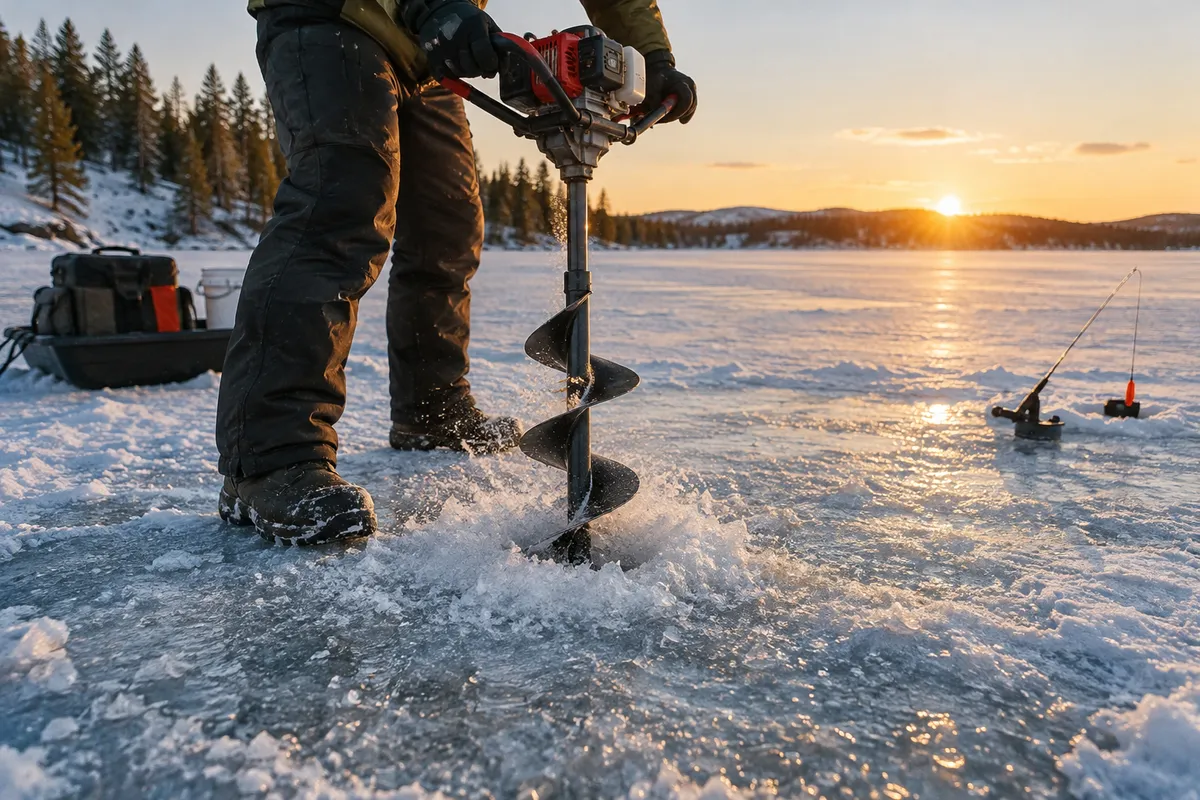
The best ice fishing augers are not necessarily the fastest or most powerful: they are the tools that make clean holes reliably while fitting your fishing style, travel limits, and maintenance comfort. StrikeMaster is a familiar name in ice fishing, but a brand alone cannot tell you whether a particular auger is right for your season. Compare the exact model’s current specifications with the work you expect it to do, and treat old product references as a starting point rather than proof of present-day availability or features.
Start with the fishing you actually do
Think about where you fish and how many holes you commonly need. A mobile angler who walks between spots has different priorities from someone who travels by snowmobile or fishes from a shelter near a vehicle. The relevant trade-offs include total carried weight, the effort needed to drill, fuel or battery logistics, and how easily the unit can be transported and stored.
Also consider the hole itself. Hole diameter affects the opening available for a fish, but a larger diameter generally means removing more ice. Check local regulations and the needs of your target species, then compare the intended opening with the auger’s verified specifications. Do not assume two products with similar names have interchangeable blades, extensions, or powerheads.
A simple pre-season inventory helps: list the number of holes you expect, how far you travel from your vehicle, the coldest conditions you fish, and what power source you can manage. That short list is more useful than choosing by a promotional claim or an old headline.
Hand, gas, and electric: the practical differences
A hand auger keeps the setup mechanically simple and avoids carrying fuel or charging batteries. Its limitation is the physical work, particularly when drilling many holes or working through thick ice. For occasional use or a compact walking kit, it may still be a sensible choice if the blade is sharp and the angler is comfortable with the effort.
Gas-powered augers can suit anglers who need repeated drilling and are prepared to manage an engine, fuel, noise, and routine maintenance. The exact weight, starting method, fuel requirements, and service needs vary by model. Verify these details in the manufacturer’s documentation; do not infer them from a product family name or a past review.
Electric augers avoid exhaust at the hole and can be convenient for anglers who value a simpler start-up routine. Their suitability depends on the specific system, battery capacity, temperature, and how often you drill. Cold weather can affect battery performance, so plan conservatively and follow the manufacturer’s storage and charging guidance. A spare battery is only useful if it is compatible and kept according to its instructions.
No category wins for everyone. Decide which inconvenience you would rather manage: physical effort, engine upkeep, or battery planning.
How to compare a StrikeMaster model
When evaluating a StrikeMaster auger, use the exact model name and current product documentation. Confirm the power source, weight, compatible cutting head or blade, available diameter, any extension compatibility, and the manufacturer’s instructions for operation and care. If a retailer listing conflicts with the official documentation, ask the manufacturer or an authorized service provider to clarify before relying on the claim.
Check what is included, too. A listing may show accessories separately, and a blade assembly or battery from one generation may not fit another. Compatibility is especially important when replacing worn parts or adapting an existing setup. Avoid forcing a connection or improvising a substitute: a loose or mismatched cutting assembly can create a safety hazard and damage equipment.
The product name in a legacy article is not a reliable guide to current specifications. Model lines change, and a product may be renamed, discontinued, or sold in different configurations. Treat claims about speed, capacity, and included equipment as facts to verify, not as a reason to assume a particular auger is available now.
Blade care and safe drilling habits
A sharp, undamaged cutting edge matters more than an aggressive approach. Inspect the blade and fasteners before heading out, and follow the manufacturer’s guidance for sharpening, replacement, and protective covers. Do not handle an exposed edge casually. Keep hands, clothing, and loose gear clear of moving parts, and shut down or secure the power source as directed before inspection or transport.
Clear loose snow from the drilling spot and keep a stable stance. Maintain control of the auger rather than leaning into it or trying to force a stalled unit. If the cutting head binds, stop and follow the manual’s clearing procedure; do not reach toward a moving blade. Keep bystanders at a safe distance, particularly children, and transport the tool with its blade protected.
Ice conditions are a separate safety decision. An auger can make a hole; it cannot establish that the surrounding ice is safe. Thickness and quality vary across a lake, and snow, currents, springs, changing weather, and shoreline conditions can complicate judgment. Check local guidance, use flotation and appropriate safety equipment, and travel with a companion when possible. Ice safety sticks are one part of a broader plan; see this guide to ice fishing safety sticks.
Plan the whole setup, not just the auger
An auger is one piece of a mobile system. Account for the tool, blade cover, power source, spare parts, and the distance you must carry them. If you fish from a shelter, leave room to place and operate the auger without crowding other people or gear. Keep fuel, batteries, and sharp equipment stored and handled according to their respective instructions.
Before the trip, inspect the unit at home, confirm that the cutting head is secure, and make sure the power source is ready. Carry only accessories confirmed compatible with your specific model. A small maintenance kit can be useful, but it should not become an excuse to attempt repairs beyond your skill or the manufacturer’s directions. For organization ideas that complement a drilling setup, read about ice fishing tackle storage.
For broader planning on equipment, conditions, and techniques, explore more freshwater ice fishing coverage. Local regulations and lake-specific safety advisories should guide where and how you fish.
Common selection mistakes to avoid
One frequent mistake is choosing an auger solely by a headline’s promise of an “edge.” A compelling phrase does not establish a model’s performance, current stock, or suitability for your conditions. Another is overlooking total weight: the tool may feel manageable beside a vehicle but become burdensome during a long walk.
It is also easy to focus on drilling speed while ignoring blade availability, service access, battery or fuel planning, and the cost of compatible replacement parts. Confirm those practical details before committing to a system. Finally, do not assume a powerful auger makes unsafe ice acceptable. Monitor conditions, follow local advice, and turn back when the route or ice is uncertain.
A grounded choice for the season
The right StrikeMaster—or another brand’s auger—depends on your workload and how you move on the ice. Compare verified specifications, prioritize safe handling and serviceable parts, and select a power source you can manage in cold conditions. If the model identity or compatibility is unclear, check with the manufacturer rather than guessing. That careful approach is more likely to provide a dependable season than chasing a supposedly universal best option.
Frequently asked questions
How do I choose between a hand, gas, and electric ice auger?
Match the power source to how many holes you drill, the distance you travel, your physical effort, and your willingness to manage fuel or batteries. Compare the verified specifications and maintenance requirements of the exact model.
Are StrikeMaster blades and accessories interchangeable between models?
Do not assume compatibility based on the brand or a similar model name. Check the manufacturer’s documentation for the exact auger and accessory, or confirm with the manufacturer or an authorized service provider.
Does an auger hole show that the ice is safe?
No. A hole provides information only at that location and does not establish the condition of surrounding ice. Conditions vary, so consult local guidance, use appropriate safety equipment, and avoid travel when uncertain.
Sources & further information
Consult these primary sources for current regulations, technical information and local guidance.