Don’t Get Stuck: Ice Fishing Safety Sticks
Ice fishing safety sticks can help a person regain purchase after an unintended fall through ice, but they are only one part of a larger safety plan. Learn what to carry, how to prepare, and when to stay off the ice.
Ice fishing safety sticks are a compact piece of self-rescue equipment: a matched pair of pointed handles connected by a cord, intended to help a person get purchase on the ice after an accidental fall through. They are not a guarantee, and they do not make uncertain ice safe. Their value depends on keeping them accessible, understanding their basic purpose before an emergency, and making conservative decisions about whether to go out at all.
What are ice fishing safety sticks for?
Often called ice picks or ice claws, safety sticks are designed to provide a grip where wet gloves and smooth ice may not. A user can hold the handles and press the points into the ice surface to help pull or work toward firmer ice. The cord helps keep the pair together. Designs vary, so read the instructions for the particular set and practice handling it on dry land.
Think of the sticks as one link in a chain: local ice information, a flotation aid, communication, a partner, and a plan for getting help all matter. They are for an emergency response, not for testing ice thickness as you travel. A stick strike cannot establish that a route will support you; ice conditions can change over short distances and around current, vegetation, inlets, outlets, and structures.
Where should you carry them?
Keep the sticks on your person, where you can reach them while wearing your outer layers—not buried in a sled, shelter, or pack. A cord or neck loop can keep them together, but arrange it so it does not catch on equipment or restrict movement. Check that the points are protected during transport and that the handles and cord are intact. Follow the maker’s care and storage directions.
Before leaving shore, make sure you can reach the equipment with gloves on. Rehearse drawing and separating the sticks on dry land, then put them back in the same accessible location. The goal is familiarity, not a complicated drill. In cold water, stress and wet hands make simple tasks harder, so don’t wait until an emergency to discover that a cap is difficult to remove or a cord is tangled.
A flotation device worn over suitable cold-weather clothing is another important layer. A phone in a waterproof, accessible case can help you contact emergency services, but reception and battery life are not assured. Tell someone your destination and expected return time, and check in when you are safely off the ice.
How do they fit into a responsible ice plan?
Start with current local guidance from the agency responsible for the waterbody. Ask about access closures, known hazards, and recent conditions; reports from another lake—or even another part of the same lake—may not apply. Ice forms unevenly, and snow can obscure cracks, weak areas, or open water. There is no universal thickness number that guarantees safety for every person, group, vehicle, or condition.
Travel with a partner when possible, but leave enough space that one person’s fall is less likely to put others in immediate danger. Carry communication and basic emergency equipment, and agree on a route and turnaround point. Avoid unfamiliar areas, moving water, pressure cracks, and places near docks or other structures unless local authorities provide clear guidance. If visibility, wind, temperature, or ice conditions deteriorate, turn back.
Before committing to a trip, consider the whole outing: how far you are from shore, whether the route crosses changing conditions, whether the group has appropriate cold-water protection, and how quickly help could reach you. A shelter or sled adds gear but does not resolve uncertainty about the surface beneath it. For a broader look at the activity, see more ice fishing coverage.
What should you do if someone falls through?
Call emergency services as soon as you can do so safely. Do not rush toward a person in the water: a rescuer can become a second casualty. Keep others back from the edge and use a safer method to extend help from a stable position—such as a throw line or other rescue equipment—if available and you are trained to use it. Follow emergency dispatch instructions and local rescue guidance.
If you are the person in the water, concentrate on staying calm, keeping your airway clear, and calling for help. The safety sticks may help you grip the edge, but the right response depends on the circumstances and the equipment’s instructions. Avoid standing or moving abruptly onto uncertain ice. Once out, get emergency medical assistance and move to a warm, sheltered place; cold-water exposure can be serious even when a person feels capable of continuing.
These points are not a substitute for cold-water rescue training. A local fire, rescue, or boating-safety organization may offer instruction suited to regional conditions. Learn the local emergency number and the safest way to communicate your location before you need it.
What mistakes make safety sticks less useful?
The most common mistake is carrying them somewhere inaccessible. Another is treating them as proof that it is safe to cross. They cannot reveal hidden weak ice or replace local reports, flotation, a partner, and a conservative route. Avoid relying on a single thickness estimate or a past trip as assurance; conditions may differ today.
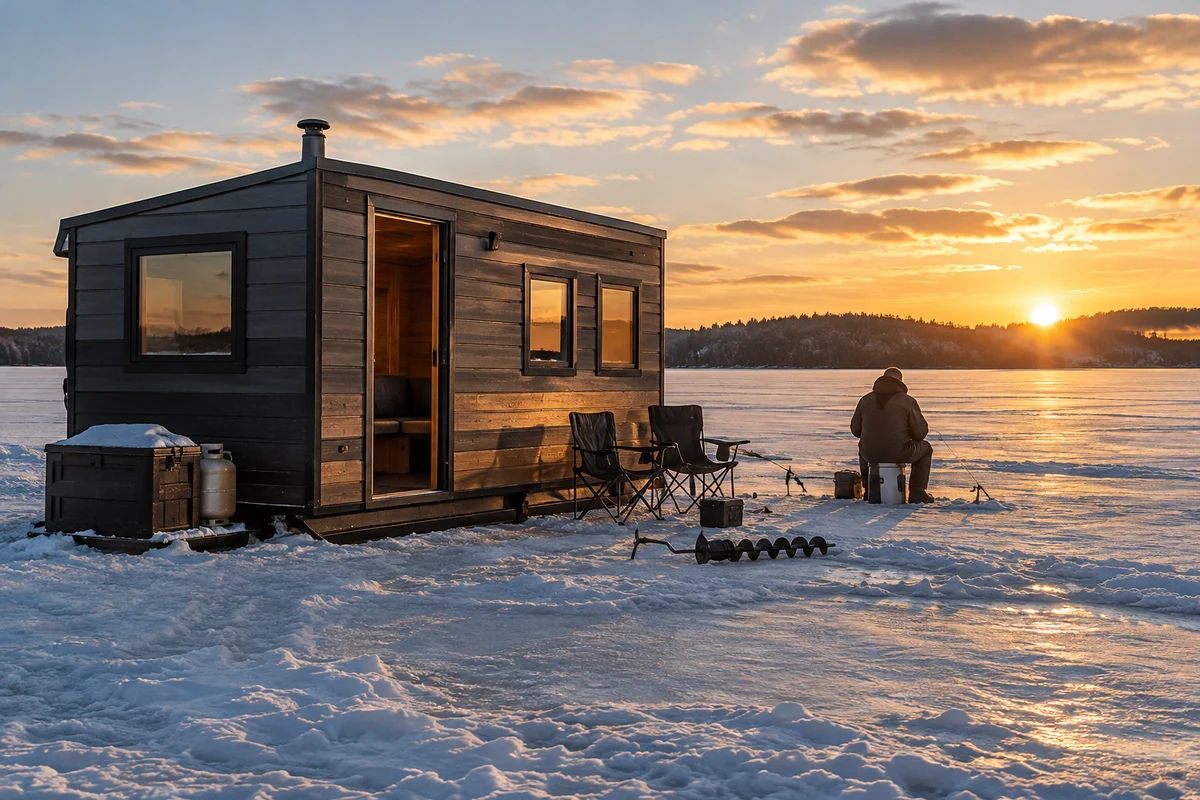
It is also easy to neglect equipment between outings. Check the cord, handles, points, and protective covers, and replace damaged gear according to the manufacturer’s guidance. Don’t improvise a setup that can snag or prevent you from reaching the handles. If you use a shelter, learn how its weight and placement affect your plan, and keep emergency equipment on your person. Our guide to custom fish houses can help you think through shelter needs without confusing comfort with ice safety.
Finally, don’t let a successful trip create overconfidence. A familiar access point can change with weather, currents, snow cover, or water-level conditions. When reliable local information is missing—or conditions feel questionable—the safest choice is to remain ashore.
What equipment and preparation belong together?
Build a simple checklist that matches the location and conditions: accessible ice safety sticks, a properly worn flotation aid, a charged phone protected from water, a whistle, and any locally recommended rescue gear. Add warm dry layers and a way to summon help. Check that everyone in the group knows the plan, understands where the equipment is, and knows when the outing will end.
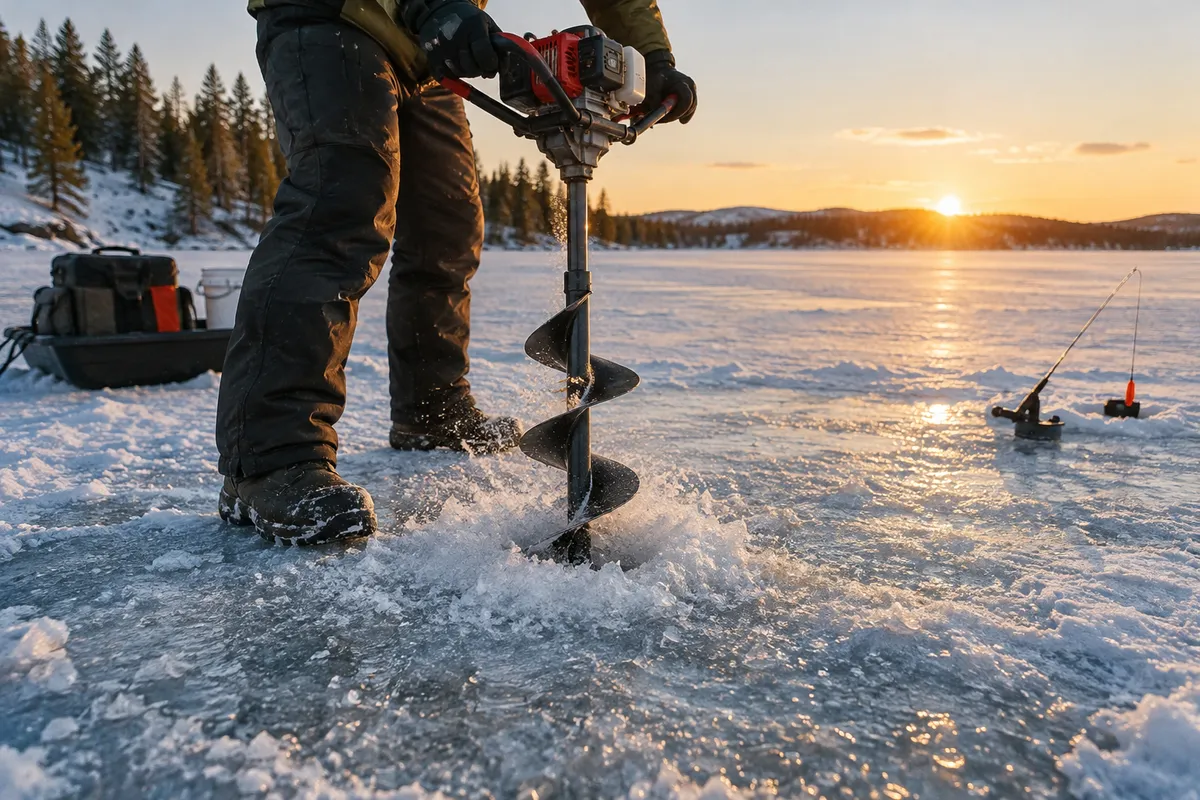
Transport equipment so it is secure, but keep emergency items immediately reachable. If an auger, sled, or other heavy gear is part of the trip, arrange it so it does not interfere with movement or access to safety equipment. Choosing an auger is a separate planning question; our overview of ice fishing augers discusses considerations for selecting equipment without suggesting that gear can compensate for unsafe ice.
A good checklist includes a no-go decision. If the local authority advises against access, if you cannot verify conditions, or if the group lacks appropriate equipment and preparation, postpone the trip. Ice fishing is optional; getting home safely is not.
The essential takeaway
Ice fishing safety sticks can be useful when an accidental fall leaves someone trying to get a grip on the ice. Carry them where they are reachable, learn their design before the season, and maintain them. Most importantly, use them as backup equipment—not permission to cross questionable ice. Local conditions, flotation, communication, a companion, and a willingness to turn around remain central to a safer outing.
Frequently asked questions
Are ice safety sticks the same as ice-fishing spud bars?
No. Safety sticks are a wearable pair of pointed handles intended to help with grip in an emergency. A spud bar is a separate tool sometimes used to assess ice while moving, and it cannot guarantee that a route is safe.
Should I keep safety sticks in my tackle box?
Keep them accessible on your person rather than buried in a box or sled. Follow the manufacturer’s instructions for carrying and protecting the points, and check that you can reach them while wearing your normal cold-weather clothing.
Do safety sticks make thin or unfamiliar ice safe?
No. They do not establish ice strength or remove hazards. Check current local guidance, use appropriate flotation and communication, go with a plan, and stay off the ice when conditions are uncertain.
Sources & further information
Consult these primary sources for current regulations, technical information and local guidance.