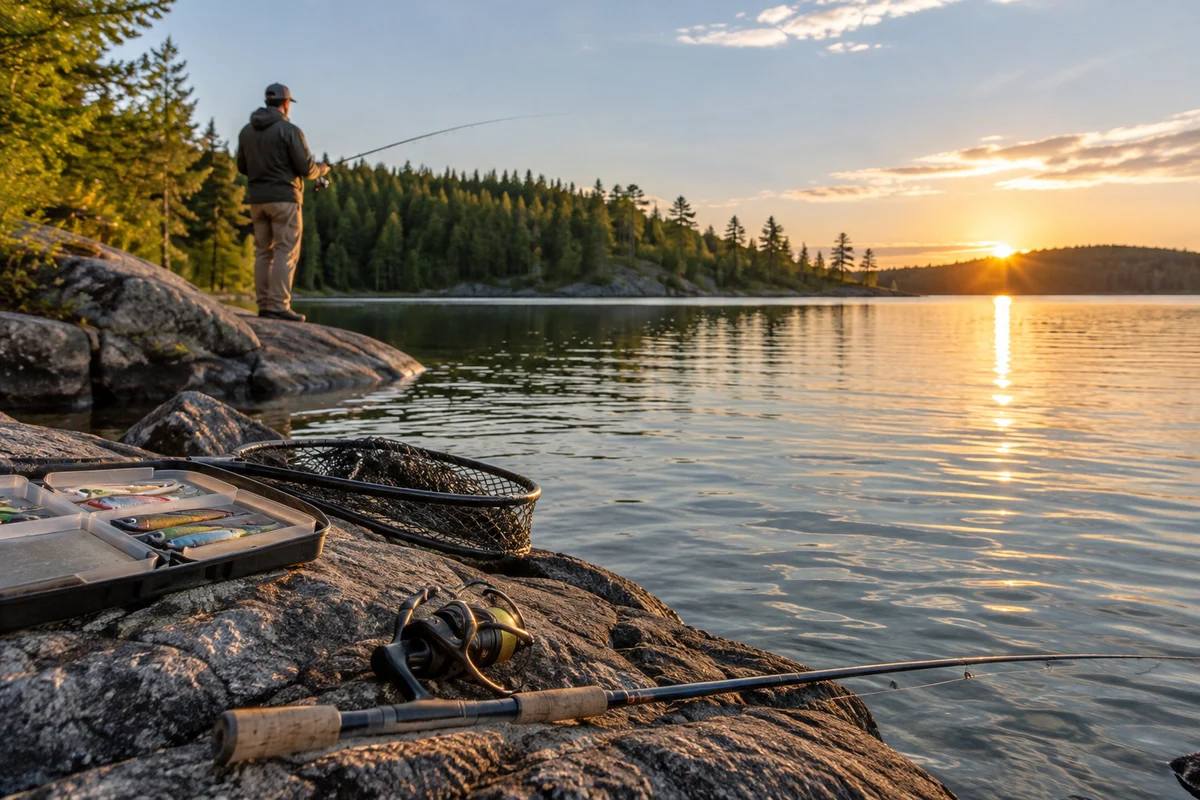
Biggest Black Buffalo Carp Record: How to Verify a Claim
A careful guide to evaluating claims about the biggest black buffalo carp record, distinguishing a verified registry entry from an anecdote or a fish identified by another name.
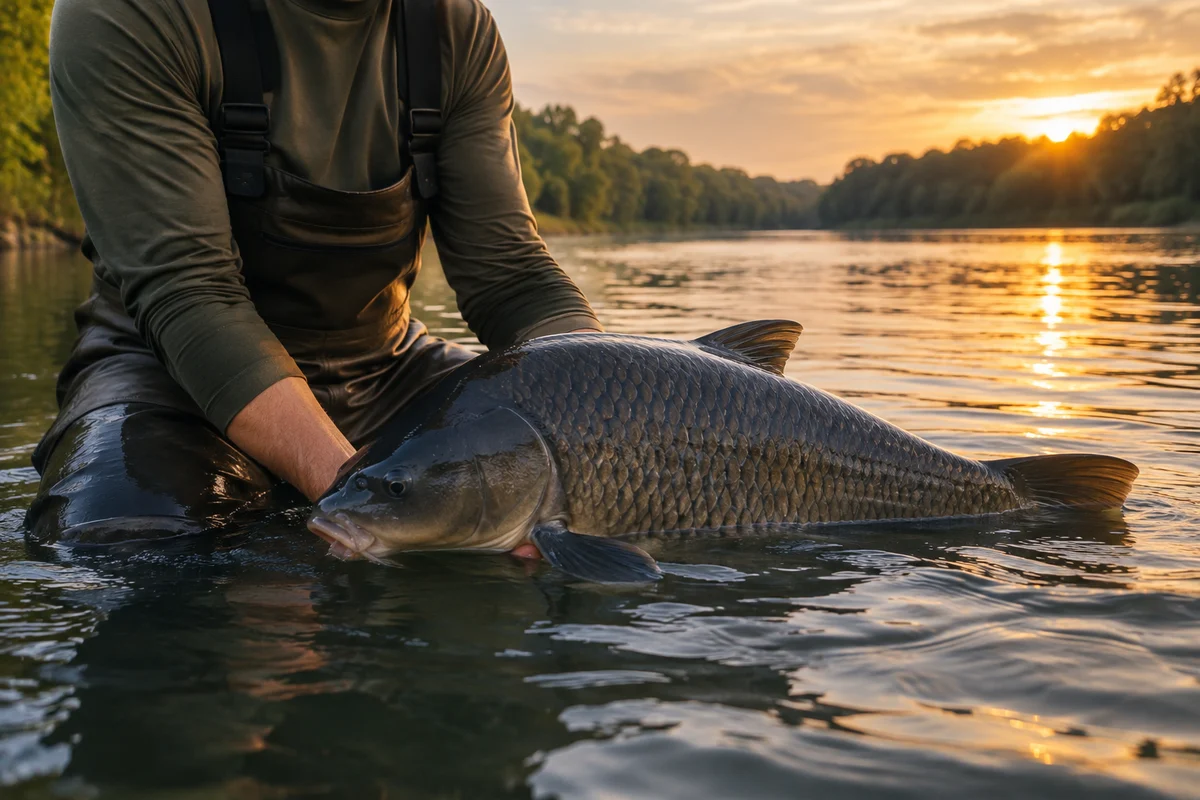
Claims about the biggest black buffalo carp record can be difficult to compare because a fish’s common name, identification, weighing method, and record category all matter. A large fish described informally as a buffalo is not automatically a documented black buffalo record. Before repeating a number, check which species was identified, who verified the catch, and whether the record organization accepted the evidence.
This guide explains how to assess a record claim without turning an uncertain report into a fact. It also covers practical identification, documentation, and responsible handling when fishing for buffalo in freshwater.
What does “black buffalo” mean?
Black buffalo (Ictiobus niger) are native North American freshwater fish in the sucker family. They are related to other buffalo species, including bigmouth and smallmouth buffalo, but a shared common name does not make the species interchangeable. Identification can be challenging, particularly in a quick photograph or when a fish is not examined by someone familiar with the group.
A record claim needs a species-level identification, not just a caption or angler’s shorthand. Images that show the fish’s overall profile and diagnostic features may help, but photographs alone may not settle every case. If a record organization or fisheries authority has not confirmed the identification, describe the fish as reported or tentatively identified rather than presenting it as a verified black buffalo.
The word “carp” can also create confusion. Buffalo are not carp, even though anglers may use broad informal labels for large, deep-bodied freshwater fish. When researching a claim, search the exact species name as well as common names, and check whether the source is discussing black buffalo, another buffalo species, or carp.
What makes a record verified?
A record is meaningful only within a defined system. Different organizations may recognize different categories, and a state record, an all-tackle record, a catch-and-release recognition, and an informal local report are not equivalent. Each has its own eligibility and evidence requirements.
Look for a named record-keeping organization and its current rules. Check whether the entry identifies the species, the location, the date, the weight, and the method used to verify the catch. A registry entry is stronger evidence of a recognized record than a reposted social-media caption, but even then, the category and the registry’s rules should be clear.
Do not assume that a striking weight is accurate because it appears in several places online. Repeated posts can trace back to one unverified claim. A scale reading, a photograph of a scale, or a witness statement may be useful evidence, but each is only as reliable as the documentation and the process behind it. If the original record listing is unavailable or does not specify the species, state that limitation plainly.
For a broader example of why species and record categories matter, see this overview of a Siamese carp world record claim. Its subject is a different fish; it is useful here as a reminder to distinguish species and record systems rather than transfer one fish’s recognition to another.
How should a reported weight be evaluated?
First, identify what was weighed and how. A fish weighed whole on a calibrated scale is not directly comparable to an estimate, a weight inferred from length, or a figure reported without supporting detail. Check whether the scale was suitable for the fish’s size and whether the reading was documented clearly.
Next, determine whether the report refers to a specific fish or a general claim. “Largest ever caught” is a stronger assertion than “a large fish was reported,” and it needs stronger evidence. A local newspaper item, angler account, or photograph may preserve useful context without establishing a formal record.
Finally, separate a verified registry result from an anecdote. An anecdote can be worth discussing, especially when it includes a date and location, but it should not be converted into an official ranking. Avoid repeating an exact weight as settled fact unless a credible record source supports it and identifies the fish and category.
What evidence helps confirm a catch?
For anglers pursuing record recognition, read the relevant organization’s rules before fishing. Requirements may cover species confirmation, witness information, scale certification, photographs, submission deadlines, and whether the fish must be retained or can qualify under a release category. The rules can change, so rely on the organization’s own current guidance rather than a summary from an old article.
Good documentation is clear and unembellished. Record the catch location as accurately as the rules and local privacy concerns allow, photograph the fish from useful angles, and preserve the scale reading and any required witnesses or paperwork. Do not alter an image to make a fish appear larger, and do not claim a measurement or weighing procedure that did not occur.
If the species is uncertain, seek help from a qualified fisheries professional or the record organization before describing it definitively. State wildlife agencies can provide regional fish information and point anglers toward appropriate identification resources. For more freshwater reading, browse more outdoor coverage.
Where might anglers encounter buffalo, and how should they approach them?
Buffalo species inhabit freshwater systems, but range and local abundance vary by species and region. Consult the state or provincial fisheries authority for local distribution, regulations, and identification guidance. Do not infer that black buffalo occur in a waterbody merely because another buffalo species is present there.
When fishing, follow local seasons, licensing rules, gear restrictions, and harvest regulations. A fish that could be a record deserves careful handling regardless of whether an angler plans to submit it. Keep the fish in the water when practical, minimize handling time, use suitable landing and measuring equipment, and avoid lifting a heavy fish by its jaw or gill structures. If the fish is to be released, prioritize its condition over prolonged photography or repeated weighing.
Fishing methods and bait choices should fit local rules and the waterbody. A lure or technique that works for one species or location may not suit another. Anglers comparing tackle can read this general blitz lures overview, but product mentions should not be mistaken for evidence about a fish’s identity or record status.
Common mistakes when researching a record
The most frequent error is collapsing several species into one category because they share the word “buffalo” or are casually called carp. Another is confusing an impressive catch with an accepted record. Large size alone does not establish a ranking, and a social post’s confident wording does not substitute for a registry entry.
A third mistake is overlooking the record class. A state record may be valid within that jurisdiction while not being an all-tackle world record. Catch-and-release recognition may use different evidence than a weight-based record. Always name the category when describing a result.
Be cautious with old posts that lack a source, image context, or identification details. A headline can preserve a topic without proving the underlying event. If no authoritative record listing can be confirmed, the responsible conclusion is that the claim remains unverified—not that the fish was necessarily small, misidentified, or fabricated.
A practical checklist for a record claim
Before sharing a claimed biggest black buffalo, ask:
- Is the fish identified as Ictiobus niger, rather than another buffalo or carp species?
- Which organization or authority recognizes the record, and what exact category applies?
- Is the weight supported by the organization’s required evidence?
- Can the original listing or documentation be found, rather than only copies of a claim?
- Are the location, date, and rules relevant to the claimed jurisdiction or category?
If key answers are missing, use cautious language and avoid presenting a number as an established record. That distinction protects the angler’s credibility and helps readers understand what the evidence actually shows.
FAQ
Is a black buffalo the same fish as a carp?
No. Black buffalo are suckers, not carp, although informal naming and resemblance can cause confusion. Confirm the species rather than relying on a casual label.
Does a large reported fish count as a record?
Not automatically. A record depends on the organization, category, identification, and evidence required by its rules. An unverified report should be described as a claim, not a confirmed record.
Where can I check local rules and fish information?
Start with the relevant state or provincial fisheries agency, then consult the record organization’s current rules if you intend to submit a catch. Regulations and record requirements vary by location and category.
Frequently asked questions
Is a black buffalo the same fish as a carp?
No. Black buffalo are suckers, not carp, although informal naming and resemblance can cause confusion. Confirm the species rather than relying on a casual label.
Does a large reported fish count as a record?
Not automatically. A record depends on the organization, category, identification, and evidence required by its rules. An unverified report should be described as a claim, not a confirmed record.
Where can I check local rules and fish information?
Start with the relevant state or provincial fisheries agency, then consult the record organization’s current rules if you intend to submit a catch. Regulations and record requirements vary by location and category.
Sources & further information
Consult these primary sources for current regulations, technical information and local guidance.