Duck Hunting in the Rain Tips: Five Ways to Stay Ready
Rain changes how a marsh looks, sounds, and feels—but it does not make every wet-weather hunt worthwhile. Plan for visibility, dry essentials, safe footing, and careful recovery before setting out.
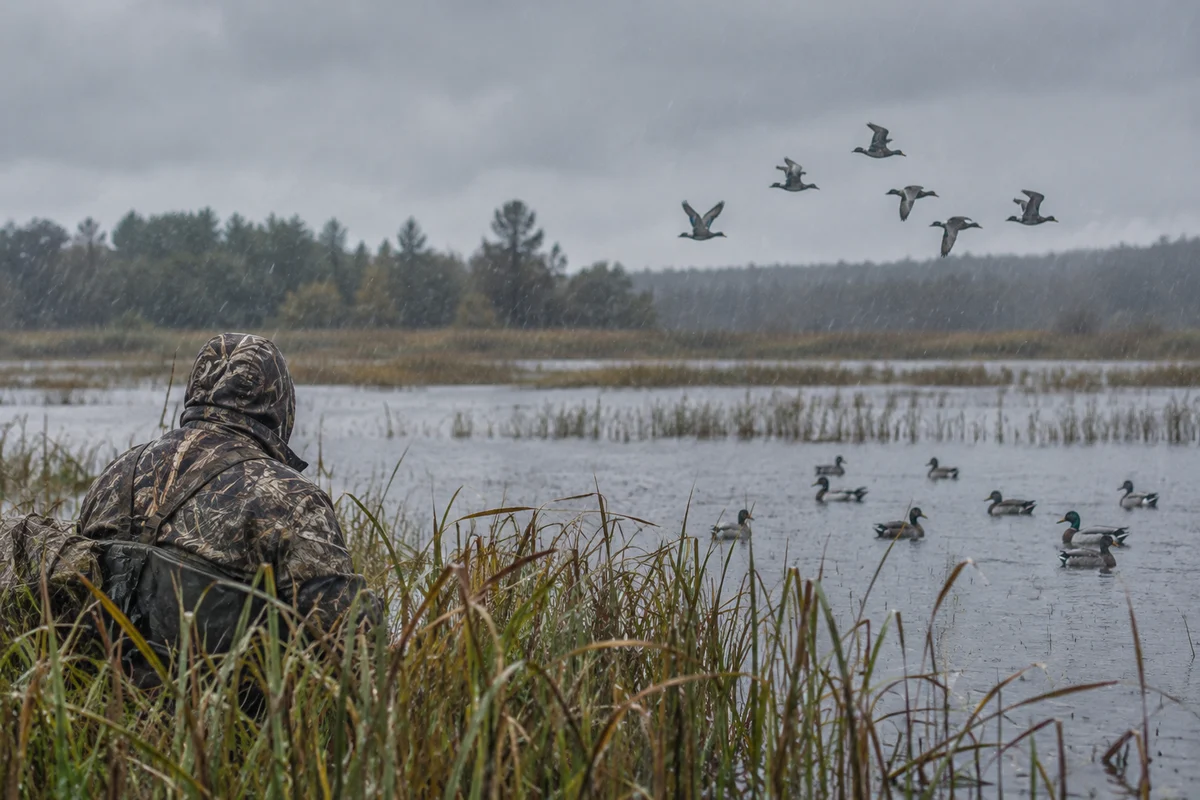
Rain can flatten light, blur the shoreline, and make a familiar marsh feel unfamiliar. These duck hunting in the rain tips focus on the decisions that matter most: checking whether conditions are safe, protecting essential gear, adjusting concealment, and making every shot and recovery count. Rain alone does not guarantee better movement or easier hunting; treat each outing as a fresh set of conditions, not a forecasted advantage.
1. Decide whether conditions are safe before leaving
Start with the forecast for the specific water and time you expect to be there. Rain may arrive with wind, thunder, falling temperatures, rising water, or poor visibility. Any of those can change a manageable outing into a bad one. If lightning is nearby, postpone the trip and seek shelter; do not rely on a blind or a tree as protection. If wind and waves exceed your experience or equipment, stay ashore.
Check access points and local advisories, too. A path that was firm yesterday may be slick or submerged today. A small creek can rise, and a familiar launch may become difficult to use. Tell someone your destination and expected return, carry a reliable communication method protected from water, and agree on what they should do if you are overdue. A conservative decision to turn back is part of sound fieldcraft.
For a broader view of season planning, regulations, and waterfowl fieldcraft, browse more outdoor coverage. Always confirm current local rules, including permitted hours, species limits, access restrictions, and any equipment requirements, with the relevant wildlife agency.
2. Read the water and the wind, not just the rain
Rain can reduce contrast and make birds harder to see against gray sky or dark water. Before settling in, observe the area from a safe position. Note where wind pushes surface water, where runoff enters, and whether water levels or current are changing. Avoid guessing that birds will use a particular pocket simply because it has worked in different weather.
Choose a position that keeps a clear view of the safe shooting area and leaves room for a controlled retrieve. Rain-softened banks and muddy edges can disguise holes, roots, and steep drop-offs. Do not wade into unfamiliar or fast-moving water to improve a setup. If you cannot identify a safe route in and out, choose another location or call it off.
Visibility is a safety issue as well as a hunting consideration. Keep people, roads, trails, buildings, and boats in mind. Agree on safe shooting zones with everyone in the group before the hunt begins, and stop if fog, rain, or fading light makes those zones hard to judge. Never take a shot at an indistinct shape.
3. Keep essential gear dry and simple
A waterproof outer layer is useful only if it allows comfortable movement and does not interfere with safe handling of equipment. Dress in layers so you can adapt to exertion and temperature changes. Avoid cotton next to the skin in cold, wet conditions because it can hold moisture and become uncomfortable. Pack a dry insulating layer in a sealed bag, plus spare gloves and socks if the trip is long enough to justify them.
Protect essentials rather than trying to waterproof everything in a complicated way. Use a sealed pouch for a phone, keys, licenses, and emergency contacts. Keep a small first-aid kit and fire-starting supplies dry, where appropriate for the outing. Check that closures on bags and cases are fully shut, and arrange equipment so you can reach what you need without emptying everything onto wet ground.
Rain can make hands cold and reduce dexterity. Test gloves and outerwear before the trip, including whether you can move freely and safely with them on. Do not let wet clothing, fogged eyewear, or a soaked hat block your vision or judgment. If you cannot see clearly or manage equipment safely, pause and correct the problem—or end the hunt.
4. Make concealment and decoy choices deliberately
Wet vegetation may sag, shine, or move differently in wind. Before committing to a hide, look at it from the direction you expect birds and other people to approach. A dark opening behind a blind can stand out against reflective water; a loose cover can flap and draw attention. Make only modest adjustments, using natural materials where lawful and leaving the site undamaged.
Rain ripples can affect how decoys appear, but there is no universal wet-weather pattern. Consider the available space, wind direction, visibility, and how the spread can be retrieved or adjusted safely. Keep the arrangement within a clearly defined safe area and avoid setting decoys where retrieval would require entering hazardous water. If a layout blind is part of your plan, review the broader practical considerations in this overview of a layout blind for waterfowl hunters; confirm current product details with its manufacturer rather than assuming any model suits every location.
5. Prioritize safe shooting and reliable recovery
Rain does not change the need for positive identification, a safe background, and restraint. Agree on who is responsible for watching each sector and retrieving downed birds. Keep muzzles pointed in a safe direction, follow the firearm maker’s instructions, and unload before crossing obstacles or entering a boat. If rain or poor light makes identification uncertain, do not shoot.
Plan retrieval before the first opportunity. A dog, where used, needs appropriate supervision and protection from cold water and fatigue. A boat and flotation equipment should match the conditions and local rules. Do not launch or continue in rough water simply because the hunt is underway. The U.S. Coast Guard’s boating safety resources provide general guidance; local conditions and appropriate training still matter.
Make a determined effort to retrieve every bird. Mark the fall, keep visual reference points, and avoid taking another shot if it would compromise a safe recovery. If the bird falls in water that is too dangerous to enter, do not turn a retrieval into a second emergency. Get help using a safe method, and learn the limits of your equipment before the season.
6. Dry, inspect, and learn after the outing
Once safely home, dry clothing and gear promptly and inspect equipment according to its manufacturer’s care instructions. Check bags for standing water, clean mud from footwear, and look for damage or moisture where it could affect function. Do not store wet equipment sealed away for an extended period.
Make a brief note about what conditions actually occurred: wind, visibility, water level, access, and which gear kept essentials dry. This is more useful than assuming that rain itself caused a particular result. If you are comparing waterfowl equipment, consider fit, weather protection, ease of care, and compatibility with your needs; for example, this overview of a 20-gauge Raptor shotgun can help frame questions to verify in the manufacturer’s documentation. It is not a substitute for training, safe handling, or checking applicable regulations.
A rain-ready hunt is not one where every piece of gear stays pristine or every plan works. It is one where you can adapt, see clearly, remain within your abilities, and leave the water safely. When conditions close the margin for judgment, the best choice is to wait for a better day.
Frequently asked questions
Is rain always a good condition for duck hunting?
No. Rain can reduce visibility and coincide with wind, cold, lightning, or rising water. Judge the actual conditions and stay ashore or postpone if travel, identification, or retrieval would be unsafe.
What should I protect first in wet weather?
Keep communication devices, licenses, keys, and emergency essentials in a sealed pouch, and carry dry insulating clothing when conditions warrant. Follow manufacturer care guidance for other equipment.
How should a group handle reduced visibility?
Set safe shooting zones before the hunt, keep everyone aware of those boundaries, and do not shoot at indistinct shapes. Stop if weather or light makes identification and safe backgrounds uncertain.
Sources & further information
Consult these primary sources for current regulations, technical information and local guidance.