How a Record Saskatchewan Elk Is Verified
A measured elk rack is only part of a record claim. Here’s how non-typical classification, documentation, and official verification work—and what to check before repeating a headline.
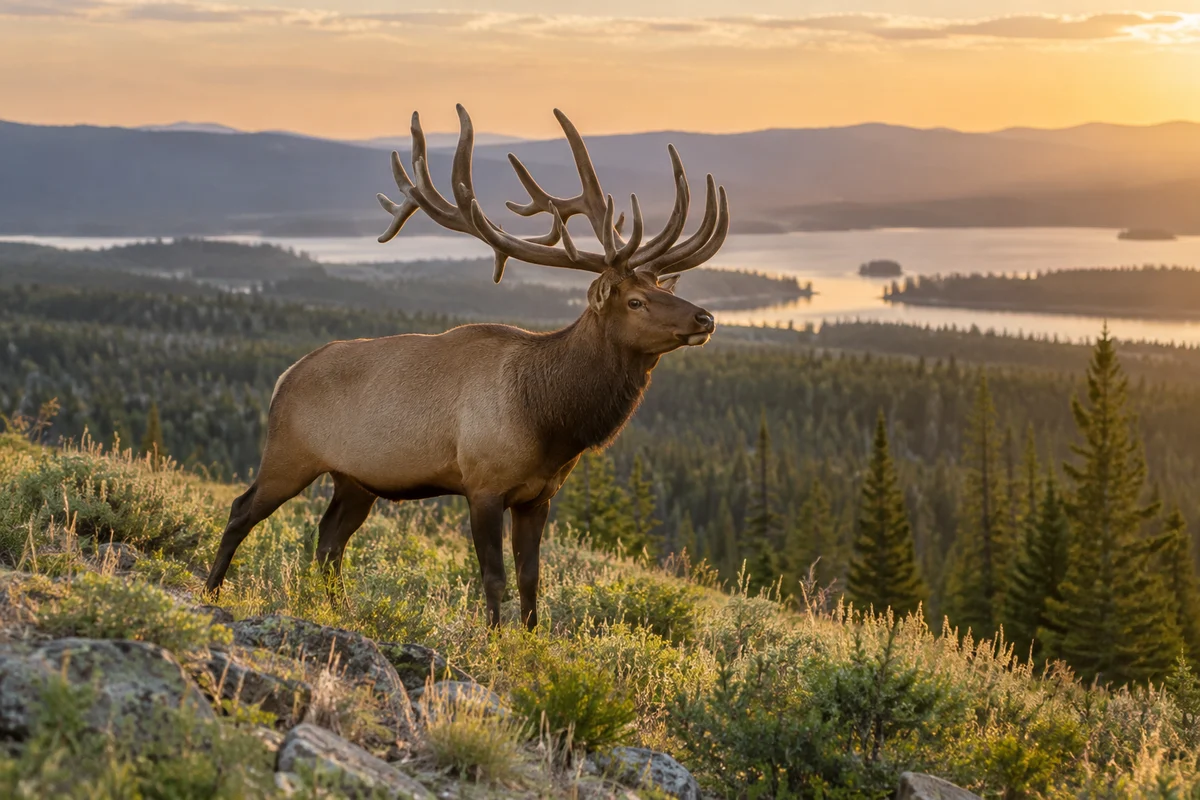
A record Saskatchewan elk claim can sound definitive, but “record” has a precise meaning only when the category, measurement system, and verification are clear. Elk antlers vary widely: a rack may have unusual points or asymmetry, while a formal record entry depends on a recognized scoring process and accepted documentation. A large-looking set of antlers, a field estimate, or a social-media caption is not by itself a verified record.
For hunters, wildlife enthusiasts, and anyone researching an exceptional rack, the useful questions are straightforward: Which record book is being referenced? Is the animal an American elk, and is the entry typical or non-typical? Was the rack measured under that organization’s rules, and can the result be confirmed in its published records? Those distinctions let you discuss an impressive animal accurately without turning an unverified claim into a fact.
What does “record Saskatchewan elk” mean?
The phrase can refer to several different things: a provincial record, a national or world record, a record-book entry, or simply an unusually large elk reported from Saskatchewan. These are not interchangeable. A claim should name the record-keeping organization and category, along with whether the measurement is official or preliminary.
Record systems also define what counts as an eligible animal and how antlers are assessed. Boone and Crockett Club and other record organizations maintain their own rules and records. Their categories can distinguish typical antlers—whose points follow a generally regular pattern—from non-typical racks, where abnormal points or irregular growth contribute under the system’s rules. A non-typical designation is a classification, not a judgment about the animal’s health or quality.
The term “American elk” usually refers to wapiti, Cervus canadensis. It is not the same species as the European elk, which is called a moose in North America. In a record claim, the species and geographic origin matter because a record book applies specific eligibility criteria.
How are non-typical elk antlers assessed?
A record measurement is not just a tape measure around the longest points. Depending on the organization and category, trained measurers record antler dimensions and points according to a published method. Typical and non-typical categories handle irregular growth differently, and the system may account for symmetry or differences between sides. A field estimate cannot reliably substitute for that process.
A practical way to evaluate a claim is to separate what is known from what is asserted:
| Check | What to look for | Why it matters |
|---|---|---|
| Species and location | Elk identification and a credible Saskatchewan origin | Confirms the claim concerns the right animal and place |
| Category | Typical or non-typical, as defined by a named record program | Categories use different scoring rules |
| Measurement status | Field estimate, official measurement, or accepted entry | These describe different levels of verification |
| Documentation | Measurer, date, score sheet, and supporting provenance where available | Lets others evaluate how the claim was established |
| Record comparison | The organization’s current record listing or direct confirmation | A large score alone does not establish a record |
Scores and records can also change as organizations review entries or update their listings. When a report provides only a number without the organization, category, or verification status, the careful description is “reported” or “potential,” not “official record.”
What documentation supports a credible record claim?
Start with the original source of the claim, not a sequence of reposts. Look for an official statement from the record organization, a recognized measurer’s documentation, or a published listing that identifies the category and entry status. If the claim comes from a news account or a hunter’s post, check whether it links to any of these primary records.
Useful supporting details may include when and where the animal was taken, the applicable license or harvest documentation, the identity of the measuring organization, and whether the antlers were measured after the required waiting period. Requirements vary, so do not assume that one record program’s rules apply to another. Privacy and local regulations can also limit what details are appropriate to publish.
For Saskatchewan hunting context, consult the provincial government’s official wildlife and hunting information rather than relying on an old season announcement. Rules, seasons, and reporting requirements can change. The Saskatchewan government’s main site is a starting point for current provincial information; record recognition itself should be confirmed with the relevant record keeper.
How should a reported record be described?
Use wording that matches the evidence. “A Saskatchewan elk described as a potential non-typical record” is appropriate when an official score or acceptance is still pending. “A verified entry in [named organization]’s [category] records” is stronger, but only if that organization confirms the entry. If the available source does not identify a record program, avoid assigning a rank or declaring a provincial, national, or world record.
This distinction matters because memorable antlers invite rapid retelling. A photograph can show a striking rack, but perspective, cropping, and missing context make it impossible to confirm dimensions or provenance from an image alone. Likewise, a precise-looking number is not proof unless the measurement method and its source are documented.
Exceptional elk stories belong in the broader context of big-game hunting and wildlife. ODU Magazine’s big-game hunting hub collects related coverage. For a comparison with another prominent elk claim, see the report on a potential Nebraska record elk, while the New Mexico bull elk story offers another example of why a reported “monster” and an officially verified record are different claims.
What can antlers tell us—and what can’t they?
Antlers are useful for identification, display, and record classification, but a rack alone cannot establish an animal’s age, health, or the conditions in which it grew. Antler form reflects biological development and environmental influences, but a photograph or final score does not reveal the full history of an individual elk. Avoid claims about age, diet, habitat, or genetics unless reliable evidence supports them.
Nor does a record entry necessarily describe population health. A remarkable animal is one observation, not a population survey. Wildlife agencies use broader monitoring and management information to make decisions. Readers interested in hunting seasons and conservation should distinguish that agency work from record-book scoring, which serves a different purpose.
A quick field guide to checking the claim
Before sharing a record headline, run through this checklist:
- Name the category: Is the claim about a typical or non-typical elk?
- Identify the record keeper: Which organization’s rules and records are being used?
- Check the status: Is the measurement preliminary, officially measured, accepted, or listed?
- Trace the source: Does the report lead to documentation rather than just another repost?
- Use restrained wording: Don’t call it a record until the relevant organization verifies it.
If key details are absent, the most accurate conclusion is that the animal has been reported as an exceptional elk, while its record status remains unconfirmed. That is still a meaningful story; precision simply keeps the story honest.
Where should readers verify an elk record?
Consult the record organization named in the claim and compare its published rules and listings. The Boone and Crockett Club is an established North American record-keeping organization, but not every claim belongs to its system. For provincial wildlife and hunting matters, use official Saskatchewan government resources. If neither source confirms the entry, report the uncertainty rather than filling gaps with assumptions.
A responsible record account identifies the animal, category, measurement authority, and verification status. With those basics in place, readers can appreciate an unusual Saskatchewan elk without confusing an eye-catching rack, a preliminary score, and an authenticated record-book entry.
Frequently asked questions
How can I tell whether a Saskatchewan elk record is official?
Find the named record organization and category, then confirm the accepted entry in that organization’s published records or through its official channels. A field estimate or headline alone is not verification.
What makes an elk antler rack non-typical?
Record programs classify racks using their own published criteria. Non-typical categories generally account for abnormal or irregular points, but the applicable organization’s rules determine classification and scoring.
Does a large antler score prove an elk is a provincial record?
No. A score must be measured and accepted under a specified program, and the claimed geographic category must match that program’s records. A large or reported score does not establish a provincial record by itself.
Sources & further information
Consult these primary sources for current regulations, technical information and local guidance.