How to Catch Burbot in Utah: Ice-Fishing Tactics
Burbot fishing in Utah can be a rewarding cold-weather pursuit, but success depends on choosing legal water, fishing near the bottom, and adapting to conditions. Use this practical framework for planning a safe, regulation-aware trip.
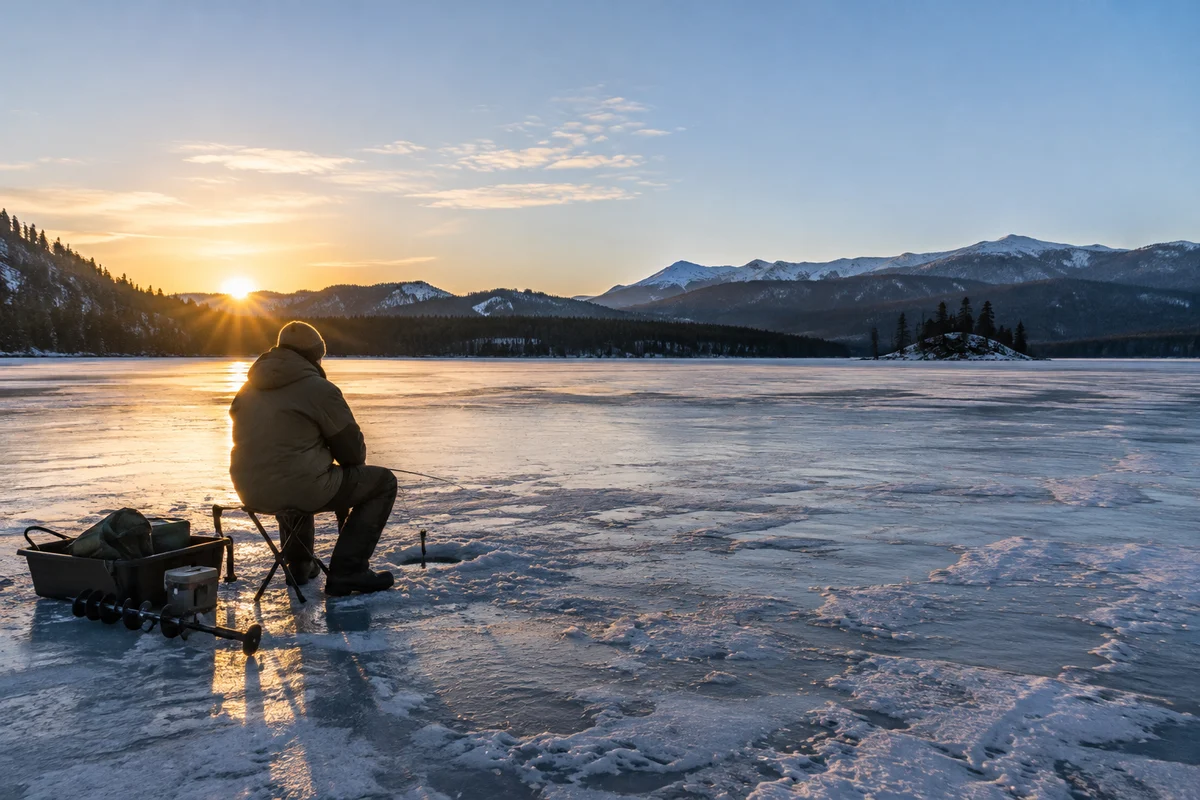
Burbot are a cold-water fish with a reputation for feeding after dark and holding close to the bottom. If you are figuring out how to catch burbot in Utah, begin with two essentials: confirm that your chosen water has an open burbot season, and treat ice safety as a separate decision from whether fish are biting. Utah waters and regulations can change, so a familiar lake or last year’s advice is not a substitute for current state guidance.
Burbot fishing is often a patient, simple style of ice fishing. Anglers commonly use a sturdy rod, a bottom-oriented presentation, and bait or lures that make enough movement to attract attention in low light. The exact productive depth, timing, and legal methods depend on the waterbody and conditions. Think of the steps below as a flexible plan, not a guaranteed recipe.
Where should you look for burbot in Utah?
Start with the current Utah fishing regulations and waterbody-specific notices. Confirm that burbot may be kept or targeted at the location, learn any limits or gear restrictions, and check for closures or special rules. The Utah Division of Wildlife Resources is the authoritative place to begin; do not assume regulations are uniform across the state.
Once you have identified legal water, look for deep, cold lakes where burbot are known or reported to occur. Local reports can help narrow the search, but treat them as clues rather than proof that fish are present or active. A lake’s shoreline access, launch or parking conditions, and winter travel options also matter: a promising spot is not useful if reaching it requires unsafe ice or unprepared travel.
On the ice, use a map or sonar to find a transition between a deeper basin and a slope, point, or channel edge. Burbot may move along bottom contours while foraging. Rather than drilling randomly over a broad area, choose a small set of holes that sample different depths along one feature. Keep your route and holes organized, and avoid areas where ice conditions are uncertain.
For more cold-weather planning, browse the ice-fishing hub. Its practical gear context can help you prepare, but gear never substitutes for checking ice and regulations.
What tackle and presentation work as a starting point?
Use tackle with enough backbone to control a fish near a hole, but avoid making the setup unnecessarily heavy. A medium-power ice rod and a reel with smooth drag are a reasonable general starting point; line choice should account for depth, current, abrasion, and the possibility of a larger fish. These are broad guidelines, not a claim that one specific rod or line is required.
A compact spoon, jig, or other legal lure can provide a visible, vibrating target. Where bait is allowed, anglers may tip a lure or use bait on a stationary line. Regulations determine which methods and bait are legal, so verify before rigging. Keep a second line only if the rules allow it and you can supervise it as required.
| Situation | Try this adjustment | What it helps you learn |
|---|---|---|
| No marks or contact | Move along the same contour and test another depth | Whether fish are using a nearby lane |
| Marks appear near bottom | Lower the lure to bottom, then lift it slightly | Whether fish respond to a close presentation |
| Fish follow but do not strike | Pause, reduce the lift, or change cadence | Whether a less forceful motion prompts a bite |
| Activity fades | Recheck depth and move to a nearby contour | Whether fish have shifted rather than stopped feeding |
| Conditions or ice feel questionable | Leave and reassess from a safe location | Safety takes precedence over finding fish |
If using a sonar unit, use it to understand depth and response, not as a promise of a catch. The Vexilar FL-12 overview offers context on a familiar flasher-style tool; compare any device with your needs and its current manufacturer information. For a broader look at lure styles, see jigs for ice fishing, then check that the specific lure and method comply with local rules.
How should you work a burbot hole?
Begin with a controlled presentation close to the bottom. Lower the lure until it touches or nearly touches bottom, then raise it enough to avoid dragging through debris. Use modest lifts and pauses at first. A steady, repeatable cadence makes it easier to notice whether fish are approaching, following, or ignoring the presentation.
When a fish appears on sonar, avoid reacting to every screen movement with a large, abrupt jig. Try a smaller lift or a brief pause, then return to a consistent rhythm. If you are fishing a baited stationary line, keep it positioned legally and check it at intervals allowed by the regulations. A combination of active jigging and a permitted second presentation can help cover different behaviors, but only when rules and supervision requirements allow it.
Darkness can be part of the appeal of burbot fishing, but it adds practical risks. Plan your route in daylight where possible, carry reliable lights and backup power, and tell someone where you will be and when you expect to return. Avoid traveling alone when conditions are unfamiliar. Do not let a promising bite persuade you to cross questionable ice, fish beyond your ability, or remain after weather and visibility deteriorate.
How do you make a safe, regulation-aware trip?
Before leaving, check the current Utah fishing proclamation or regulations, the specific water’s status, weather, access information, and any posted ice advisories. Rules can address seasons, possession, bait, hooks, and the number or use of lines; read the applicable sections rather than relying on a summary from an old report. The Utah Division of Wildlife Resources publishes official fishing information and updates.
Ice thickness is not reliably uniform. Springs, inlets, outlets, currents, changing temperatures, snow cover, and pressure cracks can create weak areas close to apparently sound ice. No single thickness number guarantees safety for every person, group, or activity. Use current local guidance, go with experienced company, carry appropriate rescue equipment, and turn around when conditions are uncertain. If you cannot confidently evaluate the route, do not go onto the ice.
A practical pre-trip check:
- Confirm the waterbody, season, legal methods, and harvest rules with Utah’s current official regulations.
- Check forecast, wind, visibility, access, and local ice information shortly before departure.
- Tell a trusted person your destination, route, and return time.
- Bring layered clothing, lights, communication, basic first aid, and suitable ice-rescue equipment.
- Keep a partner in sight and avoid separating across unfamiliar ice.
- Handle fish carefully, follow legal size and possession rules, and keep only what you can use.
What should you do when the first approach fails?
Change one variable at a time. If you see no fish, move a short distance along a likely contour or test a different depth. If fish appear but do not commit, alter the pause or lift rather than immediately changing every part of the setup. If there is no sonar, use a planned sequence of depths and holes, and give each presentation a fair, consistent trial before moving.
Keep notes on waterbody, approximate depth, time, weather, presentation, and whether you saw activity. A few personal observations are more useful than treating a single successful outing as a universal pattern. Conditions and fish behavior vary, and reports may reflect a particular day or location.
Burbot fishing in Utah rewards preparation more than complicated equipment. Choose legal water, search along bottom structure, start with a simple presentation, and adjust methodically. Most important, make the decision to fish based on verified regulations and safe access—not on the possibility of a bite.
Frequently asked questions
Are burbot available in every Utah lake?
No. Check Utah’s current official fishing information for the specific waterbody; presence, access, and regulations are not statewide assumptions.
What is a useful starting presentation for burbot through the ice?
Try a legal jig or spoon close to bottom with controlled lifts and pauses. Adjust depth and cadence based on signs of activity.
Is there one ice-thickness number that makes a Utah lake safe?
No single number guarantees safe ice. Conditions vary across a lake and over time; use current local guidance and avoid ice you cannot confidently assess.
Sources & further information
Consult these primary sources for current regulations, technical information and local guidance.