8 Fascinating Facts About Snowy Owls: Arctic Life Explained
Snowy owls are built for open, cold landscapes, but their movements and breeding success vary with conditions. These eight facts explain their adaptations and how to observe them responsibly.
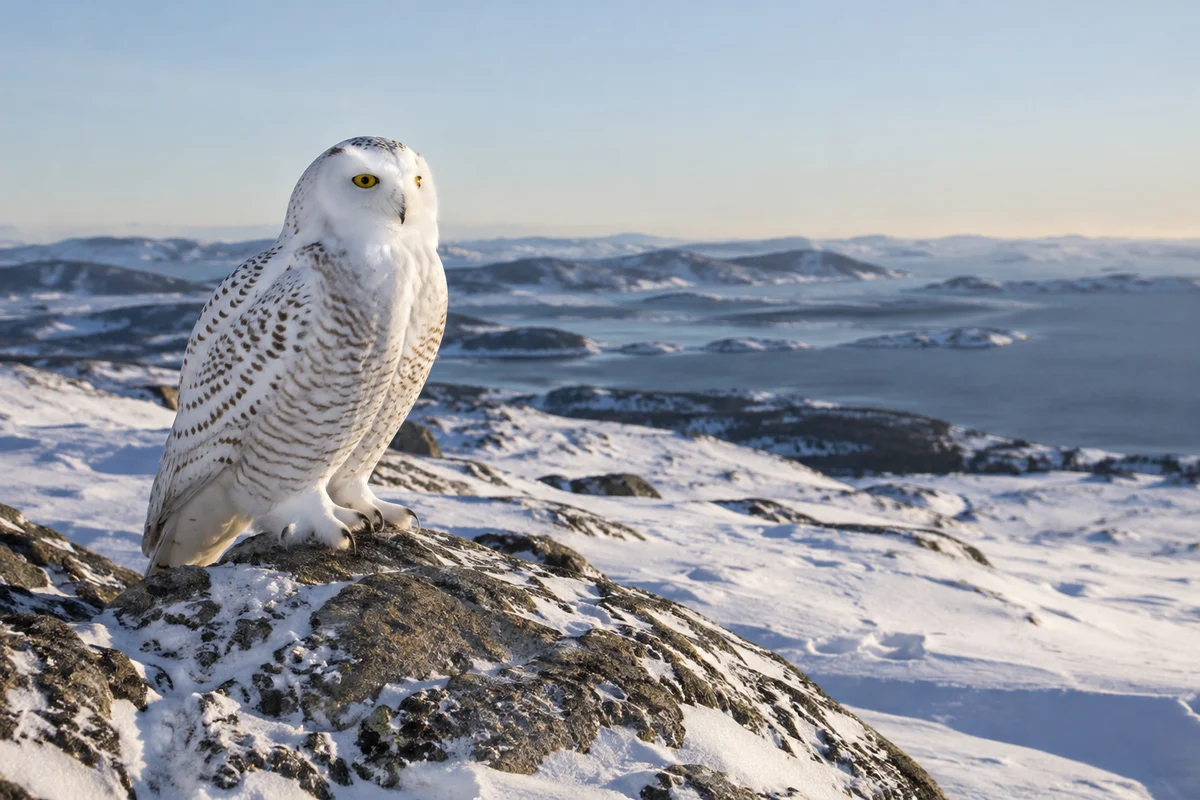
Snowy owls are among the Arctic’s most recognizable birds, yet their lives are less predictable than their striking white plumage suggests. These facts about snowy owls explain how their camouflage, hunting, nesting, and movements fit a landscape where weather and prey can change dramatically. They also offer practical ways to watch an owl without disturbing it.
1. Snowy owls are Arctic specialists
Snowy owls (Bubo scandiacus) breed across open tundra in the far north. Rather than depending on trees, they use broad, relatively treeless country where they can scan for prey from a rise, rock, or low perch. In winter, some travel south into Canada and the northern United States; others remain farther north. Their distribution can shift considerably between seasons and years.
The open habitat helps explain why a snowy owl can be visible at a distance while remaining difficult to approach. A bird resting on a drift or low rise may blend into its surroundings, and it can spot an approaching person long before that person gets close.
2. White plumage is camouflage, not a fixed uniform
Adult males tend to be paler, while females and younger birds usually show more dark barring. Individual birds vary, so plumage is not a dependable way for a casual observer to determine age or sex. The pattern helps break up the outline against snow, but snowy owls also occupy brown tundra and other open ground, where white feathers are not perfect concealment.
Their dense plumage provides insulation in cold conditions. Feathers extend down the legs and cover the feet, reducing exposed skin. As with other birds, feathers need regular maintenance; clean, aligned plumage supports insulation and flight.
3. Their diet is broader than one famous prey animal
Snowy owls are predators that take small mammals and birds. Lemmings are especially important in many Arctic breeding areas, but the menu can include other rodents, hares, waterfowl, and other birds, depending on what is available. A snowy owl’s diet is therefore tied to local prey and season rather than a single unchanging food source.
Owls swallow some prey whole or in large pieces and later regurgitate compact pellets containing indigestible material such as fur and bones. A pellet can reveal clues about diet, but it is not a complete census of everything an individual has eaten. Anyone examining pellets should leave them in place in protected areas and follow local rules.
4. Breeding effort can track prey conditions
Snowy owls nest on the ground, often on a raised patch that gives a nesting bird a view across the surrounding terrain. The female incubates eggs while the male commonly provides food; both parents defend the nest and care for young. Nesting on open ground makes early detection important: a person who walks toward a nest can cause stress even if the bird does not fly away.
In years when prey is plentiful, a pair may be able to raise more young; when prey is scarce, nesting effort and success can be limited. This variability is one reason sightings and breeding activity can change from year to year. It is not sound to infer a population trend from a single winter’s observations.
5. A southward appearance is not a simple migration schedule
Some snowy owls move south in winter, and occasional birds appear well beyond the species’ usual wintering areas. The scale and location of these movements vary. Food availability, weather, and conditions on the breeding grounds can all matter, so there is no fixed calendar that guarantees an owl will appear in a particular town each year.
A conspicuous southern sighting can draw crowds. Observers should give the bird a wide buffer, stay out of restricted areas, and avoid forming a ring around it. If the owl changes posture repeatedly, turns away, or flies because people approach, the viewing distance is too close. A long lens or binoculars are better choices than walking nearer.
6. Snowy owls are active by day as well as at night
Many owl species are most active in darkness, but snowy owls often hunt during daylight, especially in the long daylight of the Arctic summer. They can also hunt at dawn, dusk, or night. This flexible schedule is useful in open northern country, where seasonal daylight can be extreme.
When watching, look for a large, pale bird perched low or resting on the ground in open habitat. Scan slowly with binoculars instead of approaching every light-colored shape. Keep roads and other visitors safe: never stop in a travel lane or block access to reach a viewing spot.
7. Their size and flight suit open country
Snowy owls are large owls with broad wings and a rounded head. In flight, they can travel across open terrain while searching for prey. Their appearance is distinctive, but distance, snow glare, and changing light can make identification harder than photographs suggest. A distant pale bird may be another species, and a brief view may not show enough detail for certainty.
Good field notes record what was actually visible: approximate size, shape, setting, behavior, and the features seen through optics. Avoid turning a guess into a firm identification. If you are interested in how careful observation supports wildlife conservation more broadly, the U.S. Fish and Wildlife Service provides information about wildlife and habitat programs.
8. Responsible viewing is part of knowing the species
Snowy owls conserve energy in cold, exposed places. Repeated disturbance can force a bird to move, interrupt rest, or leave a useful perch. Do not bait, feed, flush, surround, or pursue an owl. Keep dogs leashed where required, respect land access rules, and follow guidance from wildlife officials and site managers. Never use a drone near wildlife.
These principles apply to other wildlife watching, too. The small-game hunting hub collects related outdoor coverage. For a look at the longstanding relationship between hunters and working dogs, read about bird dog magazines; for another example of how wildlife observations can be misunderstood, see this overview of coyote pheasant predation. Different species have different needs, but patience and distance are sound habits in the field.
What snowy owls teach us about wildlife
Snowy owls are not simply white owls that appear on a predictable winter schedule. Their appearance, diet, nesting effort, and movements reflect the changing conditions of open northern habitats. The useful takeaway is to treat each sighting as an encounter with a wild animal, not a photo opportunity to control. Watch quietly, leave room for the bird to choose where it goes, and let local conservation guidance shape your visit.
Frequently asked questions
Do snowy owls migrate every winter?
Some move south in winter, while others remain farther north. The timing and distance vary, so a sighting in a particular place is never guaranteed.
What do snowy owls eat?
They eat small mammals and birds. Lemmings can be important in Arctic breeding areas, but prey depends on location and availability.
Is it safe to approach a snowy owl for a photograph?
No. Keep a generous distance and use binoculars or a long lens. Do not approach, flush, bait, or surround the bird; follow posted rules and local wildlife guidance.
Sources & further information
Consult these primary sources for current regulations, technical information and local guidance.