Comparing Trout Minnow Lures: Match Shape, Depth and Retrieve
Comparing trout minnow lures is easier when you focus on where the fish are holding and how each lure behaves, rather than color alone. Use this practical framework to choose a profile, depth and retrieve for the water in front of you.
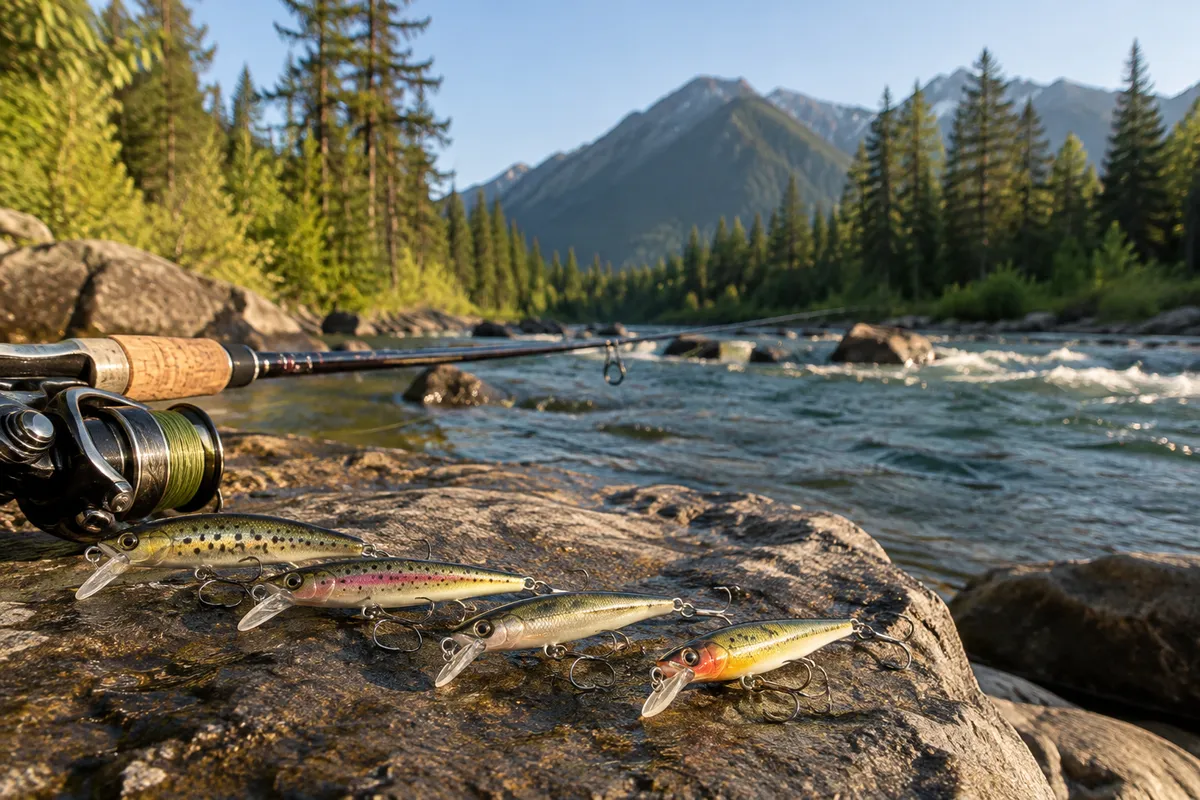
Comparing trout minnow lures starts with a simple question: where are trout holding, and how can a small fish-shaped lure pass through that zone naturally? Minnow plugs can look similar in a tackle box yet behave very differently. Body shape, lip design, buoyancy, and retrieve speed influence depth and action, while current and cover determine which traits matter most. The goal is not to find one universally best lure; it is to select a controllable presentation for the water you are fishing.
For anglers exploring the trout and salmon fishing hub, the useful comparison is between a lure’s behavior and the conditions: shallow or deep, still or flowing, open or snag-prone. Start with those variables, then make small adjustments rather than changing several things at once.
What should you compare first?
Compare four practical features: running depth, buoyancy, action, and casting control. Package labels can help, but they are not a guarantee of the depth a lure will reach in every situation. Line diameter, line length, current, retrieve speed, and rod angle all affect how a lure moves.
| Feature | What it changes | When it matters most | Field check |
|---|---|---|---|
| Lip and body design | How the lure dives and wobbles | Current seams, depth changes | Retrieve beside shore or in clear shallows |
| Buoyancy | Whether it floats, suspends, or sinks | Pauses, snags, shallow cover | Watch it during a brief pause |
| Size and profile | The apparent prey size and resistance | Small streams or larger water | Compare with local forage, not just color |
| Weight and casting balance | Distance and accuracy | Wind, banks, broad pools | Make controlled casts before fishing a tight lie |
Many compact minnow plugs are designed to wobble or dart when retrieved. Some float when paused; others sink or remain closer to their running level. Treat these as observable behaviors, not assumptions based on a product name. If the manufacturer provides a manual or specifications, consult it; model names and details can change, and older versions may differ.
How do running depth and buoyancy affect the choice?
In a shallow riffle, a deep-diving lure can dig into rocks or race unnaturally in fast water. A shallow-running or floating plug may be easier to control, especially when you need to retrieve across a short lane. In a deeper pool or lake edge, a lure that reaches lower in the water column may be more useful, provided it can pass through the area without repeatedly contacting bottom or cover.
Buoyancy matters most when you pause. A floating lure can rise away from a rock or submerged branch during a pause, while a sinking lure may continue descending. A suspending lure, if that is how the specific model behaves, can hold near its current depth. Do not assume every pause has the same effect: current can push a plug sideways, and slack line can change its direction.
A practical test is to watch the lure in shallow, safe water before making a long cast. Note whether it dives immediately, how it responds to a gentle twitch, and what happens when you stop reeling. This quick observation often tells you more than the color printed on the package.
Which profile and action suit stream trout?
In small streams, accuracy and a compact presentation are often more important than maximum casting distance. A narrower, smaller-profile minnow can be easier to fish through a short run without overpowering it. In larger rivers and lakes, a slightly more substantial profile may be easier to cast and track, but the right choice still depends on forage and conditions.
Current changes a lure’s action. A plug that works with a steady retrieve in still water may roll, surge, or sweep too quickly in a strong current. Cast across or slightly upstream where safe and legal, and retrieve at a pace that keeps the lure under control. If it spins or breaks the surface, slow down, adjust rod position, or try a different running depth. Avoid repeated casts into fragile banks or spawning areas; local regulations and seasonal closures should guide where and when you fish.
For a contrasting approach in warm-weather conditions, see these summer trout fishing tips. If trout are responding to bait rather than a moving plug, the guide to fishing PowerBait for trout discusses a different presentation. Those approaches are not interchangeable with a minnow plug, but they offer useful context for deciding whether fish are reacting to movement at all.
How should color influence your comparison?
Color is a finishing choice, not a substitute for depth and control. In clear water and bright conditions, a restrained, natural-looking pattern may be less conspicuous. In stained water, low light, or broken current, contrast can make a lure easier to notice. These are starting points, not rules: trout may respond to a silhouette, vibration, or movement more than a particular paint pattern.
Change color only after you have established that the lure is moving through the likely holding zone at a sensible speed. Otherwise, it is difficult to tell whether a new color helped or whether the lure simply ran deeper or slower. When visibility is uncertain, test one high-contrast option and one subdued option under similar conditions, then keep the better-controlled presentation.
A simple field decision framework
Use this sequence to compare lures without changing everything at once:
- Identify the water. Estimate whether the target lane is shallow, moderate, or deep; note current, clarity, and likely snags.
- Choose a manageable depth. Start with a lure that can travel through the lane without constantly hitting bottom or skimming above it.
- Check behavior nearby. Observe its action, pause response, and stability in a safe shallow spot.
- Make a controlled first pass. Use a steady retrieve, then vary speed or add a brief pause if the lure remains stable.
- Change one feature. If fish show interest but do not commit, try a subtle speed or color adjustment. If the lure is not reaching the zone, change depth or design first.
- Stop when conditions change. A different current, light level, or water depth may call for a new comparison rather than a more forceful retrieve.
This method also helps avoid overworking a small stream. A few accurate casts through a promising seam can be more informative than repeatedly covering the same water with different colors.
What are the limits of product comparisons?
A lure’s stated depth or action is not a universal measurement of what it will do on your setup. Line type and diameter, cast length, retrieve speed, current, and rod angle can all alter performance. A product name may also cover multiple sizes or generations. For an older or unfamiliar model, verify the exact version with the manufacturer’s documentation instead of inferring specifications from its name.
Fishing rules vary by waterbody and season. Check the relevant state or provincial fishing authority for tackle restrictions, trout seasons, bait rules, and access requirements. The U.S. Fish and Wildlife Service provides broad information about fish and aquatic resources, while local agencies are the right source for current regulations. Handle trout carefully, keep them in the water when practical, and follow local guidance for release and harvest.
The useful takeaway
When comparing trout minnow lures, prioritize a controllable running depth and stable action for the water you are fishing. Profile and color can refine the choice, but observing how a lure behaves in current, during pauses, and around cover gives you a more reliable starting point than judging it by appearance alone.
Frequently asked questions
How do I choose a minnow lure depth for trout?
Match its running depth to the likely holding zone and avoid a lure that constantly strikes bottom or stays above the fish. Current, line, retrieve speed, and rod angle change actual depth.
Should I use a floating or sinking minnow lure?
Choose based on cover and how you want the lure to behave during pauses. A floating lure may rise away from obstacles; a sinking one can descend, so check the specific model’s behavior before fishing.
Does lure color matter more than action for trout?
Color can matter, especially with changes in visibility, but first establish a useful depth and stable action. Change one variable at a time so you can tell what affected the presentation.
Sources & further information
Consult these primary sources for current regulations, technical information and local guidance.