FLOE Utility Trailers: Choosing a Hauler for Outdoor Gear
A utility trailer can simplify moving boats and outdoor equipment—but only when its capacity, dimensions and towing setup match the job. Here is a practical framework for evaluating FLOE utility trailers without relying on unverified model claims.
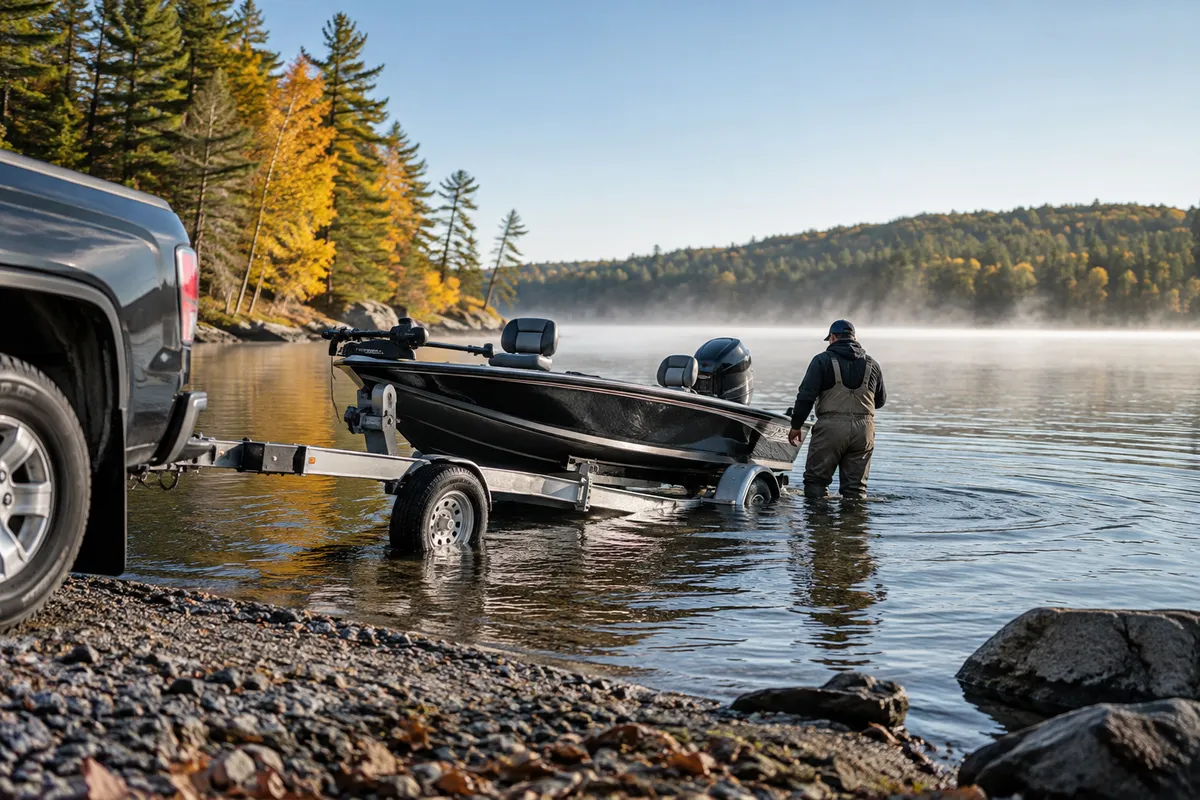
When researching FLOE utility trailers, start with the load you actually need to move—not a model name or a photograph. A trailer that looks suitable can still be a poor match if its usable deck space, rated capacity, hitch arrangement or tow vehicle limits do not fit your boat and gear. Treat this as a selection framework: confirm current specifications with FLOE and compare them with your equipment, routes and local requirements before making a decision.
What does “utility” mean for a trailer?
A utility trailer is a general-purpose platform for hauling equipment, supplies and, in some configurations, recreational gear. The term does not guarantee that every trailer is suitable for every boat, ATV or landscape load. Deck shape, side rails, ramps, tie-down locations and the trailer’s rated limits vary by design and configuration.
For an angler, the useful question is whether the trailer can carry the boat and the associated equipment safely, while still being manageable for the tow vehicle and storage space. Start by writing down the intended loads: boat, motor, batteries, fuel, safety equipment, tackle and any removable accessories. Include items that may be added later. A trailer’s advertised description is only a starting point; its manufacturer documentation and identification label are what matter for a specific unit.
For more outdoor coverage, including boat and marine-equipment topics, keep the intended use at the center of the comparison.
How should you match trailer capacity to a load?
Separate three limits that are easy to confuse: the trailer’s rated capacity, the tow vehicle’s towing limit, and the combined limits of the hitch and other towing components. The usable capacity is constrained by the lowest applicable rating. Trailer weight also consumes part of the tow vehicle’s allowance, so do not compare a payload figure directly with a boat’s dry weight and assume the combination is within limits.
Use the boat’s current, fully equipped weight where available rather than relying only on a bare hull figure. Add the motor, battery, fuel, onboard equipment and anything carried in the boat during transport. Then compare that total with the trailer documentation and vehicle manual. If the actual loaded weight is unknown, a qualified scale can help establish it; do not guess based on appearance.
Capacity is not the only fit issue. Check that the boat’s support points and overall length work with the trailer’s frame and any approved support system. Keep the load balanced as directed by the trailer and vehicle manufacturers. An improperly balanced load can contribute to sway or poor handling. If the specifications or loading method are unclear, ask the manufacturer or a qualified trailer professional rather than improvising structural changes.
Which dimensions and features matter for a fishing boat?
Measure the boat as it will travel, including the motor position, any protruding accessories and the space needed to secure it. Compare those dimensions with the trailer’s usable length and width, not just its overall external size. Consider how the boat will sit on the frame and whether the available support points suit its hull. A setup intended for one hull style may not be appropriate for another.
Practical features depend on how the trailer will be used. A ramp may help with loading certain equipment, while rails can help contain cargo but may affect access. Tie-down points should be placed so straps can secure the load without contacting fragile fittings or interfering with lights and moving parts. If the boat will be launched from a ramp, confirm that the trailer configuration is intended for that use and follow its operating instructions.
Do not assume that a feature shown in a general product image is included on every configuration. Ask FLOE or an authorized representative for the exact current specification sheet and clarify what is standard, optional or unavailable for the model under consideration. Product details can change, and this article does not assert specifications for a particular trailer.
Will your vehicle and route suit the trailer?
Check the vehicle owner’s manual for towing capacity, maximum tongue load and any requirements for brakes or towing equipment. Confirm the hitch, ball, coupler, safety chains, electrical connector and trailer rating are compatible as a system. A suitable trailer does not make an otherwise incompatible tow vehicle safe.
Think beyond a short trip from home to a launch. The route may include steep grades, narrow roads, rough access lanes, highway traffic or a tight turnaround. The loaded combination needs enough clearance and predictable handling for those conditions. Before a first trip, review the trailer and vehicle instructions, verify that the load is secured, and check that required lights function. Drivers unfamiliar with towing should practice in a controlled, open area and seek qualified instruction if needed.
For boaters comparing other equipment considerations, the guide to Falcon’s F195 model offers a related boat-focused perspective. The questions differ—a boat and a trailer are not interchangeable purchases—but dimensions, intended use and manufacturer-confirmed details matter in both cases.
What should you check before and after each trip?
A simple inspection routine helps catch problems before they become roadside trouble. Before travel, look over tires for visible damage and proper inflation according to the relevant instructions; check that the coupler is correctly seated and secured; attach safety chains as specified; and confirm lights, registration and any required safety equipment. Inspect straps and tie-downs for wear, and make sure the boat cannot shift or contact equipment in a damaging way.
After launching or driving on wet, sandy or rough surfaces, rinse and inspect the trailer as appropriate for its materials and use. Pay attention to corrosion, loose fasteners, damaged wiring, unusual tire wear and changes in bearing or brake performance. Follow the manufacturer’s maintenance schedule and service instructions. Do not rely on a generic checklist to replace model-specific guidance, especially for maintenance of brakes, hubs or structural parts.
Keep records of inspections and repairs. If a component is damaged, a tire repeatedly loses pressure, or the trailer behaves differently while towing, stop using it until the cause is understood and corrected. A professional inspection is the sensible choice when a safety-critical issue is uncertain.
How do storage and ownership affect the choice?
Measure the storage area before settling on a configuration. Account for the trailer’s full length, room to maneuver, access to the hitch and space to inspect or maintain it. Outdoor storage can expose materials and components to weather; follow FLOE’s recommendations for cleaning, protection and seasonal care. If the trailer will sit unused for long periods, ask what checks are recommended before returning it to the road.
Also consider how often you will move the boat, where it will be launched, and whether the trailer has other planned duties. A multipurpose trailer may sound attractive, but frequent changes in load can create extra work and make it easier to overlook a mismatch. A dedicated setup may be more straightforward for a consistent boat-and-launch routine. Choose based on real use, not the broadest possible list of imagined uses.
When comparing electronics and navigation tools for the same boating routine, see the overview of Garmin relief shading. It is a different equipment decision, but the same principle applies: verify compatibility and details with the manufacturer rather than inferring them from a product label.
What questions should you ask before choosing?
Bring the boat’s measured dimensions, its fully equipped weight if known, the tow vehicle’s manual and a description of your typical route. Ask for the exact trailer configuration and documentation, the rated limits, the intended hull-support arrangement, and what accessories are included. Confirm maintenance expectations and any requirements for brakes, registration or inspection in your jurisdiction with the relevant authorities.
A well-matched trailer is not defined by a single feature. It is the combination of a documented capacity, suitable fit, compatible towing equipment, secure loading and maintenance you can realistically keep up with. For FLOE utility trailers, verify every model-specific detail directly with the manufacturer, then judge the setup against your boat and the way you travel. If any rating or fit question remains unresolved, do not tow until it is clarified.
Frequently asked questions
Can a utility trailer carry any fishing boat that fits on its deck?
No. The boat must fit the trailer’s intended support arrangement and remain within the trailer, hitch and tow vehicle limits. Confirm dimensions, loaded weight and manufacturer guidance for the specific setup.
What weight should I use when checking whether a trailer is suitable?
Use the boat’s fully equipped travel weight, including the motor, batteries, fuel and gear, rather than relying only on a bare-hull or dry-weight figure. Compare it with the applicable trailer, hitch and vehicle ratings.
Where can I confirm current FLOE trailer specifications?
Check the current documentation for the exact configuration with FLOE or an authorized representative. Product descriptions and images may not show every included or optional feature.
Sources & further information
Consult these primary sources for current regulations, technical information and local guidance.