Truck Cap Review: What to Check Before It Goes on Your Rig
A practical framework for assessing a truck cap for fishing trips, from measuring the bed to checking seals, ventilation, and cargo access.
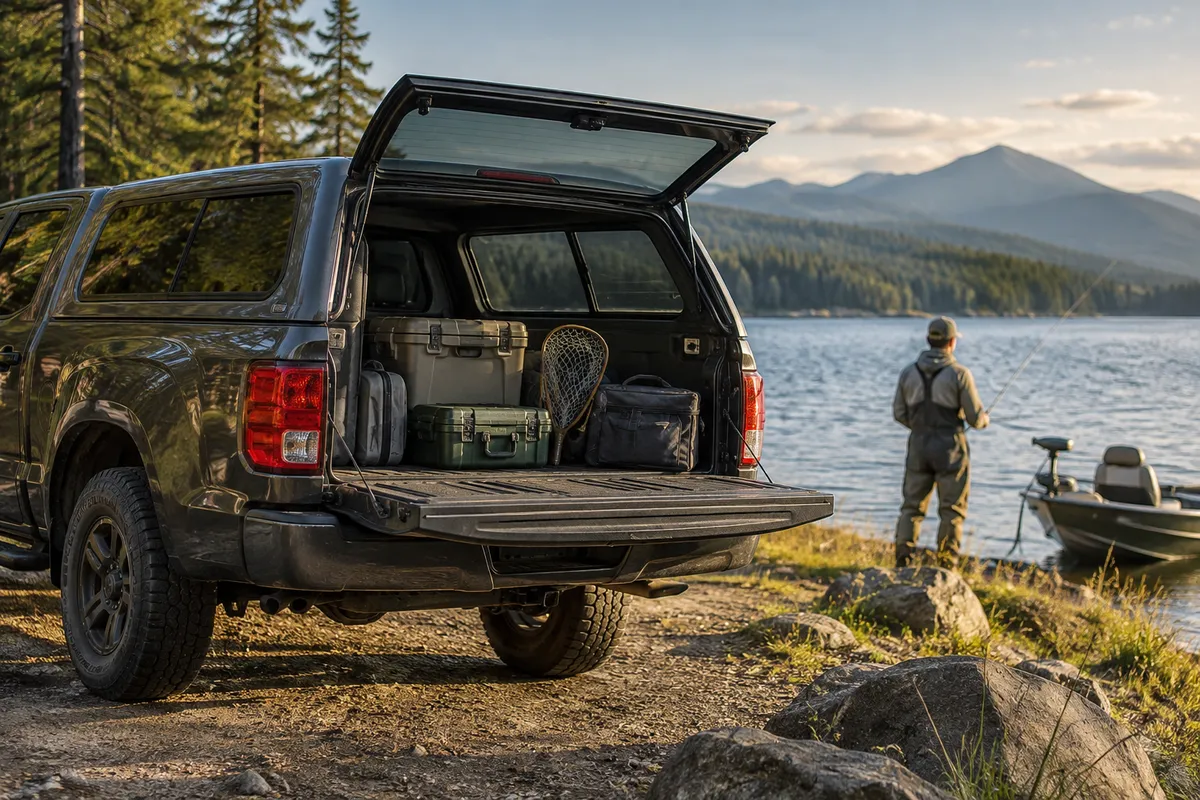
A truck cap review is most useful when it looks beyond appearance and asks how the cap will fit a specific pickup, protect equipment, and work on real fishing trips. Since cap dimensions and features vary by truck, model year, and manufacturer, treat any product listing as a starting point—not proof of compatibility. Measure your own bed, confirm the exact application with the manufacturer or dealer, and inspect the details that affect daily use before committing to a setup.
Start with exact fit, not a model name
A pickup bed’s nominal length is not enough to establish fit. Bed length, rail shape, cab profile, tailgate design, and changes between model years can all affect whether a cap sits correctly. Make a note of the truck’s year, make, model, cab configuration, and bed length, then verify those details against the cap’s official fit information.
Ask how the cap attaches and whether the mounting approach is intended for the truck’s bed rails. Look for an even, stable seating line and a seal designed for the specific application. A cap that appears close in a photograph may still leave gaps or interfere with a tailgate. Confirm the fit before arranging installation, and ask how the seller handles fit questions or a mismatch.
If you are comparing a truck-based fishing setup with a dedicated hull, the considerations are different: a Tracker deep V multi-species boat overview can help frame the trade-offs between carrying gear in a pickup and choosing a boat built around fishing space.
Check access from every side
Think through the order in which you load and unload. A rear lift-up window may make it easy to reach tackle near the tailgate, while side access can be useful for items stored forward in the bed. Window arrangements differ, so confirm which panels open, how they latch, and whether the opening is large enough for the equipment you plan to carry.
Pay attention to the relationship between the cap’s rear window and the truck’s tailgate. Together they should allow practical access without requiring awkward lifting or blocking the opening. If you carry long rods, a landing net, or a compact kayak, measure those items and check whether they can be loaded without bending, snagging, or obstructing visibility. Do not assume an accessory rack or interior organizer is included unless the product documentation says so.
A walk-through or demonstration can show how a particular window and latch operate, but it cannot establish that the same configuration fits every truck. Use demonstrations to create questions, then confirm the answers for the exact cap and vehicle combination.
Evaluate weather protection realistically
A cap can help shield cargo from direct rain and road spray, but no enclosure should be assumed perfectly watertight in every condition. Inspect the perimeter seal, corners, window seals, and tailgate interface. Ask how the manufacturer recommends maintaining the seals and what to do if a leak appears. After installation, a careful, controlled water check can reveal obvious gaps; avoid directing high-pressure spray at seals, which may create misleading results or damage components.
Consider condensation as well as rain. Wet waders, damp clothing, and fishing gear can release moisture inside a closed bed. Ventilation features may help air move through the space, but their design and effectiveness vary. Check whether vents can be opened or closed and whether their placement makes sense for your use. Dry wet equipment when possible, and avoid storing damp items in a sealed space for extended periods.
Keep valuables and sensitive equipment protected with suitable cases rather than relying on the cap alone. Weather resistance is a layer of protection, not a substitute for sensible packing.
Match materials and features to how you travel
Cap construction affects weight, appearance, maintenance, and the kind of use it suits. Compare the manufacturer’s stated material and care guidance instead of assuming that a particular finish or construction is universally tougher. Inspect the corners, window frames, hinges, latches, and contact points for a tidy fit and smooth movement. Ask what warranty applies and which parts are considered wear items.
For anglers, useful features depend on the trip. A clear rear window can support visibility, while sliding or side windows may make access easier. Screens, lighting, roof options, and interior trim are configuration-dependent; verify availability and compatibility rather than treating them as standard. If you plan to add a roof-mounted carrier, confirm its rated capacity and the cap’s approved attachment points with the manufacturer. Do not infer a safe load from appearance alone.
A cap changes how you use the pickup bed, but it does not turn the truck into a boat or make unsecured gear safe. Tie down heavy items, keep emergency equipment accessible, and avoid stacking cargo where it blocks the driver’s view. For a different kind of small-watercraft comparison, see this Old Town Penobscot canoe review.
Make a fishing-trip storage plan
Before choosing a layout, list the gear you regularly carry: rods, tackle, rainwear, boots, a cooler, safety equipment, and any electronics. Measure the largest items and sketch where they would sit. Rods often need a protected, unobstructed route; loose hooks and sharp tools should be secured in closed containers. Store frequently used items near an opening, and keep heavier cargo low and restrained so it does not shift during braking or cornering.
Think about the full trip, not just the drive to the launch. Can you reach rain gear when weather changes? Can you unload without moving every other item? Is there a clean place for wet or muddy gear, separate from dry clothing and food? A simple set of bins can make a cap more functional, but select sizes only after checking the usable space and window openings.
When comparing a truck cap with a boat-focused purchase, separate the jobs: the cap protects and organizes transport, while a boat’s layout affects fishing and on-water use. Browse more outdoor coverage for related freshwater equipment topics.
Questions to ask before installation
Get the exact cap application and configuration in writing, including window arrangement, included equipment, and any options you have discussed. Confirm installation requirements, seal care, warranty terms, and whether the cap can be removed without damage to the truck or cap. Ask how the setup affects access to factory features, cargo tie-downs, or any vehicle equipment you rely on.
At handoff, inspect the cap from inside and outside. Check that windows and latches operate, seals sit evenly, and the rear opening works with the tailgate. Follow the manufacturer’s instructions for any initial adjustment or maintenance. If the cap shifts, a latch does not engage, or water enters at a seam, address it promptly rather than assuming the issue will resolve itself.
A practical verdict
The right truck cap is the one that fits the exact pickup, gives you useful access, and supports your storage habits without adding features you do not need. Prioritize verified fit, sound seals, secure latches, ventilation suited to your cargo, and a clear plan for rods and wet gear. Treat claims about compatibility, load capacity, and weather protection as items to confirm through manufacturer documentation. That approach produces a more dependable decision than choosing by a broad model name or a polished walkthrough alone.
FAQ
Does a truck cap fit every pickup with the same bed length?
No. Bed length is only one factor; model year, rail shape, cab configuration, and tailgate details can matter. Confirm the exact vehicle application with the cap manufacturer or an authorized dealer.
Will a truck cap keep fishing gear completely dry?
Do not assume any cap is completely waterproof in every condition. Check the seals and manufacturer guidance, protect sensitive gear in suitable cases, and inspect the setup after installation and use.
What should anglers measure before choosing a cap?
Measure the longest rods and other bulky gear, consider where each item will be stored, and check that window openings and the tailgate provide practical loading access. Also plan how to separate wet equipment from dry supplies.
Frequently asked questions
Does a truck cap fit every pickup with the same bed length?
No. Bed length is only one factor; model year, rail shape, cab configuration, and tailgate details can matter. Confirm the exact vehicle application with the cap manufacturer or an authorized dealer.
Will a truck cap keep fishing gear completely dry?
Do not assume any cap is completely waterproof in every condition. Check the seals and manufacturer guidance, protect sensitive gear in suitable cases, and inspect the setup after installation and use.
What should anglers measure before choosing a cap?
Measure the longest rods and other bulky gear, consider where each item will be stored, and check that window openings and the tailgate provide practical loading access. Also plan how to separate wet equipment from dry supplies.
Sources & further information
Consult these primary sources for current regulations, technical information and local guidance.