Using Drift Sock in Kayak: 3 Reasons to Slow Your Drift
A drift sock can help a kayak move more predictably in wind and current. Learn when it helps, how to deploy it thoughtfully, and when conditions call for heading ashore.
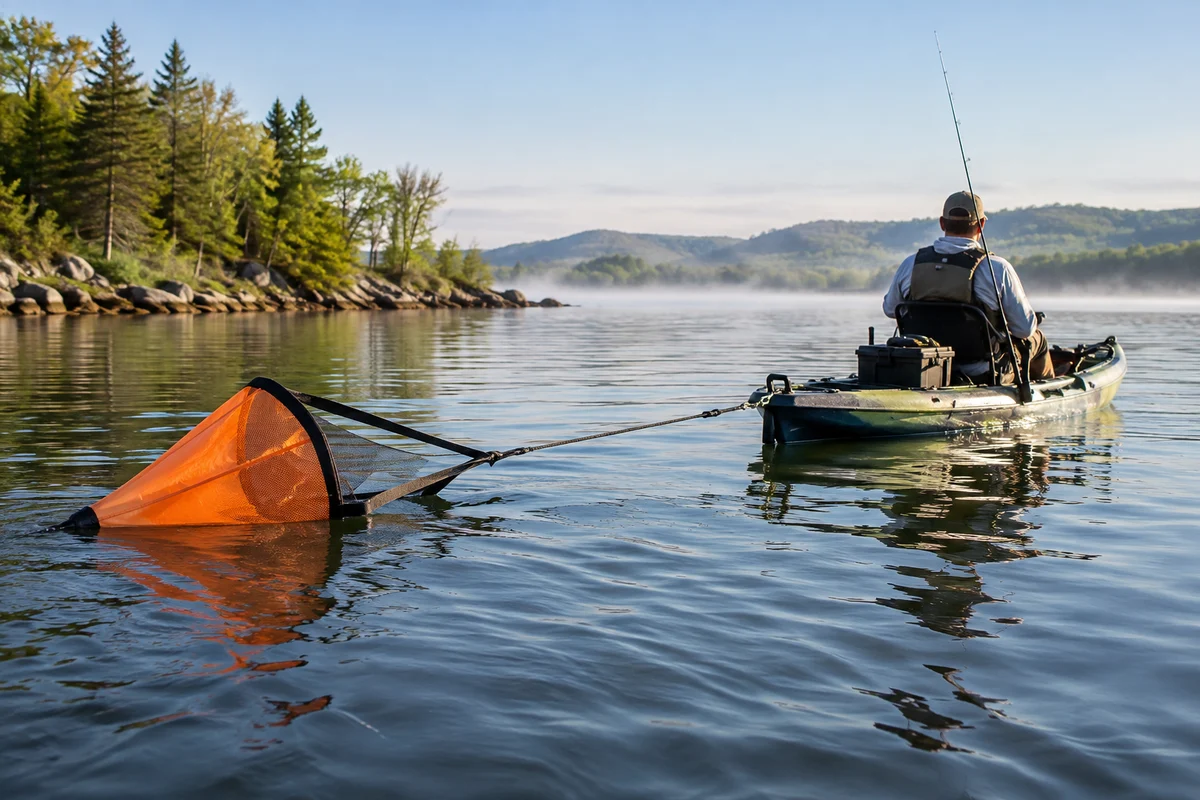
Using drift sock in kayak fishing can make a windy day feel more manageable by slowing a kayak’s drift and helping it travel more steadily across a chosen area. A drift sock—also called a sea anchor or drift anchor—is a fabric device that opens in the water and creates drag. It does not stop a kayak, hold it in place, or make rough conditions safe. Its value is modest control: when conditions are appropriate, it can give an angler more time to work a stretch without being pushed across it too quickly.
A drift sock is one part of a broader approach to kayak fishing, alongside choosing a suitable launch, checking the forecast, and keeping a clear route back. Here are three practical reasons to consider one, plus the limits and setup choices that matter.
1. It can slow a wind-driven drift
Wind can push a lightweight kayak across a lake faster than a paddler expects, especially when the boat presents a broad side to the breeze. A drift sock adds water resistance, reducing the rate of travel. That can help when you want to cover a shoreline, weed edge, or open-water contour at a controlled pace rather than repeatedly paddling back to reset.
The effect depends on conditions and the kayak. Wind direction, waves, current, hull shape, load, sock size, and where the tether is attached all influence how the boat behaves. A sock is not a substitute for paddling skill, and it may not slow movement enough in stronger wind. If the boat is moving too quickly to fish comfortably, the better choice may be to change location or end the outing.
A sock is most useful when you can still steer, keep a safe distance from hazards, and make progress toward a landing if needed. Before deploying it, identify a sheltered route and consider what happens if the wind shifts. Avoid drifting toward boat traffic, rocks, docks, spillways, or a lee shore where wind could press you against land.
2. It can make a fishing pass more consistent
A steady drift can help an angler present a lure or bait along a defined area. Without a sock, gusts may repeatedly accelerate the kayak, making it harder to keep a lure at a chosen depth or work a shoreline at a deliberate pace. Added drag may smooth some of those changes, though it cannot guarantee a uniform drift.
Think of the sock as a way to moderate movement, not as a precision anchor. Begin in protected water, with the gear arranged so the line cannot wrap around your paddle, feet, or fishing equipment. Keep the release accessible and test the arrangement before fishing. If you cannot readily disengage the system, simplify it or leave the sock stowed.
The position of the attachment matters. A bow attachment can help the kayak face into the direction of pull, while a stern attachment may orient it differently. Neither is universally right: wind, current, waves, and kayak design affect the result. Follow the sock maker’s guidance, use appropriate kayak hardware, and avoid improvised connections that could snag or become difficult to release. A quick-release setup is especially important because a deployed sock adds resistance when you may need to maneuver.
For more ideas on adapting your approach to a small boat, browse more outdoor coverage. You can also review these kayak fishing tips for catching more fish and compare considerations in this overview of aluminum boats and fishing style.
3. It can reduce repeated repositioning
When a drift carries you beyond a productive stretch quickly, you may spend more time paddling back than fishing. A drift sock can slow the pass, potentially reducing how often you need to reset. That can be useful on a broad, open shoreline or a gradual drop-off where a controlled drift is part of the plan.
But the device also creates extra work. It must be deployed, monitored, retrieved, and stowed without tangling. In a narrow channel or around submerged branches, weeds, or other obstructions, the added line and fabric may create hazards. If current is strong or the water is crowded, keeping the kayak agile is more important than extending a fishing pass. A paddle, properly fitted personal flotation device, and clear escape route remain essential.
A drift sock also does not replace an anchor when the goal is to remain stationary. Anchoring a kayak has its own risks, particularly in current, and requires a suitable setup and a release strategy. Do not assume that a drift sock will hold position; it is designed to create drag while the kayak continues moving.
Choosing a size and setup
Match the sock to the kayak and the conditions rather than assuming bigger is always better. Manufacturer guidance is the best starting point because products differ in design and intended boat size. An oversized sock can create more resistance than you can comfortably manage, while a very small one may have little effect. If a maker does not list kayak-specific guidance, contact the manufacturer rather than guessing.
Check the tether, attachment point, seams, and any retrieval line before each outing. Keep lines short enough to limit entanglement but long enough for the device to open and function as designed. Stow loose line so it cannot catch a hook, paddle, or foot. Wear a properly fitted life jacket and carry a cutting tool in an accessible location for emergencies, while recognizing that prevention and a simple, releasable setup are preferable to relying on a tool.
Practice deployment and retrieval close to shore in calm water. Learn how the kayak turns with the sock attached and how quickly you can release it. Do not test a new arrangement in wind, waves, or current. If you are fishing with another person, agree on how to communicate and what each paddler will do if the sock snags or conditions change.
Conditions that call for leaving it stowed
A drift sock is not a safety device for severe weather. If the forecast includes conditions beyond your experience, postpone the trip. On the water, worsening wind, building waves, cold temperatures, reduced visibility, or a difficult return route are reasons to reassess early. In cold water especially, a capsize can become life-threatening; dress for immersion and make decisions that avoid exposure rather than relying on equipment to compensate.
Do not deploy a sock where it could foul boat traffic, wrap around an obstruction, or pull the kayak into danger. Strong current, surf, and rough open water demand specialized judgment and training. The safest choice may be to stay ashore, choose a protected location, or seek instruction before venturing out. Local boating rules and access restrictions can also vary, so check the responsible state agency and local notices.
A simple decision checklist
Before launching, ask whether a slower drift would actually help the fishing plan. Check wind direction and forecast, identify a safe landing, and confirm the water is within your skill level. Inspect the sock and its tether, keep the release accessible, and make sure no loose line can entangle you. Try it first in calm, shallow, protected water.
During the trip, monitor your position and the weather—not just the lure. If the sock makes steering or landing harder, retrieve it while conditions still allow a controlled recovery. If the drift remains too fast, relocate or stop fishing. The best use of a drift sock is a limited one: it can moderate movement in suitable conditions, but sound judgment and a safe route home matter more than extending a pass.
Frequently asked questions
Does a drift sock stop a kayak from moving?
No. It creates drag and can slow a kayak’s drift, but it does not hold the boat in place. Wind, current, waves, hull shape, and sock size all affect the result.
Should a drift sock go on the bow or stern of a kayak?
The best attachment depends on the kayak, conditions, and manufacturer guidance. Test the arrangement in calm protected water and make sure the tether can be released quickly without snagging.
Is a drift sock safe to use in strong wind or current?
It should not be treated as a way to make hazardous conditions safe. Strong wind, current, rough water, or a difficult landing may call for staying ashore, moving to protected water, or ending the outing.
Sources & further information
Consult these primary sources for current regulations, technical information and local guidance.