The ODU topic guide
Inshore Saltwater Fishing
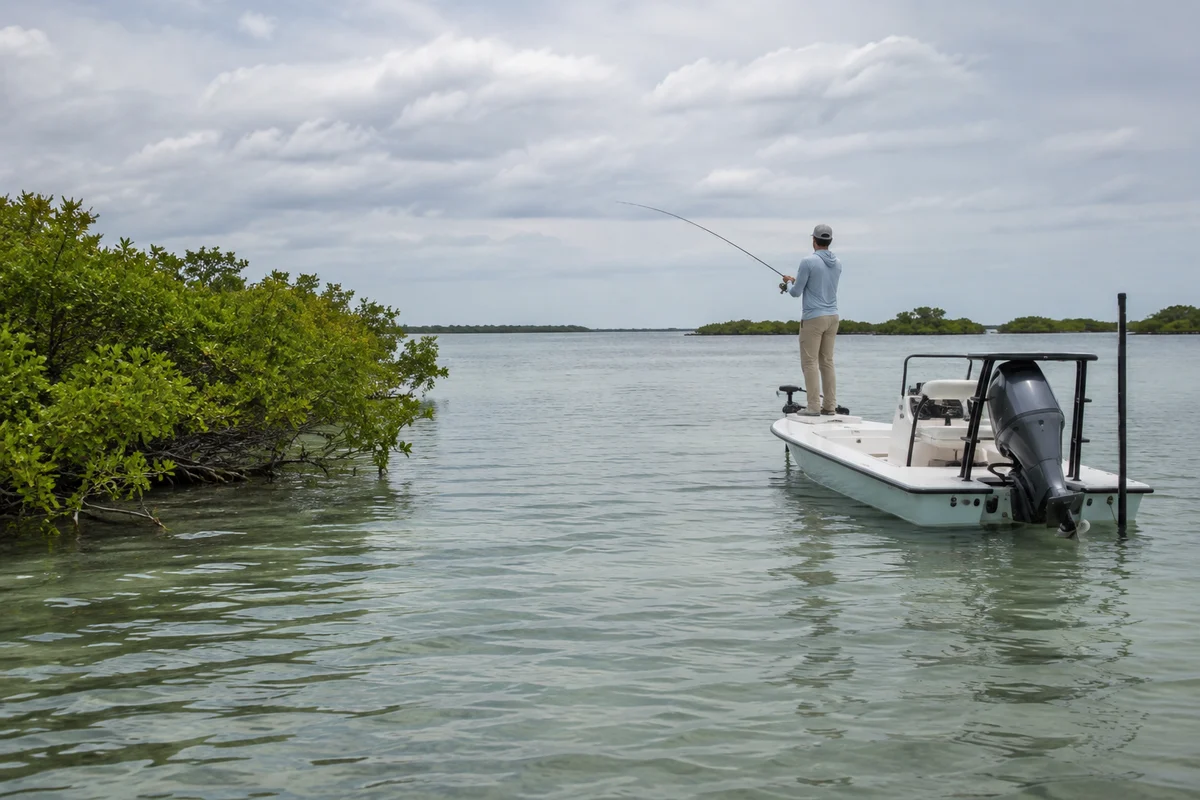
Inshore fishing can mean a protected bay, tidal creek, estuary or shoreline—and each setting changes how fish use cover and current. Before choosing a destination, ask how tide stage, wind direction and recent rain may affect water depth, clarity and access. Look for likely holding areas such as channels, points, grass edges or docks, while checking whether those places are reachable and open to fishing. A location that looks sheltered on a map can still have strong current or exposed approaches.
Match the plan to the conditions rather than relying on a fixed schedule. Find out which species are present and legal to retain, then verify size, bag and seasonal rules with the relevant authority. Consider whether a kayak, small boat or shore approach suits the forecast, launch, and your experience; shallow water, boat traffic and rapidly shifting weather can narrow the safe window. Carry a tide reference, navigation aid, drinking water and a way to communicate, and tell someone when you expect to return.
Use light, accurate casts around structure and avoid crowding other anglers or disturbing sensitive shoreline habitat. Handle released fish promptly with wet hands and minimize time out of water. If wind, current or visibility makes the return uncertain, leave early or choose a more protected spot. For wider saltwater context, explore the fishing topic index and relevant fishing news.
In this reading room
All topics →No articles are filed under this exact topic yet. The guide above is a starting point; explore the related reading and sections below while this collection grows.