Ameristep Hang-On Tree Stand: Safety and Setup Guide
A practical, safety-first guide to assessing a hang-on stand, matching it to a tree, and making a deliberate plan for every climb and hunt.
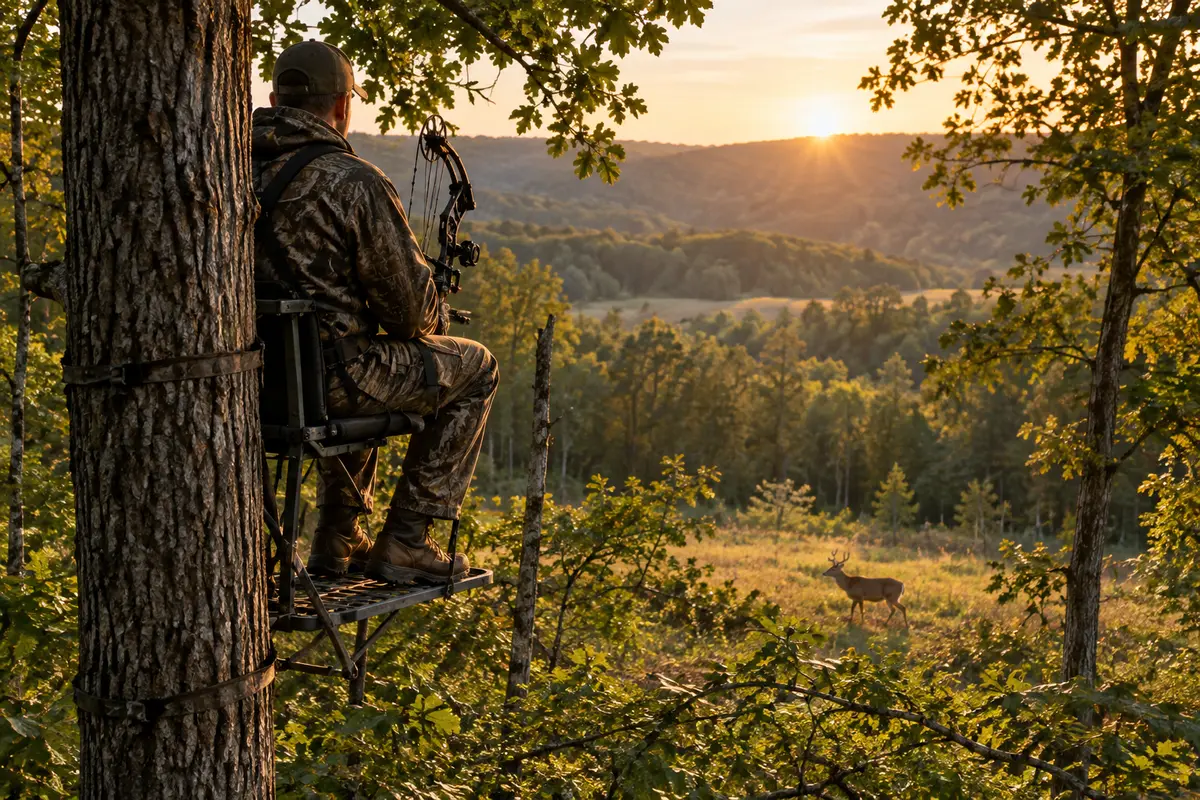
A ameristep hang-on tree stand is best understood as a platform-and-seat system that attaches to a tree, not as a complete safety solution by itself. Before using any stand associated with the Ameristep name—including an older model or one without clear documentation—identify the exact model, inspect its condition, and follow the manufacturer’s instructions. A familiar brand name cannot establish a particular stand’s age, specifications, condition, or safe capacity.
The central decision is whether the specific stand, tree, attachment system, and fall-protection equipment can be used together as intended. If a label or manual is missing, the stand is damaged, or its history is uncertain, do not guess at its rating or improvise a repair. Consult the manufacturer or choose equipment with clear, current instructions.
What to verify before using an Ameristep hang-on tree stand
Start by finding the model name and identifying labels on the stand. Locate the matching instructions from the manufacturer, and check the rated capacity, compatible attachment components, inspection guidance, and any warnings. Do not assume two stands with similar frames or branding share the same specifications. If the instructions cannot be matched confidently, contact the manufacturer rather than relying on a listing, memory, or a photograph of another model.
Inspect the platform, seat, welds, straps or chains, and attachment points for damage or deterioration. Look for cracks, deformation, corrosion, frayed webbing, damaged stitching, missing parts, or evidence of an improvised alteration. Check soft goods for age and storage damage as well as visible wear. A component that looks intact may still be compromised; follow the product’s inspection and retirement directions.
Do not exceed the stated capacity, and account for the combined load the manufacturer says to include. Keep the stand in its intended configuration. If anything appears questionable, take it out of service until the uncertainty is resolved. That is more reliable than trying to judge structural safety by appearance alone.
How to choose a suitable tree and location
Select a healthy, living tree of the species and size permitted by the stand’s instructions. Avoid dead, leaning, visibly damaged, or unstable trees, and do not use a trunk whose shape prevents the platform and attachment system from seating as directed. Bark, trunk diameter, forks, and irregular growth can affect how a stand contacts a tree; the manufacturer’s limits—not a general rule of thumb—should govern suitability.
Before climbing, check the surroundings from the ground. Consider dead limbs overhead, slippery bark, loose debris, nearby power lines, and whether the location allows a safe route up and down. Choose a position that supports a clear, lawful hunting plan without placing people, buildings, roads, or other hazards in an unsafe direction. Confirm land access and local hunting rules before setting equipment.
Weather matters too. Wet, icy, or windy conditions can make climbing and standing more hazardous. If the tree or your route is slick, visibility is poor, or conditions exceed your comfort and training, postpone the climb. A location that is convenient is not automatically a sound location.
How fall protection fits into the setup
Use a properly fitted, purpose-designed full-body fall-arrest harness whenever the manufacturer and safety guidance call for it, and follow the harness instructions from the ground onward. A waist belt or a stand’s seat belt is not a substitute for a full-body harness. Connect only to an appropriate tree attachment point using the system specified by the equipment maker; do not invent a connection based on convenience.
A lifeline or other approved system should be installed and used according to its own instructions, so protection remains available during ascent, while at the stand, and during descent. Inspect the harness, tether, connectors, and lifeline before each outing, and verify that every connection is secure before leaving the ground. Keep the tether adjusted as directed and avoid slack that could allow a dangerous fall.
Practice with the equipment at ground level before a hunt. Know how the harness fits over your clothing, how connectors close, and how to follow the manufacturer’s recovery guidance if suspended. A companion should know your location and expected return time. Carry a reliable way to call for help, recognizing that coverage may be limited.
What a careful climbing and descent plan looks like
Read the stand’s instructions for its intended installation and climbing method; hang-on designs do not all use the same components or procedure. Use only compatible, undamaged parts. Do not substitute rope, straps, or hardware unless the manufacturer explicitly permits that component and configuration. Keep three points of contact where the equipment instructions and climbing method require it, and move deliberately rather than rushing.
Raise equipment separately using a haul line, following the stand, firearm, or bow manufacturer’s safety guidance. Never climb with a loaded firearm in hand. Keep sharp broadheads protected and equipment secured so it cannot snag or fall onto someone below. Do not place another person beneath the climbing route.
On descent, remain connected as directed until safely back on the ground. Fatigue, darkness, cold hands, and wet gear can turn a familiar route into a difficult one. Set a latest departure time and carry a headlamp, but do not treat a light as a reason to continue when conditions feel unsafe. If the stand shifts or a component behaves unexpectedly, stop and return to the ground if that can be done safely; do not continue hunting on a compromised setup.
How to assess older or secondhand equipment
A used stand can have an unknown exposure to rain, heat, ultraviolet light, and improper storage. Ask for the model identification, manual, and history, but treat verbal assurances as incomplete evidence. Compare every component against the manufacturer’s parts and inspection guidance. Missing labels, replacement straps of unknown origin, altered attachment points, or unexplained repairs are reasons to seek manufacturer guidance or retire the stand.
Avoid relying on old product announcements to establish what a stand can do today. Product names can persist while versions or components change, and a historical description may not match the item in front of you. For current model information, contact Ameristep through its official channels and confirm details directly. If the maker cannot verify the product or its safety requirements, selecting a clearly documented system is the prudent course.
For adjacent equipment context, see this overview of the Wicked Ridge Warrior HL and the guide to the Blackout SS compound bow. These are separate gear topics; neither establishes compatibility with a particular tree stand.
Common mistakes to avoid
The most consequential mistake is treating a brand or model name as proof of safety. Condition, correct parts, the tree, installation, and continuous fall protection all matter. Other avoidable errors include skipping the manual, using an unsuitable tree, climbing without a harness, altering attachment components, and postponing inspection until the day of a hunt.
Do not assume that a stand feels stable during a quick test at ground level or that a strap can be tightened beyond its instructions to solve a fit problem. Do not climb when impaired, rushed, or unable to maintain safe contact with the climbing system. If you cannot explain how the stand is attached and how you remain protected throughout the climb, pause and get qualified guidance before using it.
For more practical archery hunting coverage, explore related equipment and field-safety topics while keeping each product’s instructions as the authority for its use. A good setup is not defined by brand recognition; it is defined by verified equipment, a suitable location, careful preparation, and the willingness to stay on the ground when any part of the plan is uncertain.
Frequently asked questions
Can I use an older Ameristep hang-on stand if its manual is missing?
Do not guess at its capacity, compatible parts, or installation method. Identify the exact model and contact the manufacturer for instructions; if the model or safety requirements cannot be verified, do not use it.
Is a stand’s seat belt enough fall protection?
No. Follow the stand and harness manufacturers’ directions and use a properly fitted full-body fall-arrest system as instructed. A seat belt or waist belt is not a substitute.
What should I inspect before a hunt?
Check the platform, welds, attachment points, straps or chains, seat, harness, tether, connectors, and lifeline for damage or deterioration. Follow each product’s inspection guidance and remove questionable equipment from service.
Sources & further information
Consult these primary sources for current regulations, technical information and local guidance.